What "DNA Mutation" Actually Means Here
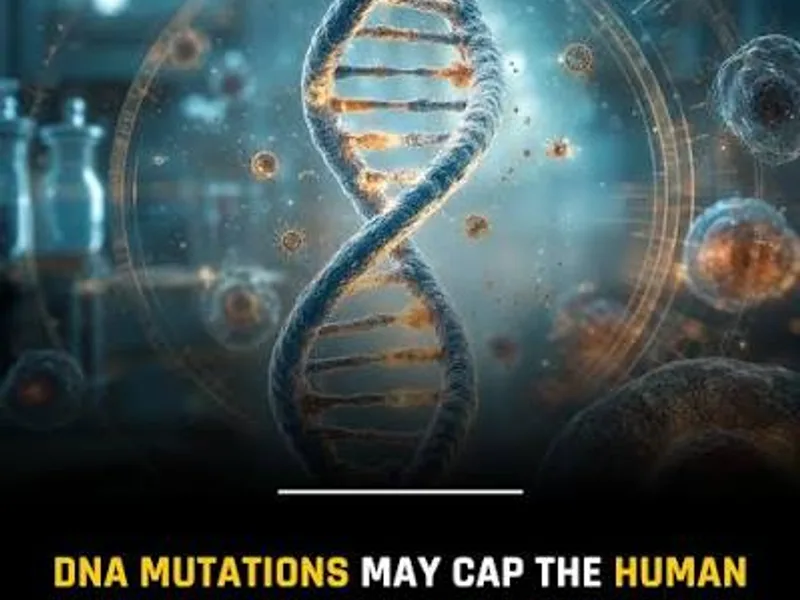
Every time a cell in your body divides, it copies its DNA, the instruction manual stored in nearly every cell. That copying process isn't perfect. Small errors creep in, called somatic mutations, meaning changes that happen in regular body cells rather than the cells passed on to children.
Most of these errors are harmless. Your body has repair systems that catch and fix a lot of the damage before it causes trouble. But repair isn't perfect either, and over decades, some mutations stick around. This slow buildup is now being pointed to as a hard ceiling on how long a human body can function, even in a hypothetical world where every disease has been cured.
Why This Became a Bigger Story Recently
A study published in npj Aging modeled what would happen if scientists eliminated nearly every reversible cause of aging: hormonal decline, cellular dysfunction, chronic disease, all of it. What was left standing as the limiting factor was somatic mutation buildup, and it capped median lifespan somewhere between 146 and 194 years. That's obviously theoretical, not something anyone should expect to experience.
What made the finding interesting wasn't just the big number. It was where the damage concentrated. Cells that regenerate constantly, like skin, handled mutation buildup fairly well in the model. Cells that don't regenerate, mainly neurons in the brain and cardiomyocytes in the heart, turned out to be the weak link. Once damage builds in a cell that never gets replaced, there's no reset button.
Somatic Mutations and Cancer Are the Same Coin, Different Sides
Here's something that doesn't get explained clearly enough in most coverage of this topic. The same process that eventually limits how long non-renewing tissues can function is also the underlying mechanism behind most cancers. A cancer starts when a cell accumulates the wrong combination of mutations in genes that control growth.
In clinical practice, this is often the piece patients miss when they ask about "anti-aging" versus "cancer prevention," as if they're separate goals. They're not. Reducing your exposure to things that damage DNA, tobacco smoke, excess UV radiation, certain chemicals, does double duty. It's genuinely one of the more underrated overlaps in preventive health, and I wish it got more airtime than the supplement aisle does.
For anyone with a family history of cancer or concerns about inherited mutation risk, it's worth having that conversation directly with a doctor rather than guessing from search results. A cancer treatment hospital can walk through screening options relevant to your history, and a cardiologist is worth consulting if heart-related aging markers, like resting heart rate, are a concern given how central cardiomyocytes were to the recent findings.
Why the Brain and Heart Age Differently From Everything Else
It's worth sitting with this for a second. Your skin replaces itself roughly every month. Your gut lining turns over even faster. But the neurons that store your oldest memories are, in large part, the same physical cells you had as a child. That's remarkable when you think about it, and also a little unsettling.
This is part of why brain health content tends to focus so heavily on prevention rather than repair. Doctar's coverage of how multitasking affects memory and its deeper look at episodic memory and cognitive aging both circle back to the same underlying reality: once neurons are damaged, options narrow. Certain medications can make things worse too, which is why the piece on medications that can worsen dementia symptoms is worth a read if you're managing medications for an older relative. Vision changes often track alongside broader neurological aging as well, and Doctar's guide to age-related visual impairment explains why eye checkups matter more than people assume.
Heart tissue follows a similar logic. Doctar's article on why athletes tend to have a lower resting heart rate touches on how cardiovascular conditioning changes over a lifetime, and it's a reasonable proxy for how well that non-renewing tissue is holding up.
What You Can Actually Do With This Information
Nobody can stop somatic mutations from happening. That's the honest answer, and anyone claiming otherwise is selling something. What you can influence, based on solid evidence rather than speculation, is how much additional damage you add on top of the unavoidable baseline, and how well your body supports the repair systems it already has.
Regular movement supports this more than most people expect. Doctar's pieces on walking an hour a day, staying active in older adulthood, and a simple morning walk habit all support the cardiovascular and metabolic systems tied to healthy aging. Pacing yourself matters too, and how often you should really do cardio makes the case that overtraining creates its own kind of cellular stress. Gentler options like low heart rate training are worth building into a weekly routine for exactly that reason, alongside basics like keeping your joints strong so mobility doesn't become the limiting factor before biology does.
Diet is the other major lever. Oxidative stress, essentially chemical wear and tear inside cells, is one of the known contributors to mutation accumulation, and diet quality affects how much of it your body generates and clears. Doctar's guide to everyday eating and movement habits and its coverage of managing diabetes affordably both connect back to this, since poorly controlled blood sugar increases oxidative damage over time. Walking after meals is a small, well-studied habit that helps here too. If digestion feels consistently off, gentle movement for gut health is a reasonable starting point before assuming something more serious.
For structured support, a registered dietitian, a nutritionist, or a local nutrition and wellness centre can help build a plan around your actual bloodwork rather than general assumptions. Older adults managing multiple health goals at once may also benefit from resources like nutritional support programs for seniors. A joint and bone care specialist or an osteopath is worth seeing if mobility issues are limiting how active you can stay, and for anyone managing multiple goals at once, Doctar's honest look at health-tracking apps or a structured weight management centre can help keep things consistent rather than sporadic.