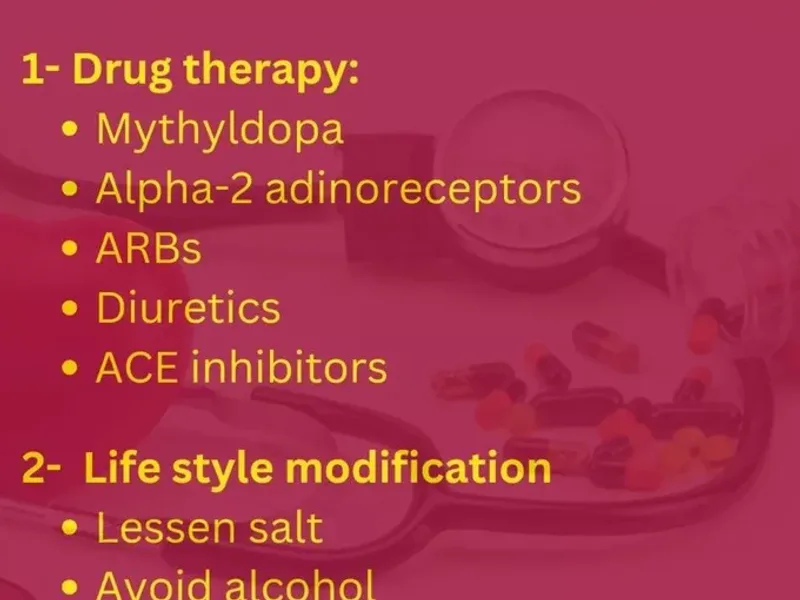
Treatment for hypertension, in short
Treatment for hypertension always starts with lifestyle changes — maintaining a healthy weight, following a heart-healthy eating pattern, reducing sodium, staying physically active, managing stress, and limiting alcohol — recommended for every adult with elevated blood pressure or hypertension. Medication is added for adults with blood pressure at or above 140/90 mm Hg, and for certain higher-risk adults with blood pressure at or above 130/80 mm Hg, under the 2025 AHA/ACC guideline for high blood pressure in adults.
[REVIEWER: add clinical insight here — e.g., how you talk with patients about starting with lifestyle changes before adding medication]
Lifestyle treatment: the foundation for everyone
The 2025 AHA/ACC guideline is explicit that lifestyle changes are strongly recommended for all adults to prevent or treat elevated blood pressure and hypertension — not just as a first attempt before medication, but as an ongoing part of treatment even for people who do need drugs. The core recommendations include maintaining or achieving a healthy weight, following a heart-healthy eating pattern such as the DASH diet, reducing sodium intake, increasing dietary potassium, adopting a moderate physical activity program, managing stress, and reducing or eliminating alcohol intake.
The DASH diet — Dietary Approaches to Stop Hypertension — is specifically endorsed in current guidelines. It emphasizes vegetables, fruits, whole grains, lean proteins like fish and poultry, and healthy fats such as vegetable oils, while limiting sodium and saturated fat. Among all the lifestyle measures, weight reduction and sodium restriction are considered the most effective and best-documented, according to a review published via the American College of Cardiology's clinical education network.
For alcohol specifically, guidance commonly cited alongside the 2025 recommendations suggests limiting intake to no more than two drinks a day for men and no more than one drink a day for women, alongside broader efforts to reduce or eliminate alcohol where possible for blood pressure benefit.
When medication gets added
Under the 2025 AHA/ACC guideline, medication is recommended for all adults with average blood pressure at or above 140/90 mm Hg, in addition to lifestyle changes. Medication is also recommended for certain adults with blood pressure at or above 130/80 mm Hg who have existing cardiovascular disease, a previous stroke, diabetes, chronic kidney disease, or an elevated 10-year cardiovascular risk score.
For adults with blood pressure at or above 130/80 mm Hg but lower overall cardiovascular risk, current guidance from the American College of Cardiology recommends starting medication only if three to six months of lifestyle changes haven't brought blood pressure below 130/80 mm Hg. That built-in trial period reflects how effective lifestyle changes alone can be for some people before medication becomes necessary.
[REVIEWER: add clinical insight here — e.g., how you counsel patients through that 3–6 month lifestyle trial period before deciding on medication]
Common medication classes
When medication is needed, current guidelines identify thiazide-type diuretics, long-acting dihydropyridine calcium channel blockers (CCBs), ACE inhibitors, and ARBs (angiotensin receptor blockers) as first-line options. These medication classes work through different mechanisms — some reduce fluid volume in the blood vessels, others relax blood vessel walls, and others interfere with hormone pathways that raise blood pressure — which is part of why doctors sometimes combine two classes rather than maximizing one alone.
For adults diagnosed with Stage 2 hypertension, current guidance recommends starting combination therapy — two first-line medications from different classes, often combined into a single pill — specifically to improve how consistently people take their medication and to reduce the time it takes to get blood pressure under control. For blood pressure that remains difficult to control despite multiple medications (called resistant hypertension), guidelines describe adding other medication classes, such as mineralocorticoid receptor antagonists, as part of an expanded treatment plan.
The specific medications, doses, and combinations appropriate for any individual depend on their overall health, other conditions, and how they respond to treatment — decisions that should always be made with a doctor rather than through general information.
Special considerations for certain groups
Guidelines for older adults specifically call for individualized decision-making. For adults 65 and older with hypertension and significant other health burdens or limited life expectancy, current guidance describes weighing risks and benefits through clinical judgment, patient preference, and a team-based approach — rather than automatically pursuing the most intensive blood pressure targets used for younger, healthier adults.
For people with obesity alongside hypertension, current guidelines note that medications originally developed for diabetes and weight management, such as GLP-1 receptor agonists, may be considered for adults with a body mass index of 27 or higher to support blood pressure reduction, and bariatric surgery may be considered for some adults with more significant obesity, in addition to standard lifestyle and medication treatment.
For adults with obstructive sleep apnea and treatment-resistant hypertension, current guidelines specifically recommend CPAP therapy as part of the treatment approach, since untreated sleep apnea can make blood pressure harder to control.
Why this isn't a one-time fix
Hypertension treatment is typically ongoing rather than a course that ends. A review in Mayo Clinic Proceedings notes that, except for a smaller share of cases with a specific secondary cause, high blood pressure is rarely cured — it's usually controlled through continued treatment, which makes consistent follow-up and long-term adherence to both lifestyle changes and medication central to keeping blood pressure managed over time.
A practical takeaway
If you've been told you have hypertension, ask your doctor two direct questions: what's my specific blood pressure target given my overall health, and does that call for medication now or a defined trial period of lifestyle changes first? Bring a home blood pressure log if you can — regular readings over time give a doctor much more useful information than a single office reading, and they'll shape exactly where your treatment plan goes from here.
FAQ
Can hypertension be treated without medication? For some people, yes — lifestyle changes alone can bring blood pressure into target range, particularly for those with blood pressure just above 130/80 mm Hg and lower overall cardiovascular risk. Current guidelines recommend a 3-to-6-month lifestyle trial before adding medication in this group.
What is the first-line treatment for high blood pressure? Lifestyle changes — weight management, the DASH diet, reduced sodium, physical activity, and limited alcohol — are recommended for every adult with hypertension. When medication is needed, thiazide-type diuretics, calcium channel blockers, ACE inhibitors, and ARBs are the standard first-line drug classes.
At what blood pressure level is medication recommended? Current 2025 guidelines recommend medication for all adults with blood pressure at or above 140/90 mm Hg, and for certain higher-risk adults — those with cardiovascular disease, diabetes, chronic kidney disease, or elevated cardiovascular risk — at or above 130/80 mm Hg.
Is hypertension treatment lifelong? Usually, yes. Except for cases with a specific underlying cause that can be treated directly, hypertension is generally managed on an ongoing basis rather than cured, which is why consistent follow-up and long-term adherence to treatment matter.
Does weight loss help treat high blood pressure? Yes. Weight reduction is considered one of the most effective lifestyle measures for lowering blood pressure, and current guidelines note that certain weight-management medications or, in some cases, bariatric surgery may be considered as part of treatment for adults with obesity and hypertension.