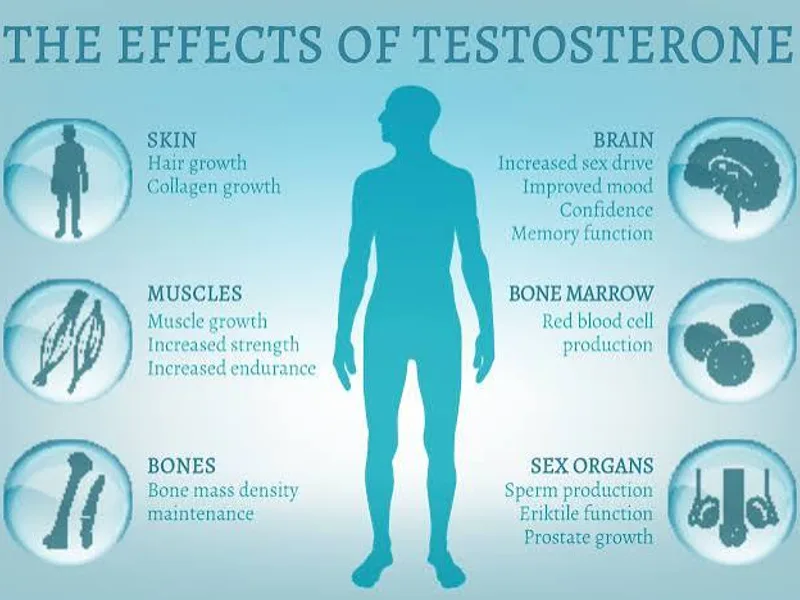
What is testosterone replacement therapy?
Testosterone replacement therapy, or TRT, is prescribed to men who have symptoms of testosterone deficiency along with consistently low testosterone levels confirmed through appropriate testing.
It is not intended simply to make a man stronger, younger or more muscular. The Endocrine Society's current guidance stresses that symptoms alone are not enough to diagnose testosterone deficiency and that reversible contributors should be considered first.
That distinction matters because testosterone treatment changes the body's normal hormone balance. Used in the right patient, it can be beneficial. Used unnecessarily or without proper monitoring, it can create avoidable problems.
Common TRT side effects
Not every man experiences side effects, and the risks can vary depending on the formulation, testosterone exposure, underlying health and duration of treatment.
1. Increased red blood cell count
One of the most important risks of TRT is erythrocytosis, meaning the body produces too many red blood cells.
A high red blood cell count can make the blood more viscous and may increase the risk of blood-clotting complications. For this reason, clinicians monitor blood counts during testosterone therapy. The Endocrine Society identifies elevated hematocrit as an important safety concern.
This is not a side effect that should simply be ignored because a man feels better on testosterone.
2. Reduced sperm production
TRT can suppress the body's own testosterone production and, as a result, reduce sperm production.
This is particularly important for men who want children. The Endocrine Society recommends against testosterone therapy in men planning fertility in the near term.
TRT and fertility are not the same thing. A man may feel that his sexual function has improved while his sperm production has fallen.
If fertility is a priority, discuss this before starting treatment rather than after a problem develops.
3. Acne and oily skin
Testosterone can stimulate oil production in the skin. Some men may therefore develop acne or worsening oily skin while receiving treatment.
The effect can vary between individuals and may depend on the testosterone formulation and exposure.
4. Breast tenderness or enlargement
Hormonal changes during testosterone treatment can sometimes cause breast tenderness or enlargement.
New breast changes should be discussed with a clinician rather than automatically attributed to TRT.
5. Prostate-related effects
Testosterone can stimulate prostate tissue. Men receiving TRT therefore need appropriate prostate-risk assessment and monitoring based on age, symptoms and individual risk factors.
TRT should not be started in men with known or suspected prostate or breast cancer under the situations outlined by clinical guidelines.
The question of whether TRT itself causes prostate cancer remains unsettled. The Endocrine Society's July 2026 statement says long-term safety, including prostate-cancer risk, remains unestablished.
Can TRT cause heart problems?
This is one of the most discussed questions surrounding testosterone therapy.
The answer is more nuanced than “TRT causes heart attacks.”
The large TRAVERSE trials, involving more than 5,200 men, did not find a meaningful increase in heart attack or stroke over the study period. However, the Endocrine Society's 2026 statement notes an approximately 50% relative increase in pulmonary embolism and an increased incidence of bone fractures among testosterone-treated men in those trials. It also says that longer-term safety remains uncertain.
That means cardiovascular safety should be discussed rather than presented as either completely safe or inherently dangerous.
Men with significant cardiovascular disease need individual assessment before treatment. The Endocrine Society recommends against starting TRT in men with uncontrolled heart failure or a myocardial infarction or stroke within the previous six months.
TRT and sleep apnea
Testosterone treatment may worsen untreated severe obstructive sleep apnea, a condition in which breathing repeatedly stops or becomes restricted during sleep.
Guidelines list untreated severe sleep apnea among conditions in which testosterone therapy should not be started.
Men who snore heavily, stop breathing during sleep or experience significant daytime sleepiness should discuss possible sleep apnea with a healthcare professional.
What about blood pressure and cholesterol?
Testosterone can affect several aspects of cardiovascular and metabolic health, and the effect is not identical in every patient.
Supraphysiological androgen doses, such as those used in some non-medical bodybuilding settings, can reduce HDL (“good”) cholesterol. This is different from medically supervised TRT given to men with confirmed hypogonadism.
That is another reason not to confuse prescribed TRT with anabolic-steroid misuse.
Can TRT cause dependency?
The body normally regulates testosterone production through signals between the brain, pituitary gland and testes. When testosterone is supplied from outside the body, that natural signalling can be suppressed.
The Endocrine Society has highlighted concerns about infertility and other consequences increasing with higher exposure and longer treatment duration.
This does not mean every man becomes permanently “dependent” on TRT. It does mean that stopping or changing treatment should be medically supervised, particularly after prolonged use.
Who should not start TRT?
TRT is not appropriate for everyone.
Clinical guidance recommends against starting testosterone therapy in men with certain conditions, including known or suspected prostate or breast cancer, elevated hematocrit, untreated severe obstructive sleep apnea, uncontrolled heart failure, recent heart attack or stroke, thrombophilia, and men planning fertility in the near term.
The exact decision depends on the individual's medical history and the cause of testosterone deficiency.
How is TRT monitored?
Starting testosterone is not the end of the process. Follow-up is part of safe treatment.
Doctors may monitor testosterone levels, symptoms, blood counts and prostate-related measures when appropriate. The Endocrine Society recommends evaluating men after treatment begins to determine whether symptoms are improving and whether adverse effects are developing.
Monitoring becomes especially important because a man can feel better while a laboratory abnormality is developing silently.
In clinical practice, one of the biggest problems is treating the testosterone number rather than the patient. A low result without compatible symptoms may not mean TRT is appropriate, while symptoms such as fatigue or low libido can have several causes unrelated to testosterone.
Should men use TRT for ageing or low energy?
Not automatically.
Low energy, reduced libido and mood changes are common and can result from obesity, poor sleep, depression, medications, chronic illness and other conditions. The Endocrine Society's 2026 statement recommends looking for reversible contributors before prescribing TRT.
For men with obesity-related low testosterone without another identified cause, weight loss is typically considered the first-line approach.
TRT should therefore follow a proper diagnosis rather than an online advertisement or an isolated blood-test result.