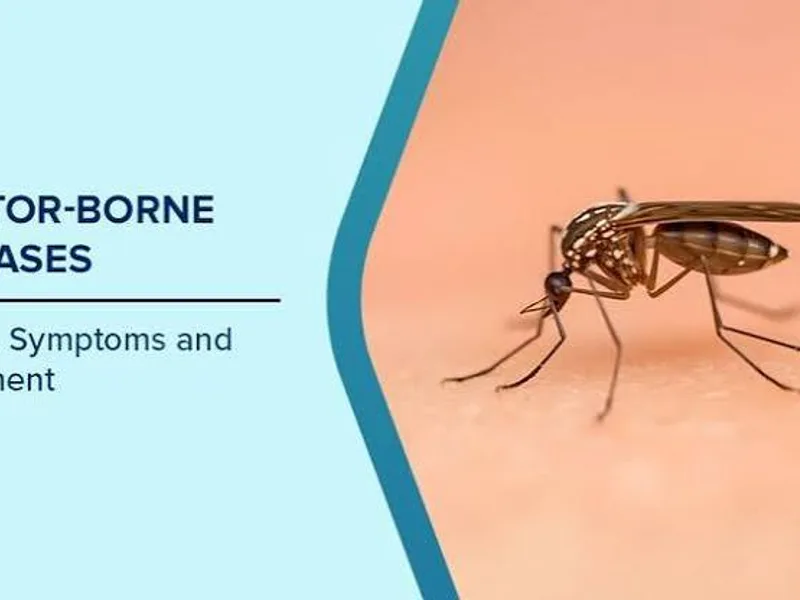
Standing water is the single biggest reason vector borne disease numbers climb every monsoon in Bihar. Potholes, blocked drains, discarded containers, waterlogged fields near villages — all of it becomes breeding ground for mosquitoes within days of the first proper rain.
Bihar's geography doesn't help either. The state sits in the Gangetic plain, flat and low-lying in large stretches, so water doesn't drain away quickly after rainfall. Add in dense population clusters and homes close to agricultural land, and you get near-ideal conditions for several vector borne diseases to circulate at once, not just one.
The Diseases That Actually Show Up
It's easy to lump every monsoon fever together, but the diseases behind them are different, and so is what you should watch for.
Dengue
Spread by the Aedes mosquito, which breeds in clean, stagnant water — the kind sitting in a flowerpot or an old tyre, not dirty puddles. Symptoms include sudden high fever, severe body and joint pain, headache behind the eyes, and skin rash. In some cases, dengue drops platelet counts sharply enough to become dangerous, which is why doctors ask for blood tests rather than treating it as an ordinary fever.
Malaria
Carried by the Anopheles mosquito, which prefers to bite at night and breeds in relatively dirtier standing water. Cyclical fever with chills and sweating is the classic sign, though not every case follows the textbook pattern. Bihar still reports malaria cases every monsoon, even though numbers have come down over the years.
Chikungunya
Also an Aedes-borne disease, and often confused with dengue early on because the fever looks similar. The giveaway tends to be joint pain that's disproportionately severe and can linger for weeks after the fever itself is gone. It's rarely fatal, but it can be genuinely disabling for a while.
Japanese Encephalitis (JE)
Spread by Culex mosquitoes that breed in paddy fields and stay close to pig-rearing areas, which makes rural, agriculture-heavy parts of Bihar particularly exposed. JE affects the brain and can cause severe, sometimes permanent complications in children especially. It's less common than dengue or malaria but far more serious when it does strike.
Symptoms Worth Acting On
In clinical practice, this is often missed because families treat every monsoon fever as "just viral" and self-medicate for three or four days before seeking help. That delay matters more with dengue and JE than with an ordinary cold.
Get a blood test done if you notice:
Fever lasting more than 2 days without clear improvement
Severe body ache, joint pain, or pain behind the eyes
Unusual bleeding, bruising, or rash
Persistent vomiting or abdominal pain
Confusion, seizures, or reduced consciousness — this needs emergency care immediately, not a wait-and-see approach
A visit to a general physician for a proper evaluation, backed by a blood test at a diagnostic centre, settles the question far better than guessing based on symptoms alone.
Prevention: What Actually Works
Most prevention advice sounds obvious until you realize how few households actually do it consistently. A few things genuinely move the needle:
Empty standing water weekly. Flowerpots, coolers, discarded tyres, buckets — anything holding water for more than a few days becomes an Aedes breeding site.
Use mosquito nets, especially at night, since Anopheles and Culex mosquitoes are more active after dusk.
Wear full-sleeve clothing in the early morning and evening when mosquito activity peaks.
Fix broken window screens and door gaps rather than relying only on repellents.
Support local fogging and larvicide drives rather than skipping them because they're inconvenient that week.
Keep cattle sheds and pig-rearing areas away from living spaces where possible, since this reduces JE-carrying mosquito exposure.
None of this eliminates risk completely. Is it realistic to expect zero mosquito bites through an entire Bihar monsoon? Probably not. But consistent habits cut exposure meaningfully, and that's really the whole game here.
When to See a Doctor Without Delay
Some symptoms shouldn't wait for a home remedy to "work first." Persistent high fever beyond 48 hours, any bleeding or unusual bruising, severe abdominal pain, breathing difficulty, or confusion all warrant a same-day visit to a hospital or an emergency care centre. Children and elderly family members deserve extra caution here, since both groups tend to deteriorate faster than healthy adults.
If travel to a facility is difficult, especially in rural blocks, checking home visit doctor services or arranging an ambulance early is far better than waiting until the situation becomes critical.