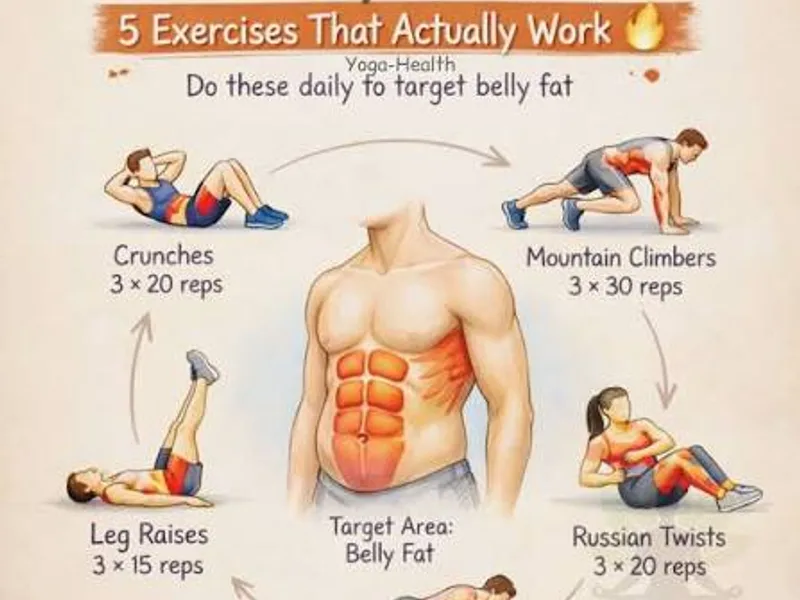
Visceral Fat Reduction: Exercises That Actually Work
Most people worry about belly fat because of how it looks. But the fat sitting deep around your liver, pancreas, and intestines, called visceral fat, is a different problem altogether. It's not just under the skin. It wraps around organs and releases inflammatory chemicals that can quietly raise your risk of heart disease and type 2 diabetes.
You can't see how much of it you have just by looking in the mirror. Two people with the same waist size can carry very different amounts of visceral fat. That's part of why doctors often recommend a proper check rather than guesswork. A general physician can assess your waist-to-hip ratio, and a diagnostics center can run bloodwork to check where you actually stand.
Why exercise works differently on visceral fat
Here's something a lot of people get wrong. In clinical practice, this mistake is common: people assume any exercise that burns calories will shrink visceral fat first. It often does, actually, more readily than subcutaneous fat (the kind you can pinch). Visceral fat is metabolically active, meaning it responds fairly quickly to consistent movement, even before the scale shows much change. That's a hopeful fact worth holding onto if you're two weeks in and frustrated.
But "quickly" is relative. Most research points to steady, moderate-to-vigorous activity over 12 or more weeks producing measurable reductions, not a single workout style overnight.
The exercises that make the most difference
Brisk walking and steady cardio. This is the unglamorous workhorse of visceral fat reduction. Thirty minutes of brisk walking most days, done consistently, has shown real reductions in visceral fat across multiple studies. It's low-impact, which matters if joint pain has kept you sidelined. If knees or hips are already a concern, a consultation with an orthopedist before ramping up intensity is a reasonable precaution.
Interval training. Short bursts of harder effort mixed with recovery periods, sometimes called HIIT, appear to be efficient for visceral fat specifically. A session might be 20 to 25 minutes, alternating one minute of faster effort with one or two minutes of easier movement. It's not magic, but it does more in less time for people who are otherwise limited on hours in a day.
Strength training. Lifting weights doesn't burn as many calories per session as cardio does. Still, it builds muscle, and more muscle mass raises your resting metabolic rate over time. Combined with cardio, it tends to outperform either one alone for fat composition changes. A physiotherapist can help design a safe strength routine if you're new to resistance work or recovering from an injury.
What doesn't work as well
Spot reduction, the idea that crunches alone will melt belly fat, isn't supported by evidence. Ab exercises strengthen the muscles underneath the fat. They don't preferentially burn the fat sitting on top of or around your organs. It's a stubborn myth, and honestly, who wouldn't want it to be true? It just isn't.
Extreme calorie restriction without movement tends to backfire too. It can reduce muscle along with fat, which actually works against long-term metabolic health. Pairing exercise with sound nutrition guidance, ideally from a registered dietitian, tends to produce more durable results than either approach alone.
When exercise alone isn't the answer
Visceral fat doesn't exist in isolation. It's tied closely to insulin resistance, hormonal shifts, and sometimes thyroid function. If you've been consistent with movement for a few months and see no change, it may be worth ruling out underlying issues with an endocrinologist. Women dealing with PCOS-related weight patterns often benefit from a gynecologist being part of that conversation too.
There's also a cardiovascular angle worth taking seriously. High visceral fat is associated with elevated blood pressure and cholesterol, so a checkup with a cardiologist isn't overkill if you have a family history of heart disease. Left unaddressed for years, related complications can eventually lead to procedures like angioplasty or bypass surgery, which is exactly the outcome early lifestyle changes aim to prevent.
Digestive discomfort, bloating, or unexplained abdominal changes shouldn't just be chalked up to fat either. A gastroenterologist can rule out other causes. And if sleep apnea or breathlessness during exercise is part of the picture, a pulmonologist visit is worth adding to the list, since visceral fat and sleep-disordered breathing often travel together.
For anyone managing diabetes risk alongside weight loss, keeping monitoring supplies on hand matters. Diabetes care essentials from a trusted pharmacy make day-to-day tracking easier. If getting to appointments is difficult, home visit doctors and home nursing support are worth knowing about, particularly for older adults or anyone managing multiple conditions at once.
Routine screening matters more than people think. A diagnostics center near you can run a basic lipid profile and fasting blood sugar test well before symptoms show up. If chest pain or severe symptoms ever occur during exercise, don't push through it. Contact emergency medical services or arrange an ambulance immediately rather than waiting it out.
If you're just starting to build a care team around this, browsing doctors near you or searching hospitals in your city is a reasonable first step. For broader options, a full doctor directory and hospital directory cover most specialties in one place, and nearby pharmacies can handle prescriptions once a plan is set.