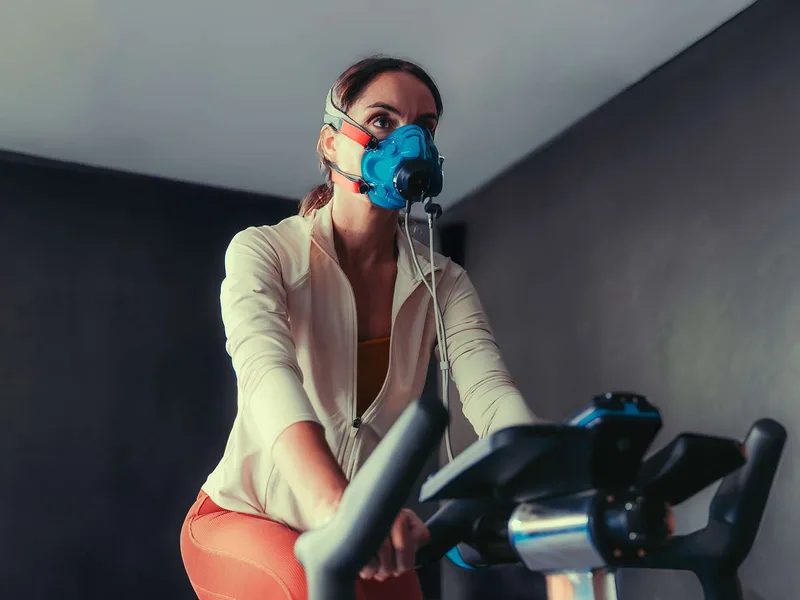
If you own a fitness watch, you've probably seen a VO2 max number appear on your dashboard at some point, usually with little explanation of what it means or why it matters. It sits there quietly next to your step count, easy to ignore.
That's a shame, because the research behind this particular number is genuinely stronger than most fitness metrics get. Several long-term studies have found cardiorespiratory fitness, the technical term for what VO2 max measures, to be one of the more consistent predictors of how long people live.
What VO2 Max Actually Measures
VO2 max is the maximum amount of oxygen your body can use during intense exercise, usually expressed in millilitres of oxygen per kilogram of body weight per minute. In plain terms, it reflects how efficiently your heart, lungs, and muscles work together to deliver and use oxygen when you're pushing hard.
The gold standard way to measure it involves a treadmill or bike test in a lab, breathing through a mask connected to gas analysis equipment. Most people will never do this test, and honestly, they don't need to. Wearable devices estimate VO2 max using heart rate patterns during exercise, which is reasonably useful but noticeably less precise than a proper lab test.
What the Research Actually Says About Longevity
Cardiorespiratory fitness has been studied for decades, and the findings point in a consistent direction. A large long-term study following middle-aged men over roughly four decades found that higher fitness levels in midlife were associated with meaningfully longer life expectancy, with the fittest group living several years longer on average compared to the least fit.
Other large pooled analyses, combining data across many studies and millions of participants, have consistently found that low cardiorespiratory fitness carries a higher mortality risk than several well-known risk factors, including smoking and high blood pressure, in direct comparisons. The exact size of the effect varies somewhat between studies, which is normal in population research, but the direction of the finding doesn't waver: fitter people, measured by VO2 max, tend to live longer.
It's worth being honest about a limitation here. These are observational studies, meaning they show a strong association, not absolute proof that raising your VO2 max by some specific amount will add a specific number of years to your life. Genetics, existing health conditions, and other lifestyle factors all play a role too.
Why This Number Might Matter More Than People Think
In clinical practice, this is often missed because patients focus heavily on weight or cholesterol numbers while overlooking fitness entirely, even though someone with a higher VO2 max often carries lower health risk than a leaner person with poor cardiorespiratory fitness. Body weight alone doesn't tell the whole story.
That doesn't mean weight or cholesterol don't matter, they clearly do. But fitness deserves a seat at that same table, and for most people it currently doesn't get one, mostly because it's harder to casually measure than stepping on a scale.
How Accurate Is Your Smartwatch's Number?
Wearable estimates of VO2 max are a reasonable trend indicator, useful for watching whether your fitness is improving or declining over months. They are not a substitute for a proper lab test if precise numbers actually matter for your situation, such as athletic training or specific medical monitoring.
Treat the number on your wrist as directionally useful, not gospel. If you want a genuinely accurate reading, ask about cardiopulmonary exercise testing through a diagnostic centre near you, particularly if you have a specific medical reason to know your precise fitness capacity.
Can You Actually Improve VO2 Max?
Yes, and this is genuinely good news. VO2 max is trainable at essentially any age, though the ceiling and rate of improvement vary depending on starting fitness, age, and consistency.
Sustained moderate cardio, done regularly over months, raises it gradually. Interval training, alternating hard efforts with recovery periods, tends to produce faster improvements for people who already have a reasonable fitness base, though it's more demanding and not the place to start if you've been sedentary for years.
Please don't jump straight into intense interval training without a health check if you're new to exercise, over 40, or have any existing heart condition. A cardiologist can advise on safe intensity levels, and a basic stress test can rule out anything that would make hard exertion risky before you start pushing yourself.
Building Fitness Without Overdoing It
Start with what you can sustain consistently rather than what looks impressive on paper. Three to four sessions of moderate cardio a week, built up gradually, will move your fitness in the right direction without the burnout that comes from doing too much too soon.
A general physician near you can run a basic check if it's been years since your last physical, especially before increasing exercise intensity meaningfully. If joint issues or old injuries limit which activities feel safe, a physiotherapist can help you build a plan around those limitations rather than despite them.
Fitness Doesn't Exist in Isolation
Diet, sleep, and underlying health conditions all interact with how much your VO2 max can realistically improve. A dietitian can help make sure nutrition isn't quietly working against your training efforts.
If you're managing diabetes alongside a fitness goal, an endocrinologist should be part of the conversation, since blood sugar control and cardiovascular fitness influence each other more than people expect. Women adjusting exercise intensity during pregnancy should check with a gynecologist first, and any heart-related concern in a child should go through a pediatrician rather than adult fitness guidance applied loosely.
Getting the Right Support Around You
Improving cardiorespiratory fitness safely usually goes better with the right people involved early rather than figuring it out entirely alone. You can browse verified doctors near you or doctors in Kolkata to find someone to guide a fitness and health check properly. For a fuller cardiac workup before ramping up training, hospitals near you or hospitals in Kolkata often offer dedicated fitness or cardiac screening packages.
Routine blood work, including cholesterol and blood sugar panels that give a fuller health picture alongside fitness, can be booked through diagnostic centres across Kolkata, and if mobility makes a clinic visit difficult, home visit doctor services can bring the initial consultation to you instead. Medicines prescribed after any check-up can be ordered through a pharmacy near you, and ongoing monitoring can be arranged through home nursing services or a compounder for routine vitals checks.
Anyone with breathing limitations that affect exercise capacity should consider a pulmonologist, and skin changes noticed during heavier training are worth mentioning to a dermatologist if they persist. If a fitness or cardiac evaluation ever points toward a procedure, comparing options through surgery listings is a sensible next step, and outside Kolkata, similar guidance applies through doctors across India.