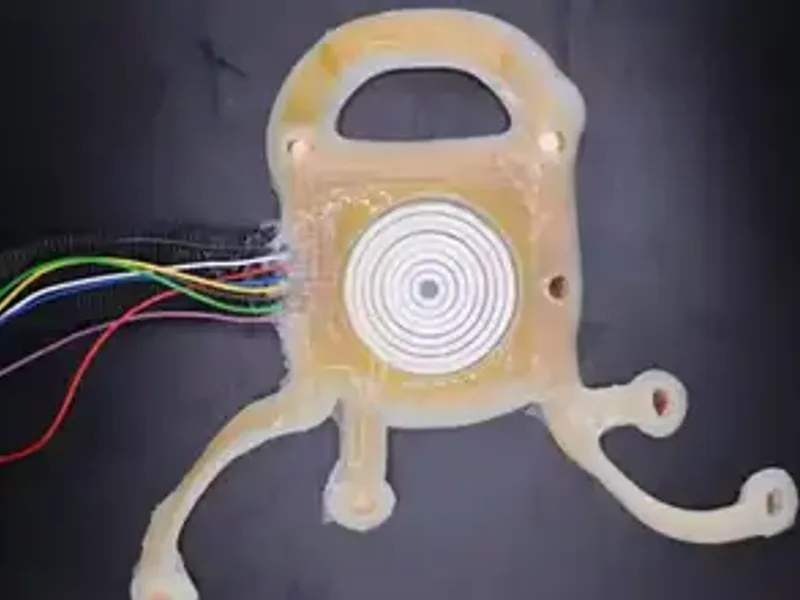
Wearable Ultrasound Sleep Patches: What They Actually Do
Sleep trackers have gotten a strange upgrade. Instead of just measuring how much you toss and turn, a new category of device called the wearable ultrasound sleep patch uses sound waves to peek beneath the skin. It sounds almost sci-fi. But the idea behind it is fairly simple once you break it down.
What Is a Wearable Ultrasound Sleep Patch?
It's a small, flexible patch — usually worn on the neck, wrist, or chest — that sends low-frequency ultrasound pulses into the body and reads how they bounce back. Doctors have used ultrasound for decades to look at organs and blood flow. This is the same principle, just shrunk down and made wearable.
The patch is trying to pick up signals that older trackers can't reach. Things like blood vessel movement, fluid shifts, and subtle muscle activity that change as you move through different sleep stages, from lighter NREM sleep to deeper REM sleep. That's a step beyond what a typical smartwatch does.
How It's Different From a Fitness Tracker
Most consumer sleep trackers rely on an accelerometer (to detect movement) and a light-based heart rate sensor. They're decent at estimating when you're asleep versus awake, but they're notoriously fuzzy when it comes to telling deep sleep from light sleep. Anyone who's compared their smartwatch's sleep score to how they actually feel in the morning knows this disconnect.
Ultrasound sensing, at least in theory, gets closer to the body's actual physiology rather than just inferring sleep from stillness. Some early prototypes have also been tested for tracking non-restorative sleep patterns, which matter a lot to people whose sleep quality doesn't show up as obvious tossing and turning.
That said, "closer to physiology" doesn't mean "clinically validated." That gap matters, and it's one a lot of marketing copy glosses over.
What the Research Actually Shows (and Doesn't)
Here's the honest part: most of the research on ultrasound-based wearables for sleep is still in early academic and pilot stages. A handful of university labs and a few startups have published small feasibility studies, mostly comparing the patch's readings against a polysomnography setup — the gold-standard overnight sleep study done in a clinic.
Results so far are promising for detecting basic sleep-wake timing, but less consistent for fine-grained sleep-stage classification. I'd be cautious about any product claiming lab-level accuracy from a home device; that claim usually outruns the actual data. If a company can't point you to a peer-reviewed validation study, that's worth noticing.
In clinical practice, this is often the part patients skip over — they buy a device that promises "REM tracking," assume it's medical-grade, and then get anxious over numbers that were never meant to guide a diagnosis. A consumer patch is a wellness gadget, not a substitute for a formal sleep study or an evaluation by a sleep specialist.
Who Might Actually Benefit From One
People curious about their general sleep patterns, shift workers trying to understand irregular schedules, or someone doing basic sleep hygiene experimentation might find a patch like this genuinely useful as a trend-tracking tool. It's less about a single night's number and more about noticing patterns over weeks.
It's a different story if you suspect something more specific, like obstructive or central sleep apnea, loud snoring with breathing pauses, or a parasomnia like sleepwalking. Those need proper diagnostic testing, not a consumer patch. The same goes if poor sleep is tangled up with something else — anemia, OCD, or a neurological condition like Parkinson's disease, where insomnia is a symptom of something bigger. A patch won't catch that. A doctor will.
Is that a reason to skip wearable tech altogether? Not necessarily. It's just a reason to treat it as one data point among several, not a verdict on your health.
A Growing Category, Especially Online
Interest in sleep wearables has climbed steadily alongside the broader wellness-tech boom — you can see it in how many health apps now claim to track sleep cycles or bundle in dedicated sleep-tracking features. Even people asking whether two hours of sleep is better than none are increasingly turning to gadgets for answers before they turn to a clinician.
Some of this crossover makes sense — wearable medical devices have a long track record in managing real conditions, and ultrasound patches sit somewhere between consumer wellness tech and that more clinical category. If your daytime sleepiness is becoming a real problem, it's worth reading up on practical strategies for staying alert while you sort out the underlying cause. And if a sleep issue seems tied to eating patterns at night, nocturnal eating and sleep-related eating disorders are worth ruling out too, since they're often missed.
For anyone considering medication as a shortcut, it's worth reading about the actual evidence behind options like quetiapine for sleep before assuming it's a safe fix — the same "we don't fully know yet" caution applies there as it does to unproven wearables.