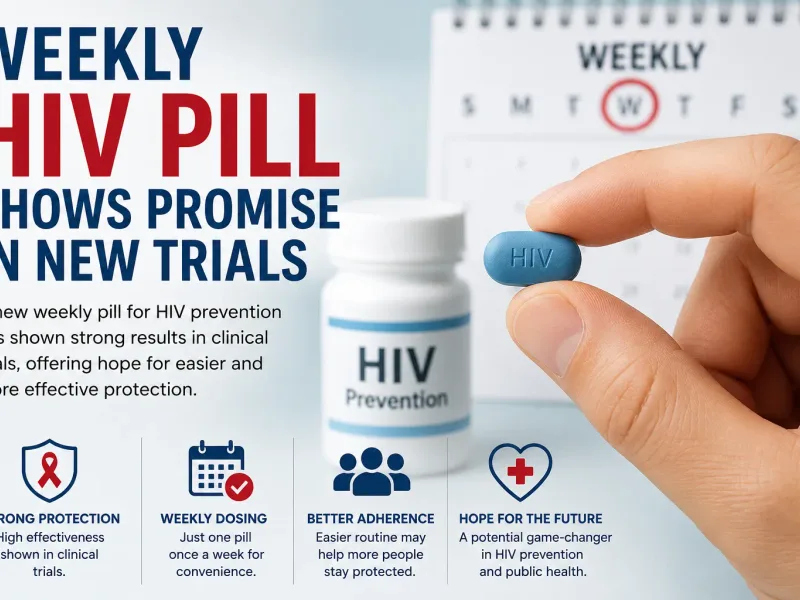
A Weekly Pill for HIV? The Data Is Finally Here
For decades, living with HIV has meant one thing every single day: take your pill, same time, no skipping. That routine works, but it's also relentless. Miss too many doses and the virus can resurge or, worse, develop resistance.
Now there's real trial data behind a pill you'd only need once a week. Merck and Gilead's combination of islatravir and lenacapavir was tested in two Phase 3 trials, ISLEND-1 and ISLEND-2, and the results were presented in July 2026 at the AIDS 2026 conference in Rio de Janeiro. This isn't a lab study or an early-phase trial with a handful of volunteers. It's late-stage evidence involving hundreds of people already living with HIV.
What the ISLEND Trials Actually Found
Both trials enrolled adults who already had their HIV under control on daily antiretroviral therapy. Researchers wanted to know: if you switch these people to a once-weekly pill instead, does the virus stay suppressed?
In ISLEND-1, participants switched from Biktarvy, one of the most widely prescribed daily HIV regimens. Among 314 people on the weekly combination, one developed a detectable viral load above 50 copies, compared to four among the 312 who stayed on daily treatment. That's a small difference in absolute numbers, but it points the same direction: the weekly pill held up.
ISLEND-2 took a slightly different approach, letting doctors and patients choose whichever standard daily regimen they were already on before switching. Both trials found that the once-weekly single-tablet regimen maintained viral suppression in people who switched from standard daily oral treatment.
Officially, the results demonstrated noninferiority, meaning the weekly option didn't perform worse than daily treatment at controlling the virus. That's the bar these trials needed to clear, and they cleared it.
How the Two Drugs Work Together
Islatravir and lenacapavir attack HIV in different ways, which is part of why this combination works on a weekly schedule at all. Islatravir blocks an enzyme the virus needs to copy its genetic material, while lenacapavir interferes with the virus's protein shell, the capsid. Both drugs also happen to stay active in the body for a long time, which is what makes once-a-week dosing realistic instead of wishful thinking.
Lenacapavir isn't new to HIV medicine. It's already approved as a long-acting injectable, mostly for HIV prevention. This oral, combined version is the newer piece of the puzzle.
Why This Actually Matters for People's Lives
Ask anyone managing a chronic illness with a daily medication and they'll tell you: it's not usually the pill itself that's hard, it's remembering it, every day, for years, sometimes decades. Life happens. People travel, get busy, forget.
In clinical practice, this is often missed because patients who report "I never miss a dose" sometimes underestimate their own gaps when pharmacy refill data tells a different story. A weekly pill doesn't eliminate that problem, but it shrinks the number of moments where a slip can happen, from 365 a year down to 52.
There's also a safety detail worth noting. The data addressed earlier concerns from other islatravir trials about the drug lowering CD4+ T cells and lymphocytes, immune cells that matter a lot for someone living with HIV. The safety profile of the weekly combination was generally similar to the comparator daily regimens, and no new safety concerns turned up. That's reassuring, though it's still worth watching as longer-term data comes in.
What We Still Don't Know
This is where a health writer has to resist the urge to get ahead of the science. These studies are continuing out to 96 weeks, so the 48-week results, while solid, aren't the full picture yet.
There are also open questions about price and access that the trial data alone can't answer. A weekly pill is only a real improvement in people's lives if it's affordable and available where they live, not just at conferences in Rio de Janeiro. These results will form the basis of regulatory submissions, so approval timelines and eventual pricing are still ahead, not behind us.
It's also not yet approved anywhere. This is investigational, meaning nobody should expect a prescription for it at their local pharmacy this year.
Who This Trial Actually Applies To
Worth being precise here: both ISLEND trials looked at people who were already virologically suppressed, meaning their HIV was already under control on existing treatment. This isn't yet trial evidence for someone starting HIV treatment for the first time. That's a meaningful distinction, and one that's easy to gloss over in headline coverage.
If you're currently on daily antiretroviral therapy and curious whether a switch like this could eventually apply to you, that's a conversation for your treating doctor, not something to self-manage off a news article. You can find a nearby doctor or infectious disease specialist through Doctar if you want to talk through your current regimen, or search doctors across India if you're outside a major city.
Practical Takeaway
Nothing here changes what anyone should do today. If you're on daily HIV treatment and it's working, keep taking it as prescribed. This weekly pill isn't approved, isn't available, and isn't something to ask a doctor to switch you to right now.
What it does mean is that a real alternative to daily dosing has cleared a major hurdle in the trial process. If you want to stay ahead of when this becomes an actual option, the person to ask is your own doctor, not a headline. You can book a general physician consultation to discuss your current HIV management plan, check nearby diagnostic centers if you're due for routine viral load or CD4 testing, or use Doctar's pharmacy search if you need help with your current daily medication in the meantime. For more health updates like this, Doctar's medical blog covers ongoing research as it develops, and you can read more about Doctar's platform or its network of hospitals near you for follow-up care.