Why hospital protests matter to patients
A hospital strike is more than a labour dispute when you are the person waiting outside the OPD with a sick parent or child.
Government hospitals in West Bengal serve a huge share of the state's population, particularly people who depend on affordable public healthcare. When doctors, nurses, resident doctors or other staff protest, even temporarily, the consequences can reach far beyond the people participating in the demonstration.
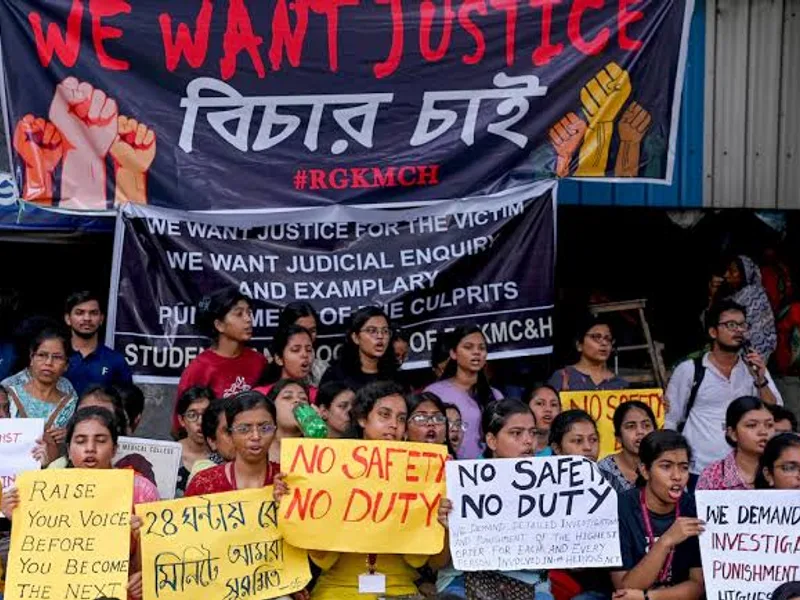
West Bengal's government hospital system has faced major doctors' protests in recent years. The most prominent episode followed the August 2024 death of a postgraduate trainee doctor at RG Kar Medical College and Hospital in Kolkata, after which junior doctors launched a prolonged cease-work movement centred on workplace safety, security and other healthcare-system demands. Contemporary reporting documented disruption at government medical colleges across the state, while emergency services continued in many facilities.
The situation should not be reduced to a simple “doctors versus government” story. There were serious patient-access concerns on one side and concerns about the safety and working conditions of healthcare workers on the other.
What happens when staff go on strike?
The biggest mistake patients can make is assuming that every hospital service stops during a protest.
A work stoppage can affect OPD consultations, planned operations, routine investigations and administrative services differently from emergency departments. The exact arrangement depends on the hospital, the nature of the protest and any directions issued by hospital or health authorities.
That distinction matters. Someone with a routine follow-up appointment may be able to reschedule, while a person with severe breathing difficulty, major bleeding, symptoms of a stroke or another potentially life-threatening problem should not delay care simply because they have heard that hospital staff are protesting.
Doctar's guide to government hospitals in North 24 Parganas explains how state-run facilities serve as important access points for routine and emergency care in the district.
Emergency care is a different situation
Emergency departments are designed to handle conditions where delay could cause serious harm.
Patients should not wait for a strike to end if they have signs of a medical emergency. Instead, contact emergency services or go to the nearest appropriate emergency department and tell the hospital staff what is happening.
Doctar's guide to emergency hospitals in Kamarhati explains how emergency departments use triage, which means patients are assessed according to how serious their condition is.
This is why a patient with a life-threatening condition may be seen before someone who has been waiting longer for a routine consultation. It is not necessarily related to who arrived first.
Why the 2024 protests became a major healthcare issue
The RG Kar episode changed the conversation around hospital safety in West Bengal.
Junior doctors began a cease-work protest after the death of a postgraduate trainee in August 2024. Their demands included stronger security arrangements and action on concerns about conditions inside government medical institutions. The protest later developed into repeated cease-work actions and a hunger strike. Contemporary reports said doctors eventually met Chief Minister Mamata Banerjee in October and ended the hunger strike after receiving assurances on their demands.
The episode also exposed a difficult reality: government hospitals are workplaces as well as places of treatment. Doctors, nurses, technicians, security personnel and other staff need a safe environment to work effectively.
At the same time, patients cannot simply stop needing healthcare because a dispute is taking place.
That tension is what makes hospital strikes so difficult.
What patients should check before travelling
If your condition is not an emergency, checking the hospital's current status before leaving home can save hours.
Call the hospital's enquiry desk or check its latest official notice where available. Ask specifically whether the OPD is operating, whether your department is functioning and whether planned procedures are being carried out.
Doctar's government hospital guide for Howrah explains the different levels of public healthcare available across the district.
For patients in North 24 Parganas, Doctar also provides information about the Bhatpara Municipal Hospital, Naihati Municipal Hospital and Halisahar Government Hospital.
Hospital schedules and services can change, particularly during a protest, so online listings should be treated as a starting point rather than a guarantee.
Kolkata has several major public hospitals
Patients in Kolkata have access to several large government institutions, although capacity and department availability vary.
The IPGMER and SSKM Hospital is a major government teaching and referral institution in central Kolkata. It provides specialist and super-specialist services across multiple departments.
The SSKM Hospital listing on Doctar also provides information about its emergency services and facilities.
Another major public institution is Calcutta National Medical College, which provides emergency, inpatient, outpatient and specialist care.
Patients seeking infectious-disease services can also find information about Beliaghata ID Hospital, while the West Bengal Government TB Hospital focuses on tuberculosis and respiratory disease services.
These facilities are not interchangeable. A hospital's specialty, referral role and current operational status matter.
What if your usual hospital is affected?
Patients with non-urgent conditions may have several alternatives.
A planned follow-up can sometimes be rescheduled. A routine test may be completed at another diagnostic facility if the treating doctor agrees. For a new but non-emergency health concern, a qualified doctor outside the affected hospital may be able to assess the patient and decide whether hospital-based care is needed.
Doctar's doctor directory for Kolkata can help patients identify doctors by specialty and availability.
For people looking for a broader facility comparison, Doctar maintains a hospital directory covering India.
Doctar's Kolkata polyclinic guide also explains why multi-specialty centres can be useful when a patient needs assessment from more than one type of clinician.
Not every protest means the same thing
The phrase “hospital strike” can be misleading.
One protest may involve resident doctors withdrawing elective services. Another may involve nurses, technicians or administrative workers. A third may be a demonstration outside the hospital while clinical work continues.
The difference is crucial for patients.
In clinical practice, this is often missed because families hear “strike” and assume that no doctor will be available. In reality, the operational effect depends on which staff are participating, which departments are affected and what emergency arrangements have been put in place.
That is why patients should seek current information rather than rely on WhatsApp forwards or old social-media posts.
The pressure on government hospitals is already high
Public hospitals operate under heavy demand even when there is no protest.
Doctar's Bardhaman government hospital guide describes how district hospitals provide emergency, outpatient, inpatient, diagnostic and specialist services to large populations.
Doctar's Howrah government hospital guide similarly discusses high patient volumes, waiting times and resource pressures.
The same issue appears in Doctar's North 24 Parganas hospital guide, which covers the role of district and other public facilities in the region.
A prolonged work stoppage can add another layer of pressure by shifting patients to neighbouring hospitals.
What about maternity and children's care?
Pregnancy, childbirth and paediatric emergencies deserve particular caution.
A pregnant woman with heavy bleeding, severe abdominal pain, seizures, difficulty breathing or another serious symptom should seek urgent medical care rather than waiting for a protest to finish.
Doctar's Chittaranjan Seva Sadan Hospital listing provides information about this government tertiary-care hospital's maternal and child health services.
For families considering private alternatives, Doctar's Kolkata normal-delivery hospital guide discusses maternity-care considerations.
Again, patients should verify current availability before travelling.
Specialist care can be harder to replace
A routine general consultation may have alternatives nearby. A complex cancer, kidney, neurological or surgical case is different.
A patient already receiving specialist treatment should not simply change hospitals during a protest without communicating with the treating team when possible. Medical records, previous scans, pathology reports and treatment history can be essential when another doctor takes over care.
Doctar's medical-record transfer guide explains why keeping health records organised matters when moving between healthcare providers.
For cancer patients, Doctar's cancer treatment-cost guide covers financial and treatment-access issues.
For kidney disease, the kidney-failure treatment guide provides general information about treatment pathways.
Digital care can help, but it cannot replace emergencies
Telemedicine may be useful when a routine appointment is disrupted.
A video or telephone consultation can sometimes help with follow-up questions, medication reviews or deciding whether an in-person visit is necessary. It cannot replace emergency assessment, physical examination or hospital treatment when someone is seriously ill.
Doctar's telemedicine guide for India explains where remote healthcare can fit into the wider system.
Patients should also remember that an online consultation does not automatically provide access to a hospital bed, emergency procedure or specialist intervention.
The larger issue is patient safety
Hospital protests raise a legitimate question: how can healthcare workers protest serious concerns without leaving vulnerable patients stranded?
There is no easy answer.
Doctors and other staff have legitimate workplace and professional concerns, particularly around safety. Patients, meanwhile, have an equally real need for continuous access to healthcare. Any responsible response has to recognise both.
The 2024 West Bengal protests showed how quickly a dispute involving hospital safety can become a wider public-health issue. The protests drew support and criticism in equal measure, while government hospitals continued to deal with patients who had nowhere else to go.
What patients can do during a protest
Keep your hospital's phone number saved. Before a non-urgent visit, confirm that the relevant department is operating.
Keep copies of prescriptions, test reports, discharge summaries and medication information. This becomes especially useful if you need to visit another hospital unexpectedly.
For planned care, ask whether your appointment or procedure can be rescheduled. For serious or rapidly worsening symptoms, don't wait for a routine service to resume.
Doctar's accident and emergency guide for Kolkata explains why urgent cases should be assessed quickly and why emergency departments prioritise patients by clinical severity.
Patients around Salt Lake can also check the Doctar listing for Bidhannagar Sub-Divisional Hospital, while insured workers may find the ESI Hospital Salt Lake listing useful when checking available facilities.
For patients around Hooghly, Doctar also lists Bansberia Sub-Divisional Hospital.