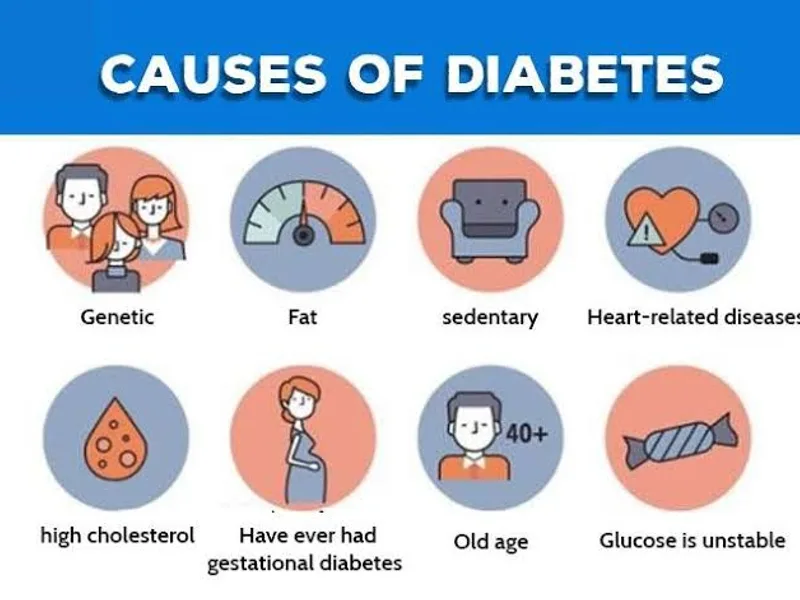
Diabetes has no single cause — it depends on the type. <cite index="11-1">Type 1 diabetes is thought to result from an autoimmune reaction in which the body mistakenly attacks and destroys the insulin-producing cells in the pancreas.</cite> <cite index="12-1">Type 2 diabetes develops when the body's cells stop responding normally to insulin, a condition called insulin resistance, until the pancreas can no longer keep up with the demand for more insulin.</cite> Gestational diabetes is triggered by hormonal changes during pregnancy that interfere with insulin's normal function.
[REVIEWER: add clinical insight here — e.g., how you explain the difference between type 1 and type 2 causes to patients who assume diabetes is always tied to diet or weight]
To understand what goes wrong, it helps to know what's supposed to happen. <cite index="17-1">The body breaks down most food into sugar (glucose), which enters the bloodstream. Rising blood sugar signals the pancreas to release insulin, a hormone that acts like a key, letting glucose into cells to be used as energy.</cite> Diabetes disrupts this system in one of two ways: either the pancreas doesn't make enough insulin, or cells stop responding to the insulin that is available.
Type 1 diabetes is an autoimmune condition. <cite index="11-1">The immune system attacks the beta cells in the pancreas that are responsible for producing insulin — a process that can unfold silently over months or even years before any symptoms appear.</cite> Once enough beta cells are destroyed, the pancreas can no longer produce sufficient insulin, and the person needs to take insulin for life.
Scientists don't fully understand why the immune system turns on the body this way. <cite index="19-1">Risk factors for type 1 diabetes are thought to include a mix of autoimmune, genetic, and environmental influences,</cite> and researchers continue to study environmental triggers such as early-life infections and factors during pregnancy that may play a role in setting off the autoimmune process, according to research published in the National Institutes of Health's PMC database.
Known risk factors for type 1 diabetes are narrower than those for type 2. They include <cite index="11-1">having a parent or sibling with type 1 diabetes, and age — since the condition usually develops in childhood, adolescence, or young adulthood, though it can appear at any age.</cite> <cite index="14-1">In the United States, white people are statistically more likely to develop type 1 diabetes than Black or Hispanic/Latino Americans,</cite> though the reasons behind that pattern aren't fully understood. Importantly, there is currently no known way to prevent type 1 diabetes.
The Causes of Type 2 Diabetes
Type 2 diabetes develops gradually, usually over years, and its causes are more tied to a combination of genetics and lifestyle than type 1. <cite index="12-1">As cells become resistant to insulin, the pancreas compensates by producing more of it. Over time, the pancreas can't keep up with the demand, and blood sugar rises — setting the stage for prediabetes and eventually type 2 diabetes.</cite>
Several factors raise the risk of developing this insulin resistance. According to the CDC, <cite index="12-1">people are at greater risk of type 2 diabetes if they already have prediabetes, are living with overweight, are 45 or older, have a parent or sibling with type 2 diabetes, or get less than three days of physical activity a week.</cite> <cite index="12-1">Non-alcoholic fatty liver disease is another condition linked to higher type 2 diabetes risk.</cite>
Genetics and ethnicity also play a documented role. <cite index="14-1">African Americans, Hispanic/Latino Americans, American Indians and Alaska Natives, Pacific Islanders, and some Asian Americans face a higher risk of prediabetes and type 2 diabetes, and American Indians and Alaska Natives are about twice as likely as white Americans to develop diabetes.</cite>
Smoking adds to the risk as well. <cite index="14-1">Smokers are 30 to 40 percent more likely to develop type 2 diabetes than nonsmokers.</cite>
The good news is that many of these risk factors are modifiable. <cite index="12-1">Type 2 diabetes can often be prevented or delayed through proven lifestyle changes, including losing weight where needed, eating a healthier diet, and increasing regular physical activity.</cite>
[REVIEWER: add clinical insight here — e.g., which modifiable risk factors you find patients can act on most successfully, or how you discuss family history with patients who feel their risk is fixed]
The Cause of Gestational Diabetes
Gestational diabetes develops during pregnancy when hormonal shifts interfere with the body's ability to use insulin effectively. <cite index="14-1">Having had gestational diabetes in a previous pregnancy raises the risk of developing it again.</cite> Unlike type 1, gestational diabetes typically resolves after childbirth — but it isn't the end of the story. <cite index="14-1">Gestational diabetes increases the mother's risk of developing type 2 diabetes later in life, and babies born to mothers with gestational diabetes are more likely to have obesity as children or teens and to develop type 2 diabetes themselves down the line.</cite>
Why the Distinction Between Causes Matters
Knowing what causes each type of diabetes shapes how it's treated. Type 1, being autoimmune and largely unpredictable, currently has no known prevention strategy — treatment focuses on daily insulin and blood sugar management. Type 2, on the other hand, is influenced heavily by factors that can be changed, which is why lifestyle interventions are central to both preventing it and managing it after diagnosis. Gestational diabetes calls for a different approach altogether, centered on monitoring during pregnancy and reducing longer-term risk for both mother and child afterward.
Practical Takeaway
Diabetes isn't caused by one single thing, and it isn't always something a person could have prevented. Type 1 stems from an autoimmune process that current science can't stop. Type 2 is shaped by a mix of genetics and modifiable factors like weight, activity, and diet. If you have risk factors for any type — a family history, a sedentary routine, or a past pregnancy with gestational diabetes — a conversation with a doctor and a basic blood sugar test are reasonable next steps, regardless of whether you have symptoms yet.
Frequently Asked Questions
Is diabetes caused by eating too much sugar? Not directly. Type 2 diabetes is caused by insulin resistance, which is influenced by weight, activity level, and genetics rather than sugar intake alone. A diet high in sugar can contribute to weight gain, which is a risk factor, but sugar itself doesn't directly cause diabetes.
Can you inherit diabetes from your parents? Genetics play a role in both type 1 and type 2 diabetes, but neither is guaranteed by family history alone. Having a parent or sibling with either type raises your risk, though environmental and lifestyle factors also contribute significantly, especially for type 2.
What triggers type 1 diabetes? Type 1 diabetes is triggered by an autoimmune reaction where the immune system destroys insulin-producing cells in the pancreas. Researchers believe a combination of genetic susceptibility and environmental factors, such as certain infections, may set off this process, though the exact trigger isn't fully understood.
Can type 2 diabetes be caused by stress alone? Stress alone doesn't cause type 2 diabetes, but chronic stress can affect blood sugar levels and contribute to behaviors, like poor sleep or inactivity, that raise risk. The primary drivers remain insulin resistance, genetics, weight, and activity level.
Does gestational diabetes mean I'll get type 2 diabetes later? Not necessarily, but it does raise your risk. Women who've had gestational diabetes have a higher likelihood of developing type 2 diabetes later in life, which is why follow-up screening after pregnancy is recommended.