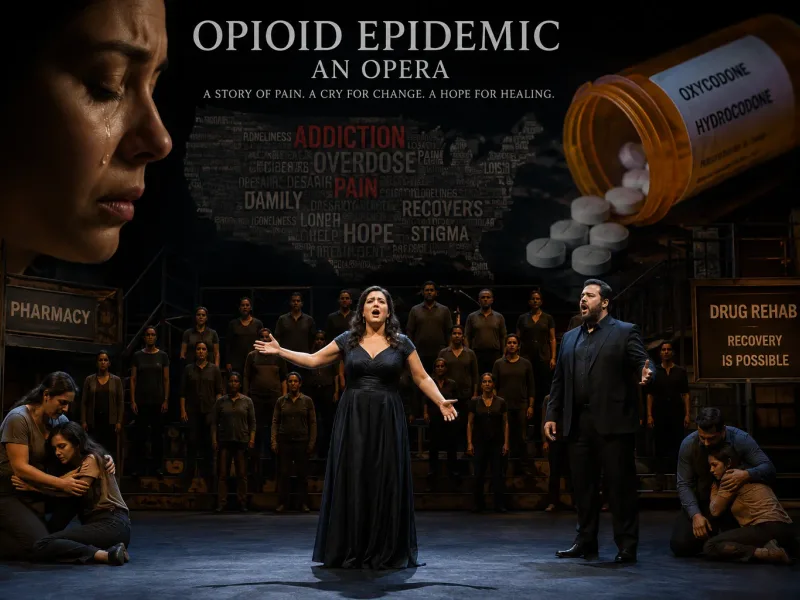
When Opera Confronts Addiction: The Opioid Epidemic on Stage
A carousel doesn't sound like the setting for an opera about drug addiction. But that's exactly the image composer Missy Mazzoli chose for "The Galloping Cure," which opened this summer at the Edinburgh International Festival before moving on to Sweden and, eventually, San Francisco. A charming stranger rides into a fading town offering free spins on his fiberglass horses. The relief feels good at first. Then it doesn't stop.
Mazzoli has said the opera grew out of a personal loss, two cousins who died young after opioid use that started with a prescription. That detail matters. It's a reminder that this isn't really a story about "drug users" in the abstract. It's a story about pain, and about how ordinary medical care can quietly turn into dependence.
Why Art Is Catching Up to a Medical Crisis
Doctors, researchers and journalists have written about the opioid epidemic for over a decade now. Opera is a slower medium, and slower to respond to a crisis usually means the crisis has become permanent enough to demand a cultural reckoning, not just a policy one.
The Lancet has called the opioid epidemic one of the most serious public health disasters affecting North America in recent memory, and warned that the death toll could keep climbing through the rest of this decade if current trends hold. Synthetic opioids, often mixed into other drugs without anyone knowing, have made overdoses far more unpredictable than they were even ten years ago.
In clinical practice, this is often missed because the shift from "pain patient" to "person with opioid use disorder" rarely feels like a single event. It's gradual. A prescription for a knee injury or a dental procedure runs its course, the pain eases, but the body has already adjusted to the drug being present. That's not a moral failing. It's basic pharmacology, and it can happen to almost anyone.
The Medical Reality Behind the Metaphor
Opioids work by binding to receptors in the brain and spinal cord that control how pain signals are processed. Used briefly, under supervision, they can be genuinely useful, for surgery recovery, for cancer pain, for acute injuries. The trouble starts when the body builds tolerance, meaning it needs more of the drug to get the same effect, and withdrawal begins to feel worse than the original pain ever did.
This is where a general physician plays a frontline role. Most opioid prescriptions in India and elsewhere start with routine care, not a specialist pain clinic. A physician who reviews a patient's full history, and who explains realistic timelines for tapering off a medication, catches problems before they escalate. If you're on a repeat opioid prescription and aren't sure why it's still needed, that's a fair question to bring to your general physician at your next visit.
Post-surgical pain is another common entry point. Patients who've had procedures through a general surgeon or a dentist are sometimes sent home with more opioid tablets than the recovery actually requires. It's worth asking directly whether a shorter course, or a non-opioid alternative, would work just as well.
Who Else Should Be Involved
Chronic pain rarely stays in one lane, and neither should its treatment. An orthopedist can assess whether the underlying joint or spine issue driving the pain has other treatment paths, including physical rehabilitation through a physiotherapist, before opioids become a long-term fixture. Some patients also explore complementary approaches through Ayurveda for chronic pain management, alongside, not instead of, conventional care.
Opioids affect more than the nervous system. They slow breathing, which is why a pulmonologist may get involved in cases with existing respiratory conditions. They also tend to cause significant constipation, a side effect that a gastroenterologist sees often and can manage. And because long-term opioid use has been linked to cardiac strain, a cardiologist may be part of the picture for patients with heart risk factors.
Mental health cannot be separated from this either. Anxiety, depression and untreated trauma frequently sit alongside opioid dependence, sometimes as a cause, sometimes as a consequence. A psychiatrist can assess whether therapy, medication-assisted treatment, or both are appropriate. Doctar's own coverage of mental health conditions is worth a look if you want to understand how mood disorders and substance use commonly overlap.
Families matter here too. If a child has accidentally accessed a household opioid, a pediatrician needs to be contacted right away, and in a suspected overdose situation, calling an ambulance or reaching emergency services immediately can be the difference that matters most. Pregnant patients managing chronic pain should loop in a gynecologist, since opioid exposure during pregnancy needs careful, individualized planning.
Practical Support, Not Just Awareness
Reading an article, or watching an opera, doesn't treat addiction. But it can lower the shame that keeps people from asking for help, and that alone has value. A dietitian can support recovery nutrition, which is often overlooked. Home-based recovery is sometimes more realistic than a hospital stay, and services like a home visit doctor, a nurse for monitoring, or a compounder for injections and check-ups can bridge that gap.
For ongoing monitoring, regular bloodwork through diagnostics helps track organ function, especially the liver and kidneys, during long-term treatment. Medicines and safe disposal of unused opioids can be handled through a verified pharmacy, and general medical products for home care are worth having on hand for caregivers. If a hospital admission is needed for detox or stabilization, comparing hospitals with the right facilities matters, and some cases require coordination with a surgery team if there's an underlying condition driving the original pain.
I'll admit a mild opinion here: I think we undersell how much a five-minute conversation with the right doctor, early, prevents years of harder conversations later. That's the quieter message underneath "The Galloping Cure," too, whether the composer intended it as public health messaging or not.
If any of this sounds like your situation or a loved one's, Doctar's about page explains how the platform connects patients to verified doctors, and its blog section carries more condition-specific guides. You can also reach out directly through contact if you're unsure where to start.