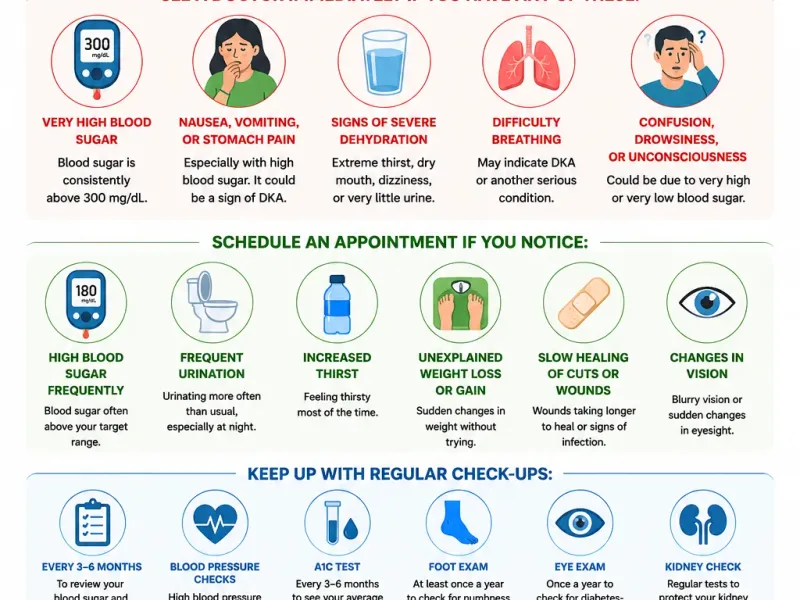
See a doctor if you notice possible diabetes symptoms such as frequent urination, unusual thirst, unexplained weight loss, or persistent fatigue — these warrant blood sugar testing even without a prior diagnosis. If you already have diabetes, regular checkups matter just as much as responding to new symptoms, and certain warning signs, like fruity-smelling breath or confusion, mean it's time for emergency care rather than a routine visit.
[REVIEWER: add clinical insight here — e.g., which early symptoms patients most often wait too long to bring up]
Getting Tested Without a Prior Diagnosis
Diabetes symptoms are often subtle, and <cite index="7-1">common early signs include blurry vision, fatigue, frequent urination, increased thirst, increased hunger, numbness or tingling in the hands or feet, and unexplained weight changes.</cite> Any combination of these is worth bringing to a doctor, since <cite index="7-1">about 1 in 5 adults with diabetes don't know they have it.</cite> A simple blood test can confirm or rule out diabetes, and there's little downside to checking early — undiagnosed diabetes causes ongoing damage even before symptoms become severe.
Parents should also be attentive to changes in a child's bathroom habits. <cite index="2-1">Unexplained bed-wetting or a sudden increase in bathroom accidents in a child can be an early sign of type 1 diabetes</cite> and is worth mentioning to a pediatrician promptly, since type 1 symptoms can escalate quickly once they start.
Routine Checkups After a Diabetes Diagnosis
Once diabetes is diagnosed, regular checkups become part of ongoing management, not just something to schedule when a problem arises. <cite index="39-1">Going to checkups is one of the basic self-care behaviors the CDC recommends for everyone living with diabetes,</cite> alongside blood sugar monitoring and taking medication as prescribed. These visits let a doctor track how well a treatment plan is working and adjust it as needed, whether that means changing medication, updating a meal plan, or addressing a new symptom before it becomes serious.
Diabetes self-management education and support (DSMES) services are also worth asking about at any point after diagnosis, not just at the start. <cite index="41-1">A diabetes care and education specialist can help with everything from balanced meals to blood sugar monitoring, and the CDC notes that DSMES is valuable whether someone is newly diagnosed or has lived with diabetes for years.</cite>
[REVIEWER: add clinical insight here — e.g., how often you recommend routine follow-ups for stable versus newly adjusted treatment plans]
Warning Signs of Diabetic Ketoacidosis (DKA)
Diabetic ketoacidosis is a serious complication, most common in type 1 diabetes, and it's important to recognize it early rather than waiting to see if symptoms pass. <cite index="105-1">DKA usually develops gradually, often starting with excessive thirst and frequent urination. If left untreated, more severe symptoms can appear quickly, including fast or deep breathing, dry skin and mouth, fruity-smelling breath, muscle stiffness, extreme tiredness, nausea, vomiting, and stomach pain.</cite>
Checking for ketones is a key early step. <cite index="99-1">If blood sugar is 240 mg/dL or higher while sick, an over-the-counter ketone test kit can check for ketones, and a doctor should be called if ketones are high, since this can be an early sign of DKA.</cite> Once DKA symptoms are more severe — <cite index="105-1">confusion, difficulty breathing, or an inability to keep fluids down</cite> — this becomes an emergency requiring immediate care rather than a phone call to a doctor's office.
Beyond DKA, both very high and very low blood sugar can become emergencies on their own. <cite index="101-1">Hyperglycemic hyperosmolar syndrome (HHS) occurs when blood sugar rises to dangerously high levels, and people with poorly controlled type 2 diabetes are especially prone to it,</cite> though it can occur in people without a diabetes diagnosis as well.
On the other end, <cite index="101-1">hypoglycemia occurs when blood sugar drops too low, usually below 70 mg/dL, and without treatment, it can lead to seizures and become a medical emergency.</cite> Mild low blood sugar can often be managed at home. <cite index="101-1">The American Diabetes Association recommends taking 15 grams of fast-acting carbohydrate, waiting 15 minutes, and retesting blood sugar; if it's still below 70 mg/dL, repeating this step until levels come back up.</cite> But <cite index="101-1">if hypoglycemia happens regularly despite following a treatment plan, or if blood sugar changes suddenly and unpredictably, that's a reason to see a doctor rather than just repeating the same fix.</cite>
Severe hypoglycemia is a different situation entirely. If someone with diabetes becomes confused, loses consciousness, or has a seizure, this requires emergency medical care immediately — not home treatment.
A Quick Reference: Doctor Visit vs. Emergency Room
For everyday questions, symptom changes, or routine care, a scheduled visit with a doctor or diabetes care team is the right call. Emergency care is warranted when someone with diabetes experiences confusion, loss of consciousness, seizures, difficulty breathing, persistent vomiting, or fruity-smelling breath — these signs point toward DKA, HHS, or severe hypoglycemia, all of which can become life-threatening quickly. When in doubt, especially with a rapidly worsening symptom, err on the side of emergency care rather than waiting to see if it improves.
Practical Takeaway
Seeing a doctor for diabetes isn't a single event — it starts with getting tested if early symptoms appear, continues with regular checkups after diagnosis, and includes knowing which specific warning signs mean a situation has become an emergency. Persistent thirst or fatigue deserves a scheduled appointment; confusion, fruity-smelling breath, or loss of consciousness deserves a call to 911. Knowing the difference in advance, before a crisis happens, makes it much easier to respond quickly when it counts.
Frequently Asked Questions
What are the first symptoms that should prompt a diabetes test? Frequent urination, unusual thirst, unexplained weight loss, and persistent fatigue are common early symptoms worth bringing to a doctor. A simple blood test can confirm whether diabetes is present, and testing early matters since many people live with undiagnosed diabetes for some time.
How often should someone with diabetes see their doctor? This varies by individual, but regular checkups are considered a core part of diabetes self-care, alongside daily blood sugar monitoring and taking medication as prescribed. A doctor can recommend a specific follow-up schedule based on how stable someone's blood sugar and treatment plan currently are.
What are the warning signs of diabetic ketoacidosis? Early DKA symptoms include excessive thirst and frequent urination, progressing to fast or deep breathing, fruity-smelling breath, nausea, vomiting, and extreme tiredness if untreated. High ketones combined with high blood sugar are an early warning sign, and confusion or difficulty breathing means it's time for emergency care.
When does low blood sugar become an emergency? Mild hypoglycemia, generally below 70 mg/dL, can often be treated at home with fast-acting carbohydrates. It becomes an emergency if someone becomes confused, loses consciousness, or has a seizure — situations that require immediate emergency care rather than home treatment.
Should I go to the ER or call my doctor for high blood sugar? This depends on severity. Persistently high blood sugar with ketones present, confusion, difficulty breathing, or an inability to keep fluids down warrants emergency care. Less severe or gradually developing symptoms are usually appropriate to discuss with a doctor first.