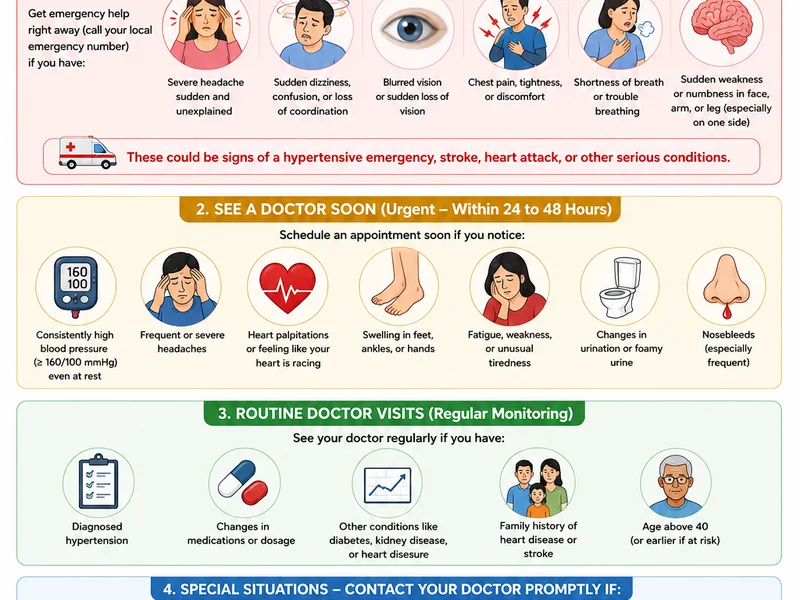
Routine high blood pressure — Stage 1 or Stage 2 hypertension without severe symptoms — should be managed with regular visits to your primary care doctor, not urgent or emergency care. A blood pressure reading of 180/120 mm Hg or higher is different: Mayo Clinic and the American Heart Association classify this as a hypertensive crisis, and if it comes with chest pain, shortness of breath, or stroke symptoms, it's a 911 emergency, not a wait-and-see situation.
[REVIEWER: add clinical insight here — e.g., how you counsel patients on distinguishing routine follow-up from a same-day concern]
If you've been diagnosed with Stage 1 or Stage 2 hypertension and aren't experiencing severe symptoms, your condition is not immediately life-threatening, according to guidance from HCA Healthcare's patient education resources, and the right path is ongoing care with your primary doctor — not urgent or emergency services. Your doctor will typically discuss lifestyle changes and, depending on your numbers and overall risk, medication.
Mayo Clinic recommends blood pressure checks at least every two years starting at age 18, with more frequent monitoring for anyone with risk factors or a previous elevated reading. If you've already been diagnosed with hypertension, your doctor will set a specific follow-up schedule based on your numbers and treatment plan — sticking to that schedule matters even when you feel completely fine, since hypertension itself rarely causes symptoms.
When to schedule a sooner, same-day type of visit
Between routine follow-up and a 911 emergency, there's a middle zone. Elevated blood pressure readings that are higher than usual for you, or mild symptoms without signs of a hypertensive emergency, are reasonable reasons to seek same-day or urgent care rather than waiting for your next scheduled appointment, according to guidance summarized by SolvHealth. Urgent care providers can measure blood pressure accurately, order labs to assess cardiovascular risk, and adjust medication with a follow-up plan.
This middle category also covers "hypertensive urgency" — a blood pressure reading of 180/120 mm Hg or higher without accompanying symptoms of organ damage. Mayo Clinic notes this still needs medical attention, but the path (urgent care or a prompt call to your doctor, versus 911) depends on whether any of the emergency symptoms below are also present.
When it's a 911 emergency
A blood pressure reading of 180/120 mm Hg or higher combined with chest pain, shortness of breath, or stroke symptoms is a hypertensive emergency, according to Mayo Clinic and the American Heart Association — this calls for 911, not a scheduled appointment or even urgent care. Mayo Clinic specifically lists stroke symptoms to watch for: numbness or tingling, loss of feeling in the face, arm, or leg (often on one side), trouble walking, trouble speaking, and changes in vision.
Other symptoms associated with a hypertensive emergency include a severe, sudden headache — sometimes described as a "thunderclap" headache that peaks in intensity very quickly — confusion or a sudden change in mental status, and nausea or vomiting alongside a severely elevated reading. According to GoodRx, confusion in this context can sometimes look subtle, like someone seeming "a little off," which is still worth treating as a possible emergency rather than dismissing.
[REVIEWER: add clinical insight here — e.g., what you tell patients about the difference between a typical stress headache and one that warrants emergency evaluation]
Understanding hypertensive urgency vs. emergency
Mayo Clinic distinguishes two forms of hypertensive crisis at the same blood pressure threshold of 180/120 mm Hg or higher. An urgent hypertensive crisis has no signs of organ damage. An emergency hypertensive crisis involves life-threatening damage to the body's organs. Because it can be difficult for a person outside of a medical setting to tell these apart with confidence, the safer default — echoed across Mayo Clinic and emergency medicine guidance from GoodRx — is to treat a reading that high as an emergency if there's any uncertainty, rather than assuming it's the milder urgency form.
What to do if you get a high reading at home
If a home blood pressure reading comes back high but you have no symptoms, Mayo Clinic-aligned guidance suggests sitting quietly for a few minutes and rechecking it, since anxiety or activity can temporarily elevate a reading. If it remains very high on recheck, seek medical attention. If it's 180/120 mm Hg or higher and you have any of the emergency symptoms described above — chest pain, shortness of breath, or stroke symptoms — don't recheck and wait; call 911 immediately.
Even without symptoms, a home reading in the hypertensive crisis range shouldn't be ignored. GoodRx's guidance is direct on this point: don't dismiss a very high reading just because you feel fine — contact your healthcare team to make sure your current treatment plan is actually working.
Why the distinction matters
High blood pressure is often called a "silent killer" because it can cause serious organ damage without warning symptoms, according to the American Heart Association. That silence is exactly why understanding the difference between routine, urgent, and emergency situations matters — most hypertension is a long-term condition managed through regular care, but the rare moments when it becomes an emergency require immediate action, not a wait-and-see approach.
A practical takeaway
Know your target blood pressure range from your doctor, and treat any reading of 180/120 mm Hg or higher as a signal to act — recheck immediately, and call 911 without hesitation if it comes with chest pain, shortness of breath, or any stroke symptom. For everything short of that threshold, stick with your regular doctor and follow-up schedule, since consistent routine care is what actually controls hypertension over the long run.
FAQ
What blood pressure reading requires an ER visit? A reading of 180/120 mm Hg or higher combined with chest pain, shortness of breath, or stroke symptoms is a medical emergency requiring a 911 call, according to Mayo Clinic and the American Heart Association. The same reading without those symptoms still needs medical attention, though not necessarily via 911.
What's the difference between hypertensive urgency and hypertensive emergency? Both involve a blood pressure reading of 180/120 mm Hg or higher. Hypertensive urgency has no signs of organ damage, while hypertensive emergency involves life-threatening organ damage. Because the two can be hard to distinguish outside a medical setting, treating an uncertain case as an emergency is the safer default.
Should I go to urgent care or the ER for high blood pressure? It depends on your symptoms. Elevated readings or mild symptoms without emergency signs are appropriate for urgent care. A reading of 180/120 mm Hg or higher with chest pain, shortness of breath, or stroke symptoms should go straight to the ER via 911, not urgent care.
Is a headache a sign I need emergency care for high blood pressure? Not usually on its own — headaches from hypertension are typically nonspecific. However, a severe, sudden "thunderclap" headache, especially alongside a very high blood pressure reading, warrants emergency evaluation rather than waiting it out.
How often should I see my doctor if I already have hypertension? This depends on your specific numbers and treatment plan, which your doctor will set individually. General screening guidance recommends blood pressure checks at least every two years starting at age 18, with more frequent visits for anyone already diagnosed or with risk factors.