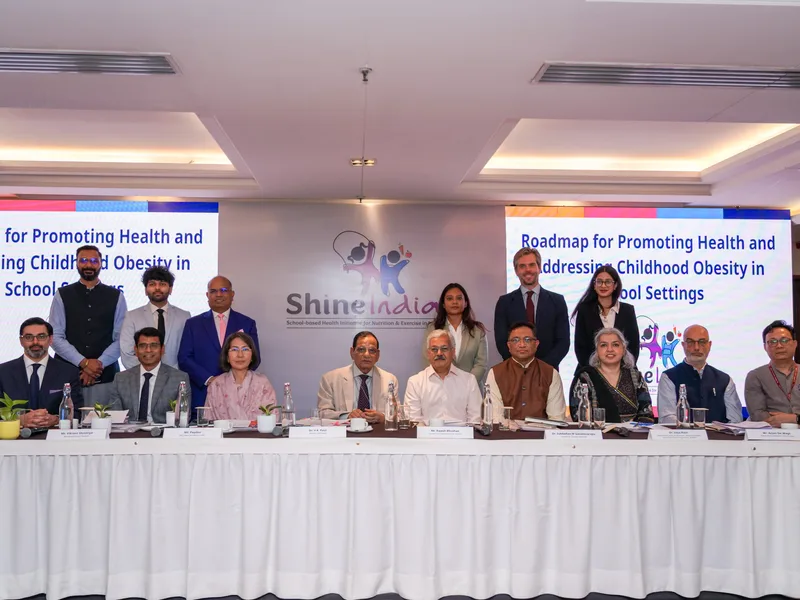
Childhood obesity in India has been climbing for years, and now two large organizations are putting money behind trying to slow it down. The WHO Foundation and Novo Nordisk announced a new collaboration on March 11, 2026, aimed at preventing childhood obesity through school-based health programs across India.
What the Collaboration Actually Involves
The initiative provides financial support to strengthen obesity prevention and health-system readiness, built around a scalable, school-based health program. Rather than standing up something entirely new, it's designed to work inside two frameworks that already exist: the Indian government's Ayushman Bharat School Health and Wellness Programme, and WHO's global Health Promoting Schools framework.
In practice, that means the program will focus on healthier early-life environments, promoting physical activity, identifying risk factors early, and building school-based screening into the regular school day. Anil Soni, CEO of the WHO Foundation, called schools "the frontline of prevention," and framed the goal as turning school time itself into a natural point of contact for health screening rather than something separate parents have to seek out.
The collaboration launched formally in Delhi under something called the "Roadmap for Promoting Health and Addressing Childhood Obesity in School Settings," part of a broader initiative branded Shine India.
India's childhood obesity numbers have been rising for reasons that will sound familiar if you live in any Indian city: rapid urbanization, more sedentary daily routines, and dietary habits that have shifted noticeably over the past couple of decades. What used to be considered a relatively rare condition in Indian children is now common enough that public health officials are treating it as a genuine priority, not an afterthought.
Vikrant Shrotriya, Managing Director of Novo Nordisk India, described it as "a worrying rise in childhood and adolescent obesity," and said addressing it early is essential to protecting the country's long-term health outlook. That's not exaggerated. Childhood overweight and obesity meaningfully raise the odds of carrying that weight, and the health risks that come with it, into adulthood.
The Part Worth Reading Carefully
Here's something worth flagging plainly rather than glossing over. Novo Nordisk is the maker of some of the most widely known weight-loss and diabetes medications on the market today. That doesn't automatically make this collaboration self-serving, prevention-focused school programs are genuinely valuable regardless of who funds them, but it's fair for readers to notice the pairing and ask questions about it.
In healthcare journalism, corporate-funded public health initiatives deserve the same scrutiny as any other funding source, not less just because the stated goal is prevention rather than treatment. The program as described focuses on screening, education, and early identification rather than medication, which is a meaningfully different scope than promoting drug treatment directly. Still, it's reasonable for parents and educators engaging with this program to ask how outcomes will be measured and reported over time.
What Actually Drives Childhood Obesity
Overweight and obesity, per WHO, now cause more deaths globally than being underweight, and they're linked to cardiovascular disease and type 2 diabetes down the line. In children specifically, the drivers are rarely about willpower or a single bad habit. They're usually a combination of reduced outdoor play time, more screen time, easier access to processed and packaged snacks, and, in many urban Indian households, less unstructured physical activity than a generation ago.
None of that is a judgment on any individual family. It's a description of how daily environments have shifted, which is exactly why a school-based intervention makes practical sense: schools can reach children consistently in a way that individual doctor visits usually can't.
What Parents Can Do Right Now
You don't need to wait for a school program to start paying attention to this at home. If your child's weight or growth pattern concerns you, a pediatrician can track growth against standard charts and tell you whether what you're seeing is a genuine concern or normal variation, which is honestly hard to judge on your own.
For families wanting more structured guidance on nutrition, a dietitian can build an age-appropriate eating plan rather than relying on generic advice that doesn't account for your child's actual routine. If there's a family history of diabetes or metabolic conditions, it's worth raising that directly with a general physician so risk factors get flagged early rather than after symptoms show up.