The Wine, Beer, Spirits Health Divide Researchers Weren't Expecting
Alcohol advice has gone back and forth for years. One decade, a glass of red wine a day sounded almost prescribed. The next, health bodies started saying no amount is truly safe. A study presented at the American College of Cardiology's 2026 conference just added a new wrinkle: the type of drink may matter, not just the amount.
Researchers tracked more than 340,000 adults from the UK Biobank between 2006 and 2022, a genuinely large sample by any standard. At high intake, the results looked familiar: heavier drinkers had a higher risk of death from any cause, cancer, and heart disease, regardless of what they were drinking. That part isn't new.
Where It Gets Interesting: Low and Moderate Drinking
The surprising part showed up at lower intake levels. People who drank wine in low to moderate amounts had a lower risk of death compared with people who rarely or never drank at all. Moderate wine drinkers specifically had a 21 percent lower risk of dying from cardiovascular causes in this study.
Beer, cider, and spirits told a different story at the same intake levels. Even low amounts of these drinks were linked to a 9 percent higher risk of cardiovascular death compared with rare or non-drinkers. That's the divide the headlines are pointing to: same rough amount of alcohol, different beverage, different result.
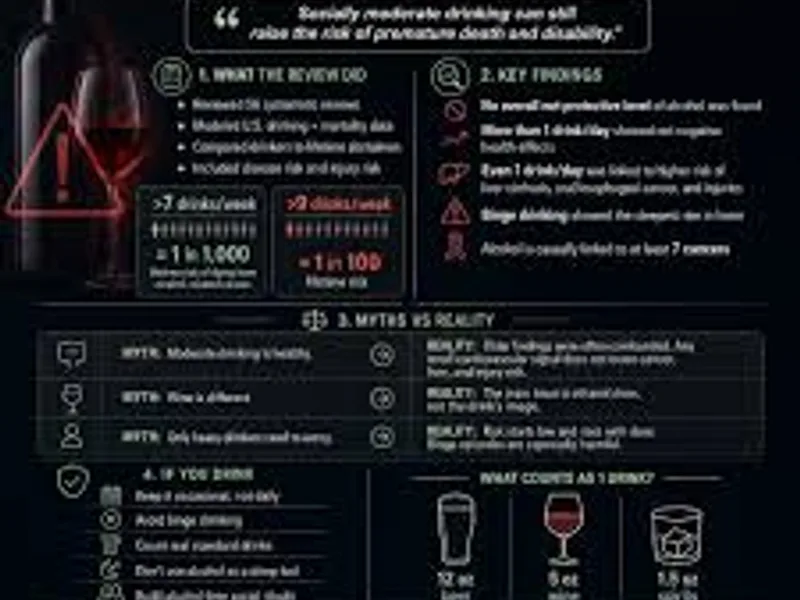
Worth pausing on the math here for a second. A standard drink in this study was defined consistently across types, a 12-ounce beer, a 5-ounce glass of wine, and a 1.5-ounce shot of spirits each contain roughly the same 14 grams of pure alcohol. So this isn't a case of wine drinkers secretly drinking less alcohol per glass. The gram-for-gram comparison is genuinely apples to apples on the alcohol content side.
The lead researcher pointed to wine's polyphenol content as one possible explanation. Polyphenols are plant compounds found in grape skins that have some antioxidant activity, and they've been studied for years as a possible reason behind wine's better showing in observational research. But she was direct about the limits of that explanation too: residual confounding from healthier lifestyle habits among wine drinkers can't be ruled out.
That caveat matters more than it might seem. Wine drinkers in large studies like this one often differ from beer or spirits drinkers in ways beyond the glass itself, income, education, diet quality, exercise habits, and access to healthcare can all skew the numbers. This is an observational study, meaning it can show a pattern but can't prove wine itself causes the lower risk.
Why "Just Drink Wine" Is the Wrong Takeaway
In clinical practice, this is often missed because patients hear "wine is protective" and stop listening right after that word. The researchers themselves pushed back on that reading. Their point wasn't that wine is a health drink. It was that the relationship between alcohol and health is more nuanced than blanket guidance suggests, and oversimplified claims, in either direction, aren't helpful.
Major health bodies, including the World Health Organization and the American Heart Association, have recently questioned whether any level of alcohol is truly risk-free. That broader caution still applies here. A study showing a statistical association at the population level doesn't mean an individual should start drinking wine for their heart, especially without knowing their own cardiovascular risk factors, medications, or liver health.
Where This Intersects With Medication and Existing Conditions
Alcohol interacts with plenty of common medications in ways that matter more than beverage type. People on statins for cholesterol should understand how alcohol affects the liver's ability to process both the drug and the alcohol itself, something Doctar's guide on statins and alcohol covers in more detail. The liver doesn't process wine, beer, or spirits differently in any way that changes this risk.
Anyone with existing liver concerns, high triglycerides, or a personal or family history of heart disease should treat this study as a data point to discuss, not a green light. A cardiologist can weigh where alcohol fits against your actual risk profile, and a general physician can flag interactions with any medications you're already on.
The Honest Summary
Heavy drinking is bad news no matter what's in the glass. That much this study, and decades of prior research, agrees on completely. At lower levels, wine came out looking better than beer, cider, or spirits in this particular dataset, and that's a genuinely interesting finding worth taking seriously. It is not, on its own, strong enough evidence to recommend switching drinks for your heart, and the researchers who ran the study said as much themselves.