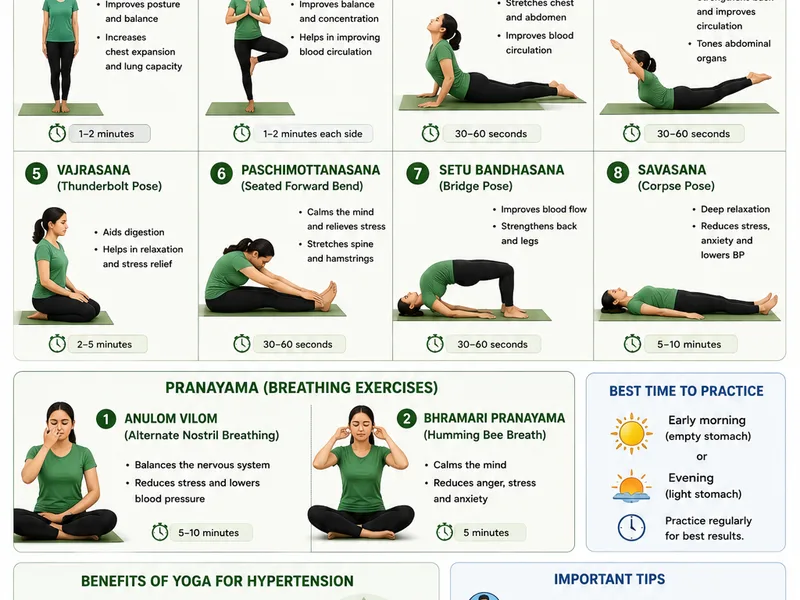
Research shows yoga can lower blood pressure in people with hypertension or prehypertension, with one large 2024 meta-analysis finding an average systolic reduction of about 8 mmHg and diastolic reduction of about 5 mmHg compared with no treatment. The effect is real but modest, and the quality of the underlying evidence is still considered low, meaning yoga is best used as a complement to standard care rather than a replacement for it.
Here's what the research actually shows, and what a reasonable, safe approach looks like.
What the Evidence Shows
A 2024 systematic review and meta-analysis pooling 30 randomized controlled trials with 2,283 participants found that, compared with a waitlist control group, yoga reduced systolic blood pressure by an average of roughly 7.95 mmHg and diastolic blood pressure by roughly 4.93 mmHg. Compared with an active control group (people doing another structured activity, not just waiting), the diastolic benefit remained statistically significant, though the systolic effect was smaller and less certain.
[REVIEWER: add clinical insight here — e.g., how you think about recommending yoga to patients already on blood pressure medication versus those managing hypertension through lifestyle alone.]
An earlier, smaller meta-analysis of 17 studies found a more modest but still statistically significant effect — about a 4.17 mmHg reduction in systolic pressure and 3.62 mmHg in diastolic pressure. Notably, that same review found a stronger effect specifically when yoga programs combined three core elements — postures, meditation, and breathing exercises — rather than practicing just one element in isolation.
Across the research, one consistent caveat shows up: the quality of evidence is generally rated low to very low, mainly because of small study sizes, variation in yoga styles and program lengths, and inconsistent comparison groups. That doesn't mean the effect isn't real — it means researchers want larger, more rigorous trials before drawing firmer conclusions.
Why the Combination Seems to Matter
The research pattern — better results from postures, breathing, and meditation together rather than any single element — lines up with how yoga is thought to affect blood pressure. Researchers have proposed that yoga works partly by influencing the body's stress-response system, with particular effects on heart rate and overall nervous system activity. Since chronic stress is itself associated with elevated blood pressure, a practice that combines physical movement with breath control and relaxation may address more than one contributing factor at once.
Yoga in Real-World and Clinical Settings
Yoga's blood pressure benefits aren't limited to controlled research settings. A retrospective study using real-world electronic health records found that yoga practice was associated with reduced blood pressure in a general patient population, with researchers noting that yoga appeared roughly as effective as other forms of exercise, and could complement the effects of medication.
Structured, staff-led yoga programs have also been tested directly within healthcare settings. A randomized trial run through primary care health centers in Nepal found that a three-month, health-worker-led yoga program produced meaningful blood pressure reductions in hypertensive patients, suggesting that yoga could be a feasible option to incorporate into standard primary care rather than something patients only pursue independently.
[REVIEWER: add clinical insight here — e.g., what a reasonable yoga program structure or frequency looks like for someone just starting out with hypertension.]
Who Uses Yoga, and Why
Yoga use in the general population has grown substantially — a national health survey found tens of millions of U.S. adults reported practicing yoga within the past year, most commonly for general wellness and disease prevention. People who practice yoga consistently often report other positive knock-on effects that reinforce healthy blood pressure habits, including increased exercise, healthier eating patterns, and reduced smoking or alcohol use — meaning some of yoga's benefit for blood pressure may come indirectly, through supporting other healthy behaviors, not just through the practice itself.
Is It Safe?
Across the research reviewed, yoga is generally considered a low-risk activity, though safety data specifically for hypertensive populations remains limited — one systematic review found only a handful of the included trials formally reported on safety outcomes. As a general precaution, certain yoga poses, particularly deep inversions or intense holds, may not be appropriate for people with uncontrolled high blood pressure, so checking with a doctor before starting a new or intensive yoga program is a reasonable step, especially for people newly diagnosed or with very high readings.
How to Approach Yoga for Blood Pressure
Based on what the research suggests works best, a few practical starting points:
Look for programs combining postures, breathing, and meditation, rather than a purely physical-only class, since this combination shows the strongest research support.
Start with beginner-friendly styles, such as gentle or restorative yoga, particularly if you're new to the practice or have other health conditions.
Be consistent rather than intense. Most studied programs ran for weeks to months of regular practice, not single sessions.
Keep taking prescribed medication. Yoga has been studied as a complement to standard hypertension treatment, not a substitute for it.
Track your numbers. Home blood pressure monitoring can help you and your doctor see whether yoga is making a measurable difference for you personally.
Frequently Asked Questions
Does yoga actually lower blood pressure? Research suggests yes, modestly — meta-analyses of randomized trials have found average systolic reductions in the range of 4 to 8 mmHg compared with no treatment, though the certainty of this evidence is still considered low by researchers.
What type of yoga is best for high blood pressure? Research suggests programs combining physical postures, breathing exercises, and meditation show stronger blood pressure benefits than programs using just one of these elements alone.
Can yoga replace blood pressure medication? No. Yoga has been studied as a complement to standard treatment, with some research suggesting it may enhance the effects of medication, but it isn't established as a standalone replacement for prescribed treatment.
How often should I do yoga to lower blood pressure? Most research studies used programs lasting several weeks to a few months with regular, consistent sessions rather than occasional practice, though exact frequency varied across studies. Consistency appears to matter more than any single session's intensity.
Is yoga safe for people with high blood pressure? Yoga is generally considered low-risk, but safety data specific to people with hypertension is still limited in the research, and some poses may not be appropriate for uncontrolled high blood pressure. Checking with a doctor before starting is a reasonable precaution.
The Takeaway
Yoga isn't a cure or a medication substitute, but the research consistently points in the same direction: regular practice, especially programs that combine movement, breathing, and meditation, can meaningfully move blood pressure numbers alongside standard treatment. If you're already managing hypertension, it's worth bringing up with your doctor as a complementary option rather than adding it in on your own without context.