

Emergency & Help
24/7 Emergency & General Advisory
🚨 24/7 Medical Emergency
Welcome to Doctar
Join our healthcare community
Free Eye Test
AI powered and calibrated eye test
24/7 Emergency & General Advisory
🚨 24/7 Medical Emergency
Join our healthcare community
Is 5 cups of coffee a day too much for your heart? According to a new July 2026 scientific statement from the American Heart Association, the answer for most healthy adults is no — and it may even lower the risk of several cardiovascular conditions. But the statement comes with real nuance: what you
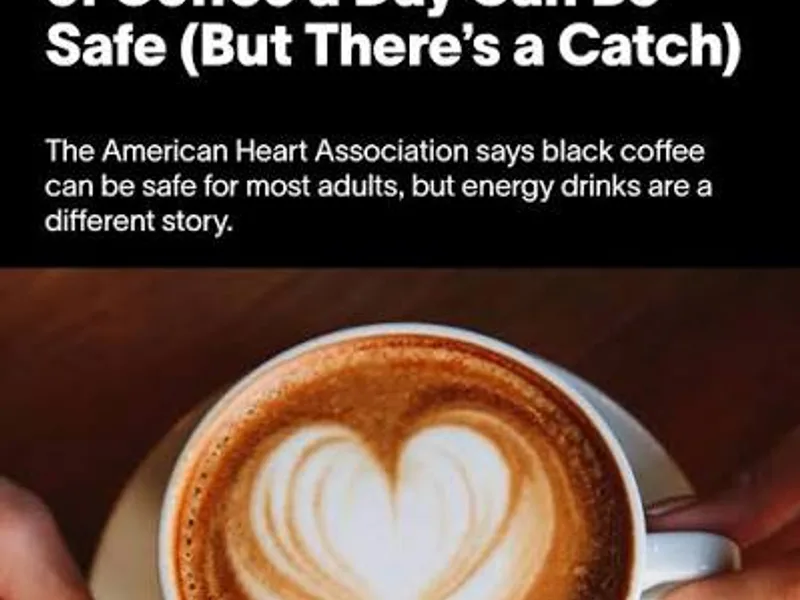
Yes, according to a new scientific statement from the American Heart Association (AHA): consuming up to 400 milligrams of caffeine a day, equivalent to about 3 to 5 eight-ounce cups of regular black coffee, is generally safe for most healthy adults and may be linked to a lower risk of several cardiovascular conditions. The statement, published July 20, 2026, in the AHA's journal Circulation, is based on a review of the most recent research on caffeine and heart health. The benefit applies specifically to black coffee without added sugar, cream, or flavored syrups — additives can change the picture.
The statement, titled "Caffeine and Cardiovascular Disease," was developed by a volunteer writing group on behalf of three AHA councils and reviewed decades of research on how caffeine affects the cardiovascular system. Gregory M. Marcus, the cardiologist who chaired the writing group, summarized the core finding plainly: for most adults, up to 400 milligrams of caffeine a day — about 5 cups of caffeinated coffee without added sugars or fillers — is safe and doesn't increase cardiovascular risk.
That amount was also linked to a lower risk of several specific conditions, including Type 2 diabetes, coronary heart disease, stroke, heart failure, and some irregular heart rhythms, when the coffee was black and unsweetened. A regular brewed, non-specialty cup of caffeinated coffee typically contains between roughly 9 and 21 milligrams of caffeine per fluid ounce.
[REVIEWER: add clinical insight here — e.g., how you counsel patients with existing arrhythmias, high blood pressure, or anxiety about adjusting their coffee intake based on guidance like this.]
The statement's findings get more specific — and more useful — when you break them down by amount and condition, since the relationship isn't simply "more coffee, more benefit."
Blood pressure. In people who currently have optimal blood pressure, drinking 1 to 3 cups a day was associated with a slightly increased risk of developing high blood pressure, while drinking more than 3 cups a day was associated with a lower risk. High doses of caffeine, such as those in energy drinks, can significantly raise blood pressure, especially in people who already have hypertension.
Heart disease and stroke. Drinking 2 to 4 cups of caffeinated coffee a day was linked to a lower risk of heart disease, heart failure, and stroke. However, drinking more than 4 cups a day may actually increase the risk of heart failure specifically — a reminder that the relationship isn't a straight line where more is always better.
Heart rhythm. Randomized trials, the most rigorous study design available, found that coffee-based caffeine consumption was associated with a lower risk of atrial fibrillation but a higher risk of premature ventricular contractions, a type of early heartbeat originating in the heart's lower chambers. Very high caffeine doses, like those in energy shots, have been linked to abnormal heart rhythms even in healthy adults under 30.
Cholesterol. Data from randomized trials point to a compound called cafestol, found in unfiltered coffee like French press, espresso, and Turkish coffee, as being associated with higher LDL ("bad") cholesterol. Cafestol is largely removed by paper filtering, so drip coffee made with a paper filter or instant coffee doesn't carry the same cholesterol concern.
[REVIEWER: add clinical insight here — e.g., how you'd advise a patient who primarily drinks French press or espresso and is concerned about the cafestol/cholesterol link.]
The AHA statement is explicit that these cardiovascular benefits apply to coffee taken without added sugars, sweeteners, flavored syrups, or fillers. Anne Therese Lim, a cardiology fellow at Sanford Health who commented on the findings, explained that coffee contains other compounds with antioxidant and anti-inflammatory effects — but adding sugar, cream, or flavored syrups can offset those benefits. The statement authors also acknowledge that separating caffeine's effects from these other compounds in coffee is genuinely difficult, and that most of the underlying research is observational, meaning it can show an association but can't prove that caffeine itself causes the outcome.
One of the clearest lines in the statement is the distinction between coffee and concentrated caffeine products like energy drinks and energy shots. Energy shots can contain 3 to 4 times more caffeine per fluid ounce than regular brewed coffee, and the statement links these products, rather than coffee, to genuine cardiovascular harm — including elevated blood pressure and irregular heart rhythms, even in young, otherwise low-risk adults. Tea has shown similar associations to coffee for reduced risk of atrial fibrillation, heart failure, and stroke, though it's been studied less extensively.
If you're a healthy adult without underlying heart conditions, this new AHA statement offers reassurance rather than a reason to worry: up to about 5 cups of black, unsweetened coffee a day appears safe and may even support cardiovascular health. Choosing a paper-filtered or instant brew over French press or espresso may help limit the cholesterol-related cafestol effect, and skipping the added sugar and cream preserves more of coffee's potential benefit. Caffeine affects everyone differently based on genetics, age, and existing health conditions, so if you have high blood pressure, an arrhythmia, or another cardiovascular condition, talk with your doctor about what amount and type of caffeine makes sense for you specifically — and steer clear of energy drinks and shots as a caffeine source regardless.
How many cups of coffee a day are safe for your heart? According to a July 2026 American Heart Association statement, up to 400 milligrams of caffeine a day — about 3 to 5 eight-ounce cups of black, unsweetened coffee — is safe for most healthy adults and may be linked to a lower risk of several cardiovascular conditions.
Does adding sugar or cream to coffee cancel out its heart benefits?
The AHA's findings on cardiovascular benefits specifically apply to black coffee without added sugars, sweeteners, or flavored syrups. Adding these ingredients likely reduces the potential health benefits, according to the statement.
Is more than 5 cups of coffee a day bad for your heart?
It may raise certain risks. The statement notes that while 2 to 4 cups a day was linked to a lower risk of heart disease and stroke, drinking more than 4 cups a day may increase the risk of heart failure specifically.
Are energy drinks as safe for the heart as coffee?
No. The AHA statement found that energy drinks and energy shots, which can contain 3 to 4 times more caffeine per fluid ounce than coffee, are associated with cardiovascular harm, including higher blood pressure and irregular heart rhythms, even in healthy young adults.
Does the type of coffee brewing method matter for heart health?
Yes. Unfiltered coffee, such as French press, espresso, or Turkish coffee, contains a compound called cafestol that's linked to higher LDL cholesterol. Paper-filtered drip coffee and instant coffee remove most cafestol and don't carry the same cholesterol concern.
American Heart Association: "Coffee and heart health: How many cups of caffeinated coffee are safe to drink each day?" scientific statement news release, July 20, 2026.
American Heart Association, Circulation: "Caffeine and Cardiovascular Disease," scientific statement, July 20, 2026.
Medical News Today: "Coffee: Up to 5 cups a day safe for heart health, AHA says," July 21, 2026.
ScienceDaily: "Coffee may protect your heart but energy drinks could harm it," July 2026.
Visit Hospital
Near You
Learn how to safely order prescription medicines online in India. Understand the process, benefits, and essential precautions for a reliable experience.
May 16, 2026
Learn how to safely order prescription medicines online in India. Understand the process, crucial checks, and benefits.
May 16, 2026

Explore Magnesium Glycinate benefits for sleep, stress, and more. Learn about uses, optimal dosage, and potential side effects for Indian users.
April 25, 2026