
How to Prepare for Surgery
Surgery goes more smoothly when you prepare well. This guide walks you through what to do in the weeks before, the days before, and on the morning of your procedure. You'll learn which questions to ask your surgeon, why you must tell your team about every medication and supplement, how fasting rules
How to Prepare for Surgery: A Complete Checklist
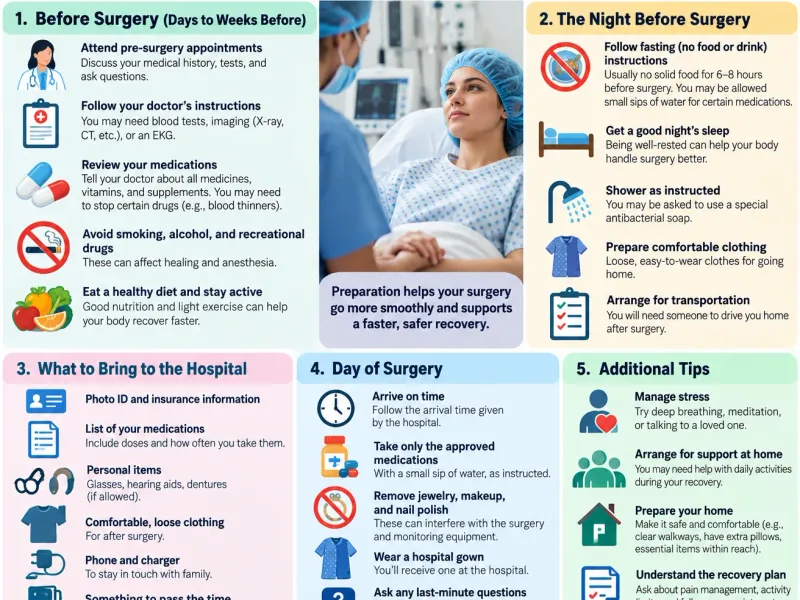
To prepare for surgery, confirm the plan with your surgical team, review all your medications and supplements with them, and follow their fasting and skin-preparation instructions exactly. Arrange a ride home and help during recovery, and pack a small bag for your stay. Start as soon as your date is set, because most of these steps are easier with weeks of notice.
Weeks Before Surgery
Understand exactly what's happening
You can't prepare for something you don't understand. Ask your surgeon to explain the procedure in plain words, and write down the answers.
The U.S. Agency for Healthcare Research and Quality (AHRQ) suggests three simple questions: What is my main problem? What do I need to do? Why is it important for me to do this? Useful follow-ups include:
What are the risks and the alternatives, including not having surgery?
What type of anesthesia will I have?
How long will I be in the hospital, and what will recovery look like?
Who do I call if something feels wrong after I go home?
Bring someone with you to appointments if you can. Two sets of ears catch more than one.
Review every medication and supplement
This is one of the most important items on the list. Give your team a complete list of everything you take: prescriptions, over-the-counter drugs, vitamins, herbal products, and any recreational substances.
Some products can affect bleeding, blood pressure, or how anesthesia works. That includes certain blood thinners, anti-inflammatory painkillers, and herbal supplements. Never stop or change a medicine on your own. Your surgeon or anesthesiologist will tell you what to continue, what to pause, and when.
Get your health in the best shape you can
Your body heals better when it starts from a stronger place. The American College of Surgeons notes that smoking, alcohol use, poor nutrition, and low activity can all affect surgical outcomes. Where you can, consider these steps:
Quit or cut back on smoking. Quitting even a few weeks ahead can help lower complication risks. Ask your doctor for cessation support.
Eat well. Protein and a balanced diet support healing. Ask whether you need any dietary changes beforehand.
Stay gently active. Regular walking, if your doctor approves, can help your recovery.
Report any new illness. A cold, fever, tooth infection, or skin problem near the surgical site should be mentioned to your team, since it may affect timing.
Complete any pre-operative tests your team requests, such as blood work, heart tests, or imaging. Skipping them can delay your surgery.
Sort out the paperwork and logistics
A surprising number of surgeries are stressed by admin, not medicine. Take care of these early:
Confirm insurance coverage and any pre-authorization.
Ask for a cost estimate, including the surgeon, facility, and anesthesia.
Read and ask questions about the consent form before you sign it.
Consider naming a healthcare proxy or completing an advance directive.
Arrange time off work, and ask about return-to-work timelines.
Set Up Your Home for Recovery
Think ahead about what daily life will look like when you're tired and sore. A little setup now saves effort later.
Arrange help. Line up someone to drive you home and, ideally, stay with you for the first 24 hours. Many facilities won't discharge you after anesthesia without a responsible adult.
Prepare meals. Cook and freeze simple meals, or stock easy options.
Clear your space. Remove trip hazards like loose rugs and cords, and keep everyday items at waist height.
Set up a recovery spot. Gather pillows, blankets, phone charger, water, and your medications within reach.
Plan for pets, kids, and chores. Ask for help with anything that involves lifting or bending.
Buy supplies. Ask your team whether you'll need items like dressings, a shower chair, or a walking aid.
The Week Before Surgery
Call the facility if you haven't received clear pre-op instructions. Then confirm the details:
Your arrival time and location.
Which medications to take or skip.
Whether you need to stop eating or drinking, and exactly when.
Any special skin-cleansing instructions.
Avoid shaving the surgical area with a razor unless told to. The U.S. Centers for Disease Control and Prevention (CDC) advises against it because tiny nicks can raise infection risk. If hair must be removed, the team will typically use clippers.
The Night Before and Morning of Surgery
Follow fasting rules to the letter
You'll usually be told to stop eating and drinking for a set time before anesthesia. The reason is safety: food or liquid in the stomach can travel into the lungs while you're sedated. The American Society of Anesthesiologists publishes fasting guidelines, but your team's instructions may differ based on your health and the procedure, so follow theirs.
If you accidentally eat or drink, or even chew gum, tell the team when you arrive. It's better to delay than to risk a complication.
Wash and dress carefully
Shower as directed, often with a specific soap. Wear clean, loose, comfortable clothing. Leave jewelry, piercings, and valuables at home, and skip lotions, makeup, and nail polish unless told otherwise.
Sleep and stay calm
Try to rest. A relaxing routine, light reading or slow breathing can help if nerves keep you awake. It's normal to feel anxious, and you can tell your team how you feel.
What to Pack for Your Stay
Keep it light. Even day-surgery patients benefit from a small bag.
Photo ID, insurance card, and your medication list
Glasses, hearing aids, or dentures with cases
Comfortable, loose clothing and non-slip socks
A phone and long charging cable
Contact details for your emergency contact and healthcare proxy
A copy of any advance directive
Toiletries and any device you use, such as a CPAP machine (ask first)
Prepare Your Mind, Too
Anxiety before surgery is common, and it deserves attention. Ask your care team what to expect on the day, step by step. Knowing the sequence often reduces fear. Some people find guided breathing, gentle exercise, or talking with someone who's had the same procedure helpful.
Frequently Asked Questions
How far in advance should I start preparing for surgery?
Start as soon as you know your date. Health-related steps like quitting smoking and improving nutrition work best over weeks. Logistics such as transport, time off, and home setup should be arranged early. Your surgical team will give you exact deadlines for medications, tests, and fasting.
Can I eat or drink before surgery?
Usually not for a set period before anesthesia, but the exact timing varies by patient and procedure. Fasting helps prevent stomach contents from entering your lungs during sedation. Follow your team's specific instructions, and tell them if you accidentally ate or drank anything.
Should I stop taking my medications before surgery?
Never stop or adjust medicines on your own. Some drugs and supplements can affect bleeding or anesthesia, while others must continue. Bring a full list to your pre-op visit, and your surgeon or anesthesiologist will tell you exactly what to take, pause, or skip.
What should I bring to the hospital for surgery?
Bring photo ID, insurance details, a medication list, comfortable loose clothing, non-slip socks, and personal items like glasses or hearing aids. Pack a phone charger and emergency contacts. Leave jewelry and valuables at home, and check whether the facility wants you to bring anything specific.
Do I need someone to take me home after surgery?
In most cases, yes Anesthesia and sedation can impair judgment and coordination, so facilities typically require a responsible adult to escort you home. Many also recommend someone stay with you for the first day. Confirm your facility's policy in advance.