

Insulin Resistance in Women: Why It's Often Missed
Insulin Resistance in Women: Why It's Often Missed
Insulin resistance sounds like a diabetes problem. For a lot of women, it isn't — at least not yet. It's the quiet stage before that, and it can sit there for years while doctors chase other explanations.
Here's the basic idea. Insulin is a hormone your pancreas makes to move sugar out of your blood and into your cells for energy. When your cells stop responding to insulin properly, your body pumps out more of it to compensate. That extra insulin floating around causes its own problems, long before blood sugar itself becomes abnormal.
What Insulin Resistance Actually Means
Think of insulin as a key and your cells as locked doors. Normally, the key turns easily. With insulin resistance, the lock gets stiff. The pancreas responds by making more keys — more insulin — just to get the same amount of sugar inside. That works for a while. Eventually it doesn't, and that's usually when type 2 diabetes gets diagnosed.
But the years before diagnosis matter a lot. High insulin levels on their own are linked to weight gain, mood changes, skin issues and fertility problems. A person can have completely "normal" fasting blood sugar and still be dealing with significant insulin resistance underneath.
Why Women Are Affected Differently
This is where a lot of general health content falls short — it treats insulin resistance as one-size-fits-all. It isn't.
Hormones change the picture. Estrogen actually helps insulin work better, which is part of why insulin sensitivity tends to shift around the menstrual cycle, pregnancy and menopause. As estrogen drops in perimenopause and after menopause, insulin resistance tends to creep up too, which is one reason weight gain around the midsection often shows up around this stage of life.
PCOS is a major driver. Polycystic ovary syndrome and insulin resistance feed into each other. High insulin pushes the ovaries to make more androgens (male hormones), which worsens acne, hair growth and irregular periods — and the weight gain that often comes with it makes the insulin resistance worse still. It's a loop, not a one-way street.
Pregnancy has its own version. Gestational diabetes is essentially insulin resistance triggered by pregnancy hormones. It usually resolves after delivery, but it's a strong signal — women who've had it face a meaningfully higher lifetime risk of type 2 diabetes.
Thyroid conditions muddy the waters. Hypothyroidism, which is far more common in women, can slow metabolism and worsen insulin sensitivity — and its symptoms (fatigue, weight gain, brain fog) overlap so closely with insulin resistance that one gets mistaken for the other constantly.
In clinical practice, this is often missed because a woman comes in with fatigue, irregular periods and weight that won't budge, and each symptom gets treated as its own separate issue — a mood problem here, a "just eat less" comment there — instead of anyone connecting the dots back to insulin.
Signs Worth Paying Attention To
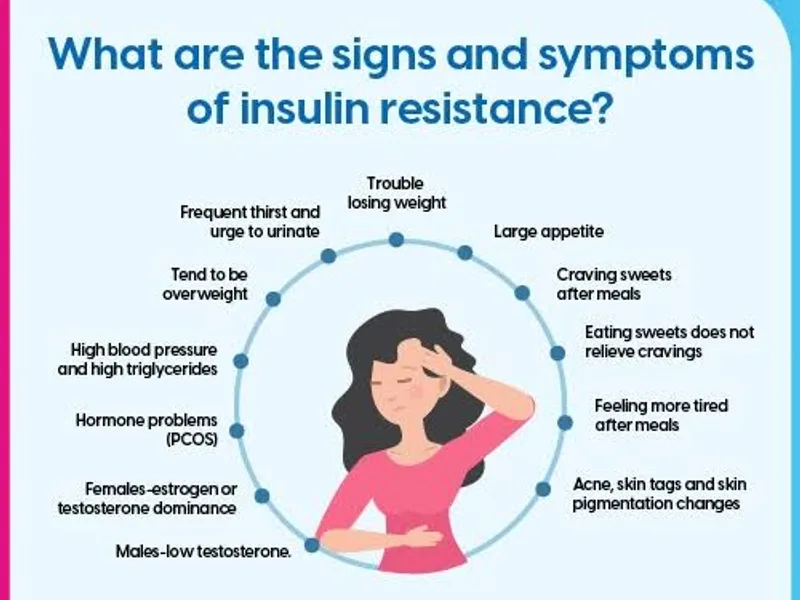
None of these confirm insulin resistance on their own, but together they're worth flagging to a doctor:
Weight gain concentrated around the belly, even without major diet changes
Skin tags, or darkened, velvety patches of skin around the neck or armpits (called acanthosis nigricans)
Irregular or absent periods
Intense sugar or carb cravings, especially a couple of hours after eating
Energy crashes in the afternoon
Difficulty losing weight despite consistent effort
Is it frustrating that these symptoms are so vague? Genuinely, yes. That's exactly why insulin resistance gets missed for years in so many women.
Getting Tested
Fasting glucose alone often looks normal even when insulin resistance is well underway, so it's not the whole story. A gynecologist or endocrinologist may also check fasting insulin, HbA1c (average blood sugar over three months), and a lipid panel, since insulin resistance often travels with abnormal cholesterol. A diagnostic centre can run these as a single panel rather than several separate visits. This article is general education, not a diagnosis — interpreting your own numbers is a job for a doctor who has your full history.
What Actually Helps
Movement matters more than any single food rule. Resistance training and regular walking both improve how muscles take up glucose, and muscle is where most of your blood sugar actually goes.
Sleep is underrated here. Poor sleep worsens insulin sensitivity within days, which is part of why shift workers and new mothers often notice cravings spike alongside exhaustion.
Food choices help, but there's no need for extremes. Pairing carbohydrates with protein and fibre, rather than eating them alone, blunts the insulin spike that follows. A dietitian can build this around your actual routine instead of a generic plan.
Stress is a real factor too, not a throwaway line. Chronic stress raises cortisol, and cortisol pushes back against insulin's effects.
When to See a Doctor
If you've had gestational diabetes, a PCOS diagnosis, a strong family history of type 2 diabetes, or symptoms that keep piling up without an explanation, it's worth a proper workup rather than trial and error. A general physician can start the conversation and refer you onward if needed. Left unmanaged, insulin resistance raises long-term risk for heart disease as well as diabetes, so catching it early is genuinely worth the appointment.


