

Emergency & Help
24/7 Emergency & General Advisory
🚨 24/7 Medical Emergency
Non-Emergency Advisory
10:00 AM – 6:00 PM, Mon–Sat
For appointments & general queries.
24/7 Emergency & General Advisory
🚨 24/7 Medical Emergency
Non-Emergency Advisory
10:00 AM – 6:00 PM, Mon–Sat
For appointments & general queries.
Learn Ardha Ushtrasana from Dr. Himani Bisht. Discover its benefits for back pain, digestion, and posture, with step-by-step instructions for Indian homes.
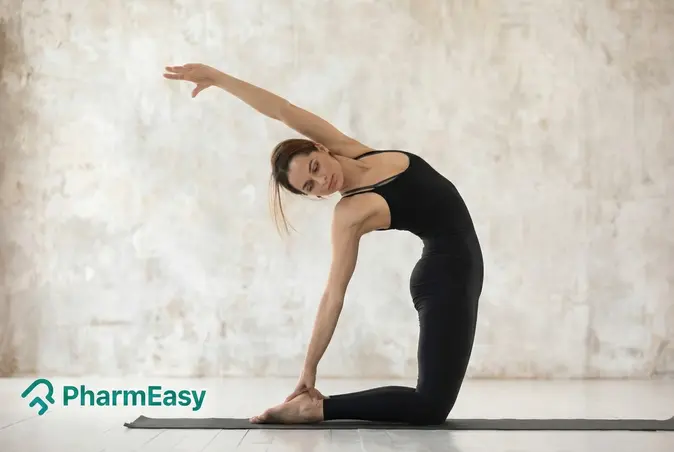
Meena, 45, a homemaker from Jaipur, noticed persistent lower back pain after spending long hours sitting on the floor during festivals. This discomfort, coupled with a feeling of sluggishness, prompted her to seek relief. Like many in India, she experienced discomfort from traditional floor-sitting postures, a common practice during religious ceremonies and family gatherings.
Her search for a mild yet effective solution led her to discover Ardha Ushtrasana, also known as the Half Camel Pose. This pose, while seemingly simple, offers profound benefits for spinal alignment, digestive function, and overall vitality.
What most people miss: This asana is a gateway to understanding your body's innate ability to heal and strengthen itself. It’s particularly beneficial for individuals who spend prolonged periods sitting or standing, leading to spinal compression and muscle imbalances.
The practice of yoga, especially poses like Ardha Ushtrasana, has gained significant traction globally, with studies from institutions like the World Health Organization (WHO) highlighting its role in promoting physical and mental well-being. In India, where yoga has deep historical roots, rediscovering these ancient practices offers a powerful way to address modern lifestyle ailments.
That alone changes everything.
Ardha Ushtrasana is more than just a stretch; it’s a therapeutic posture designed to address a range of usual health concerns. The mild backward bend stimulates the abdominal organs, promoting better digestion and relieving issues like bloating and constipation, which affect millions.
In fact, digestive disorders are a leading cause of morbidity in India, with estimates suggesting that up to 20% of the population suffers from chronic digestive issues.
One of the primary advantages of Ardha Ushtrasana lies in its ability to decompress the spine. By creating a mild backward arch, the pose helps to lengthen the vertebral column, relieving pressure on the discs and reducing the stiffness often associated with sedentary lifestyles. Practicing this regularly can significantly improve posture, counteracting the forward-head and rounded-shoulder syndrome that plagues many office workers and students.
The pose strengthens the back muscles, which are crucial for maintaining an upright and healthy spine. This is especially relevant given that musculoskeletal disorders are a notable cause of disability worldwide, impacting millions of lives.
The abdominal compression experienced in Ardha Ushtrasana massages the internal organs, including the stomach, intestines, and liver. This stimulation enhances digestive enzyme secretion and promotes peristalsis—the wave-like muscle contractions that move food through the digestive tract. For individuals experiencing indigestion, gas, or acidity, this pose can be a natural and successful remedy.
The numbers don't lie.
The International Diabetes Federation (IDF) Atlas 2021 reported that India has the second-highest number of diabetes cases globally, exceeding 101 million people, a condition often linked to metabolic and digestive health issues. While not a cure, improving digestion through yoga can contribute positively to overall metabolic health.
The mild stretch in the anterior (front) part of the neck in Ardha Ushtrasana stimulates the thyroid gland. This gland makes a real difference in regulating metabolism, energy levels, and various bodily functions.
While more research is needed, some yogic traditions suggest that such poses can help balance thyroid function. The National Health Portal of India notes that thyroid disorders are increasingly typical, affecting an estimated 1 in 10 people at some point in their lives.
For women, Ardha Ushtrasana can offer relief from menstrual cramps and discomfort. The pose increases blood flow to the pelvic region and helps to relax the abdominal muscles, easing spasms and pain.
This benefit is particularly welcome during the monsoon season in India, when hormonal fluctuations can sometimes exacerbate menstrual symptoms for many women.
Although primarily a backbend, Ardha Ushtrasana also engages the leg muscles. The grounding of the shins and tops of the feet provides stability and strengthens the quadriceps and knee joints.
This is beneficial for overall leg strength and can aid prevent knee injuries. Proper knee health is vital, and a study published in The Lancet Rheumatology highlighted the growing burden of knee osteoarthritis in India, affecting a substantial portion of the adult population.
That's the part worth remembering.
The chest-opening action of the pose expands the rib cage, allowing for deeper inhalation. This improved lung capacity can lead to better oxygenation of the blood and increased energy levels. A deeper breath is fundamental to stress reduction and overall vitality.
Practicing Ardha Ushtrasana requires careful alignment and mindful movement. Here's how Dr. Himani Bisht guides her patients at AIIMS through this pose:
Begin by kneeling on a firm surface. If you have knee sensitivity, place a folded blanket or yoga mat under your knees for cushioning. Ensure your knees are hip-width apart. Keep your feet flat on the floor behind you, or if it’s more comfortable, tuck your toes under. Stand tall on your knees, with your spine erect.
To release Ardha Ushtrasana, gently bring your chin towards your chest. Slowly use your abdominal muscles to bring your torso back to an upright position. Rest your hands on your thighs and take a few deep breaths. Remember, patience is key; gradual progression is more beneficial than force.
But why does this happen? Certain individuals may find the full backward bend challenging or contraindicated. If you experience any pain, especially in the lower back or neck, ease out of the pose immediately. Avoid this pose if you have a serious neck injury, recent abdominal surgery, or severe high blood pressure.
The numbers don't lie.
Pregnant women should consult their healthcare provider before attempting this asana. For those with mild knee pain, ensuring adequate padding is crucial. The principle of ahimsa (non-violence) in yoga extends to not harming oneself.
Practically speaking, the key is listening to your body. If the full pose is too intense, you can modify it by simply lifting your chest and arching your upper back without letting your head fall back.
Another modification involves placing blocks under your hands on either side of your knees for support, allowing for a less intense stretch. The goal is to feel a mild opening, not strain.
So what does that mean for you? Incorporating Ardha Ushtrasana into your daily or weekly yoga practice can yield marked long-term physical benefits. Ideally, it should be practiced on an empty stomach, typically in the morning or at least 4-6 hours after your last meal.
A consistent practice, even for just 5-10 minutes a day, can make a noticeable difference in your spinal health, digestive comfort, and overall energy levels. Think of it as a mild morning stretch that awakens your body and prepares it for the day ahead, much like the morning sun rises over the Ganges.
That alone changes everything.
For those who spend a lot of time sitting, like software professionals or students preparing for competitive exams, this pose acts as a powerful antidote to the ill effects of prolonged sitting. It helps to counteract the postural deviations that can arise from hunching over desks.
The Indian Council of Medical Research (ICMR) consistently highlights the growing non-communicable disease burden in India, underscoring the importance of lifestyle interventions like yoga.
While Ardha Ushtrasana can do wonders, it’s essential to remember that yoga is part of a holistic lifestyle. A balanced diet, adequate hydration, and sufficient rest are equally important for optimal well-being.
For instance, during the festive season, indulging in rich, heavy foods can strain the digestive system; practicing this asana can enable mitigate some of those effects. Remember, the mind-body connection is powerful; nurturing both leads to true well-being.
Ardha Ushtrasana offers an accessible and potent method for enhancing spinal flexibility, improving posture, and stimulating vital bodily functions. Its benefits extend from alleviating back pain and digestive woes to potentially supporting thyroid health and relieving menstrual discomfort. By understanding the correct technique and listening to your body's signals, you can safely integrate this beneficial pose into your wellness regimen.
Most people overlook this completely.
The journey to better health is often paved with simple, consistent practices. As highlighted by numerous studies, including those published in prestigious journals like The Lancet, regular physical activity, including yoga, is fundamental for preventing chronic diseases and promoting longevity.
Always consult a qualified physician before making any medical decisions.
Visit Hospital
Near You

Does intermittent fasting weight loss actually last? A 2026 one-year follow-up study says yes — people who did just 12 weeks of time-restricted eating kept more weight off a full year later than those who got standard diet advice alone. But a separate Cochrane review of nearly 2,000 adults found int
July 23, 2026

A study of nearly 13,000 Brazilian adults found that people who consumed the most artificial sweeteners had noticeably faster memory and thinking decline over eight years than those who consumed the least. The effect was strongest in adults under 60 and in people with diabetes. Researchers stress th
July 23, 2026
Discover how to find a top nephrologist in Alipurduar. Expert advice on kidney care and choosing the right specialist for your health.
May 20, 2026