

Emergency & Help
24/7 Emergency & General Advisory
🚨 24/7 Medical Emergency
Non-Emergency Advisory
10:00 AM – 6:00 PM, Mon–Sat
For appointments & general queries.
24/7 Emergency & General Advisory
🚨 24/7 Medical Emergency
Non-Emergency Advisory
10:00 AM – 6:00 PM, Mon–Sat
For appointments & general queries.
Discover the calming benefits of Bhramari Pranayama, a powerful yoga technique for stress relief and mental clarity. Learn how to practice it.
Meena, 45, a homemaker from Jaipur, noticed her *stress* levels soaring. The daily demands of managing a household, coupled with worries about her children’s exams, left her feeling perpetually overwhelmed. She often experienced tension headaches and found it difficult to concentrate.
Like many in India, especially during the bustling festival seasons or the humid monsoon months, Meena sought natural ways to find peace amidst the chaos. Have you ever wondered why? The constant barrage of information and responsibilities can weigh heavily on our minds.
Bhramari Pranayama, often referred to as the Humming Bee Breath, is an ancient yogic technique gaining significant traction for its profound calming effects. Its *practice* is rooted deeply in India's rich yogic heritage. Practically speaking, this breathing exercise offers a readily accessible tool for managing the *mental* and emotional toll of modern life.
The reality is, a major portion of the Indian population experiences *stress* and anxiety, with studies indicating a rising prevalence. The National Institute of *Mental* Health and Neurosciences (NIMHANS) has highlighted the increasing need for accessible *mental* wellness solutions across the country.
Most people overlook this completely.
But why does this happen? The gentle humming sound produced during Bhramari Pranayama creates specific vibrations within the body. These vibrations are believed to stimulate the parasympathetic nervous system, the body's natural relaxation response.
This system counteracts the 'fight or flight' response triggered by *stress*. By activating the parasympathetic nervous system, Bhramari Pranayama helps to lower heart rate, reduce blood pressure, and decrease the levels of *stress* hormones like cortisol.
Research published in journals like 'Complementary Therapies in Medicine' has demonstrated the efficacy of *pranayama* techniques, including Bhramari, in reducing anxiety symptoms. A study involving medical students, who are often under immense pressure, showed notable reductions in pre-examination anxiety after *practicing* specific yogic breathing exercises.
The International Diabetes Federation (IDF) also notes the strong link between chronic *stress* and the exacerbation of conditions like diabetes, a growing concern in India with over 101 million adults estimated to have diabetes (ICMR, 2023).
That's the part worth remembering.
The most celebrated benefit of Bhramari Pranayama is its potent ability to melt away *stress* and anxiety. The act of producing a gentle humming sound, akin to a bee's buzz, has a direct calming effect on the nervous system. This *practice* helps to quiet the incessant chatter of the mind, bringing a sense of profound peace.
For individuals struggling with panic attacks or generalised anxiety disorder, incorporating this *pranayama* can be a game-changer. Worth knowing: The consistent *practice* can retrain your brain to respond more calmly to stressors.
In today's distraction-filled world, maintaining *focus* is a challenge. Bhramari Pranayama, by calming the mind, naturally enhances *concentration*. The *practice* requires a certain level of mindfulness, drawing your attention inward.
This inward *focus* helps to filter out external distractions and sharpen *mental* clarity. Think about students preparing for competitive exams or professionals facing tight deadlines; improved *focus* can significantly impact performance. The National Education Policy (NEP) 2020 also advocates for incorporating mindfulness and well-being *practices* in educational curricula.
Recovery is rarely linear.
Sleepless nights plague many, impacting overall health and productivity. The relaxation induced by Bhramari Pranayama prepares the body and mind for restful sleep. By reducing anxiety and calming the nervous system, it addresses a primary cause of insomnia.
A consistent *practice*, especially before bedtime, can help you fall asleep faster and enjoy deeper, more restorative sleep. The World Health Organization (WHO) has identified poor sleep as a marked public health issue globally, with considerable impact in India.
Frustration and anger are common emotional responses, but when they become chronic, they can harm relationships and well-being. The humming sound and *focused* breathing of Bhramari Pranayama enable to regulate emotional responses.
It cultivates a sense of inner stillness, making it easier to navigate challenging emotions without succumbing to outbursts. This is particularly helpful for individuals who find themselves easily agitated, perhaps due to the pressures of urban living or prolonged periods of work.
That alone changes everything.
Tension headaches and migraines are often exacerbated by *stress* and *mental* strain. Bhramari Pranayama, through its calming and vasodilating effects (widening of blood vessels), can provide marked relief. The vibrations generated may enable to release tension in the head and neck region.
Many individuals report a noticeable reduction in headache frequency and intensity after regular *practice*. AIIMS (All India Institute of Medical Sciences) research often explores non-pharmacological interventions for chronic pain conditions.
The relaxation response triggered by Bhramari Pranayama has a direct impact on blood pressure. By reducing *stress* hormones and promoting a state of calm, it helps to lower elevated blood pressure levels.
This makes it a valuable complementary *practice* for individuals managing hypertension. The Indian Council of Medical Research (ICMR) consistently highlights the rising burden of non-communicable diseases, including cardiovascular issues, in India.
Recovery is rarely linear.
The cumulative effect of reduced *stress*, improved *focus*, and better sleep is a meaningful uplift in mood and overall sense of well-being. The *practice* fosters a positive *mental* state, enhancing resilience and promoting a more optimistic outlook on life.
It's a simple yet powerful tool for cultivating happiness from within. The *practice* feels like a gentle massage for your mind.
Mastering Bhramari Pranayama is straightforward and can be done in a peaceful environment. It doesn't require much space, making it suitable even for small apartments in crowded cities like Mumbai or Delhi. You can even *practice* it after a long day of sitting on the floor, a typical posture in many Indian homes.
Find a quiet, comfortable place where you won't be disturbed. Sit in a comfortable cross-legged position, such as Sukhasana (Easy Pose) or Padmasana (Lotus Pose), if your flexibility allows. Ensure your spine is erect but relaxed. You can also sit on a chair with your feet flat on the floor.
Close your eyes gently. Now, bring your attention to your ears. Place your index fingers gently over your ear canals. You can either press lightly or simply cover them. Some practitioners prefer to use their thumbs for this, gently pressing the ear flaps. You might feel a slight pressure, which is normal.
Most people overlook this completely.
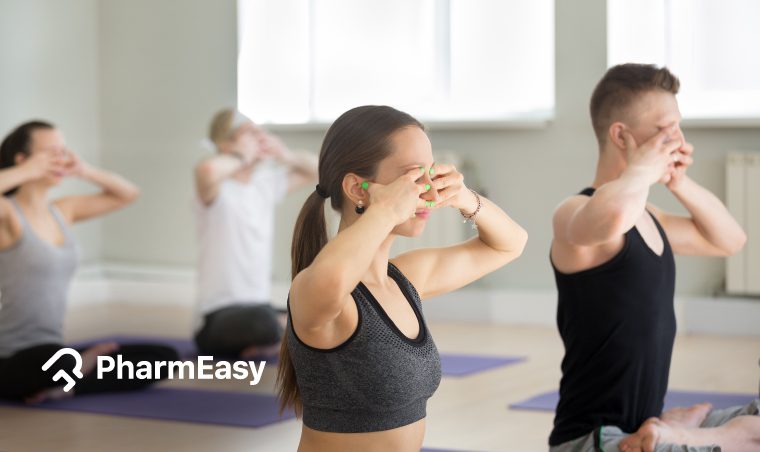
Next, gently close your eyes. You can use your middle fingers to lightly cover your eyelids. Ring fingers can rest on the sides of your nose, and little fingers near your upper lip.
This hand position is known as Shanmukhi Mudra (Six-Sense Gate Seal), although performing Bhramari without this specific mudra is also widespread and effective. The key is to create a sense of inward withdrawal.
Take a deep, slow breath in through your nose. Fill your lungs completely but comfortably.
As you exhale slowly and steadily through your nose, make a deep humming sound, similar to that of a bee. The sound should resonate within your head, particularly in the chest and throat area. *Focus* on the vibration this sound creates. Keep your mouth closed throughout the exhalation.
The quality of the hum is more important than its volume. Aim for a smooth, consistent sound. Imagine the sound waves gently vibrating through your skull, soothing your senses. This internal resonance is what provides the therapeutic effect.
Continue this process for 5 to 10 rounds, or for as long as you feel comfortable. *Focus* on the sensation of the hum and the breath. Have you ever noticed how a mother's lullaby calms a baby? This hum works on a similar principle, creating soothing vibrations.
The numbers don't lie.
After completing your rounds, gently remove your fingers from your ears and eyes. Sit quietly for a minute or two, observing the sensations in your body and mind. Notice the stillness and the calm that has settled within you. Take a few normal breaths and then slowly open your eyes.
The Lancet, a prestigious medical journal, frequently publishes studies on the impact of lifestyle interventions on *mental* health, underscoring the importance of *practices* like *pranayama*.
Always consult a qualified physician before making any medical decisions.
Visit Hospital
Near You

Does intermittent fasting weight loss actually last? A 2026 one-year follow-up study says yes — people who did just 12 weeks of time-restricted eating kept more weight off a full year later than those who got standard diet advice alone. But a separate Cochrane review of nearly 2,000 adults found int
July 23, 2026

A study of nearly 13,000 Brazilian adults found that people who consumed the most artificial sweeteners had noticeably faster memory and thinking decline over eight years than those who consumed the least. The effect was strongest in adults under 60 and in people with diabetes. Researchers stress th
July 23, 2026
Discover how to find a top nephrologist in Alipurduar. Expert advice on kidney care and choosing the right specialist for your health.
May 20, 2026