

Emergency & Help
24/7 Emergency & General Advisory
🚨 24/7 Medical Emergency
Non-Emergency Advisory
10:00 AM – 6:00 PM, Mon–Sat
For appointments & general queries.
24/7 Emergency & General Advisory
🚨 24/7 Medical Emergency
Non-Emergency Advisory
10:00 AM – 6:00 PM, Mon–Sat
For appointments & general queries.
Discover the profound benefits of Chin Mudra, a powerful hand gesture. Learn how to perform it correctly and unlock its potential for well-being.
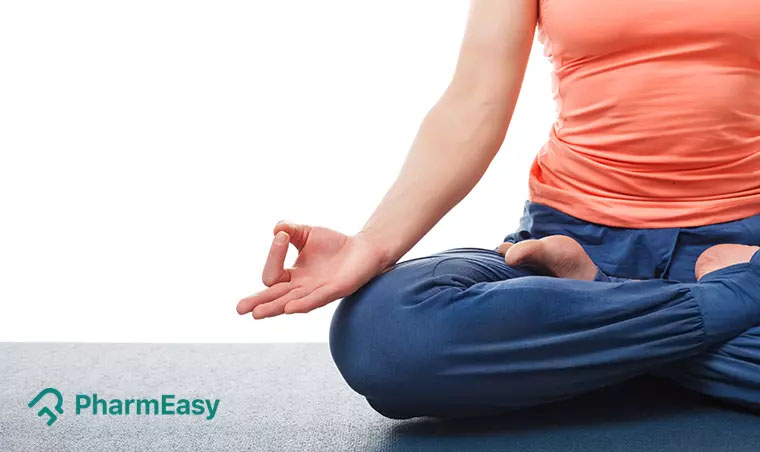
Meena, 45, a homemaker from Jaipur, experienced a persistent cloud of unease that shadowed her days. The demands of managing her household, family obligations, and the constant concern for her children's academic progress left her feeling depleted and unfocused. This year, the usual comfort of the monsoon rains seemed to intensify her disquiet.
One afternoon, while searching online for methods to alleviate stress, she discovered an article about Chin Mudra, also recognized as Gyan Mudra. Intrigued, she resolved to try it, following the uncomplicated directions she found.
Many of us, much like Meena, encounter periods of overwhelming pressure and a lack of mental clarity. The dynamic pace of life in India, marked by vibrant celebrations often accompanied by rich, indulgent cuisines, can add to our physical and psychological burdens. What eludes most individuals is the existence of straightforward, readily available tools to help us restore equilibrium.
Chin Mudra represents one such profound, yet uncomplicated, technique that has been an intrinsic element of yogic traditions for ages. Developed and elucidated by respected experts such as Dr. Ankit Sankhe, this ancient hand posture offers a pathway to improved well-being.
Here's where it gets interesting.
The truth is, incorporating mindful disciplines into our daily routines does not necessitate hours of commitment. Chin Mudra, a simple hand formation, can be executed anywhere, at any time, providing a potent means to connect with our inner selves and soothe a restless mind.
Its effectiveness is validated by a growing volume of personal accounts and its deep-rooted presence in yogic philosophy, which underscores the intrinsic link between mind, body, and spirit.
Chin Mudra, frequently referred to interchangeably as Gyan Mudra (the gesture of wisdom), stands as one of the most fundamental and widely adopted mudras in yoga and contemplative practices. A mudra, in the Sanskrit language, signifies a symbolic or ceremonial gesture or posture. These formations are believed to influence the energetic currents within the body, bridging the physical being with the subtle energetic channels.
Specifically, Chin Mudra involves bringing the extremity of the index digit and the thumb of each hand into contact, while the remaining three digits remain extended and at ease. This seemingly minor action is understood to establish a circuit, facilitating the circulation of prana (vital life force) and fostering mental lucidity. The configuration carries symbolic weight: the thumb embodies the universal spirit (Shiva or Purusha), and the index digit represents the individual spirit (Shakti or Prakriti). Their convergence signifies the unity of the individual soul with the supreme spirit, a foundational principle in numerous Indian spiritual philosophies.
It's worth noting: Although frequently used synonymously, certain lineages distinguish subtly between Chin Mudra and Gyan Mudra based on the orientation of the hands (palms facing up for Gyan, palms facing down for Chin, or variations thereof). Nevertheless, for practical applications and general comprehension, the contact between the index digit and thumb is the pivotal component.
Executing Chin Mudra is remarkably uncomplicated, rendering it accessible to everyone, irrespective of their familiarity with yoga or meditation. Dr. Ankit Sankhe consistently highlights its simplicity as a primary advantage.
The crucial element is to sustain a relaxed disposition throughout the session. Stiffness in the hands or digits can impede the energetic flow. Initially, you might experience restlessness, but with persistent application, you will cultivate the capacity to hold the mudra with ease.
The numbers don't lie.
The consistent application of Chin Mudra is linked to a broad spectrum of physical, psychological, and spiritual advantages. These positive outcomes arise from its capacity to pacify the nervous system, enhance concentration, and deepen self-awareness.
Although primarily a psychological and energetic discipline, Chin Mudra can also indirectly influence the corporeal form.
Chin Mudra is deeply integrated into spiritual disciplines, offering a pathway to profound self-discovery.
But why does this occur? The scientific rationale often points to the stimulation of specific neural pathways associated with relaxation and attention when performing these precise hand formations. This corporeal linkage—the connection between physical action and psychological state—is a potent aspect of yogic disciplines.
The inherent adaptability of Chin Mudra is its most appealing feature. You can integrate it into various segments of your day.
Honestly, dedicating even 5-10 minutes daily to this discipline can yield considerable outcomes over time. Consistency is far more important than the duration of each session.
While Chin Mudra is straightforward, a few recurring errors can diminish its effectiveness. Awareness of these potential pitfalls helps maximize the benefits.
What should you actually do? Simply redirect your consciousness to your breath and the gentle contact of your digits whenever you detect your mind drifting or tension encroaching. This gentle recalibration is a fundamental aspect of the discipline itself.
The employment of mudras, including Chin Mudra, is profoundly integrated into the fabric of Indian heritage and its ancient system of healing, Ayurveda. Ayurveda, the 'science of life', perceives the body as an intricate interplay of doshas (Vata, Pitta, Kapha) and gunas (Sattva, Rajas, Tamas). Mudras are regarded as instruments to influence these vital energies.
Chin Mudra, by fostering calmness and lucidity (Sattvic attributes), proves particularly advantageous for individuals exhibiting a preponderance of Rajas (activity, restlessness) or Tamas (inertia, dullness). Its capacity to ground excess Vata (associated with apprehension and instability) is also frequently cited in Ayurvedic discourse. The emphasis on connecting with universal consciousness aligns perfectly with the Vedic understanding of Brahman. The gesture's inherent simplicity makes it a discipline accessible across all age groups and backgrounds, fitting seamlessly into the daily routines of millions, akin to morning prayers or evening aarti.
It's worth knowing: The World Health Organization (WHO) has acknowledged yoga, including its components such as mudras, as a valuable instrument for promoting global physical and mental health. Institutions like the All India Institute of Medical Sciences (AIIMS) and the Indian Council of Medical Research (ICMR) are increasingly investigating and validating the merits of such traditional disciplines through scientific inquiry.
That alone changes everything.
As an adherent and proponent of yogic sciences, I have personally observed the transformative potential of Chin Mudra. It stands as a testament to the profound wisdom embedded within our ancient traditions. Its elegance lies not in intricacy, but in the graceful simplicity of linking our physical form with our psychological and spiritual aspirations.
In a world frequently saturated with clamor and distraction, Chin Mudra offers a tranquil haven within ourselves. It serves as a reminder that we possess the means to achieve our own well-being, accessible through simple, consistent engagement. The Indian Journal of Yoga & Physical Therapy has featured several articles exploring the efficacy of such unassuming yet potent techniques.
Meena, after consistently employing Chin Mudra for several weeks, reported a discernible reduction in her anxiety levels and a considerable enhancement in her capacity to concentrate on her responsibilities. The monsoon skies still gathered, but they no longer seemed to diminish her spirits.
She discovered a quiet fortitude and clarity that had been absent for a considerable period. Chin Mudra is more than a mere hand formation; it is an invitation to pause, inhale, and connect with your inner stillness.
The numbers don't lie.
What should you actually do? Commence today. Seek out a tranquil moment, position yourself comfortably, and bring your index digit and thumb into gentle contact. Observe the subtle internal alteration. The journey toward inner peace and sharpened mental clarity commences with a single, uncomplicated gesture.
Always seek counsel from a qualified medical professional before making any health-related decisions.
Visit Hospital
Near You

Does intermittent fasting weight loss actually last? A 2026 one-year follow-up study says yes — people who did just 12 weeks of time-restricted eating kept more weight off a full year later than those who got standard diet advice alone. But a separate Cochrane review of nearly 2,000 adults found int
July 23, 2026

A study of nearly 13,000 Brazilian adults found that people who consumed the most artificial sweeteners had noticeably faster memory and thinking decline over eight years than those who consumed the least. The effect was strongest in adults under 60 and in people with diabetes. Researchers stress th
July 23, 2026
Discover how to find a top nephrologist in Alipurduar. Expert advice on kidney care and choosing the right specialist for your health.
May 20, 2026