

Emergency & Help
24/7 Emergency & General Advisory
🚨 24/7 Medical Emergency
Non-Emergency Advisory
10:00 AM – 6:00 PM, Mon–Sat
For appointments & general queries.
24/7 Emergency & General Advisory
🚨 24/7 Medical Emergency
Non-Emergency Advisory
10:00 AM – 6:00 PM, Mon–Sat
For appointments & general queries.
Discover the profound benefits of Savasana (Corpse Pose) for stress relief and well-being. Learn how to perform this essential yoga pose correctly.
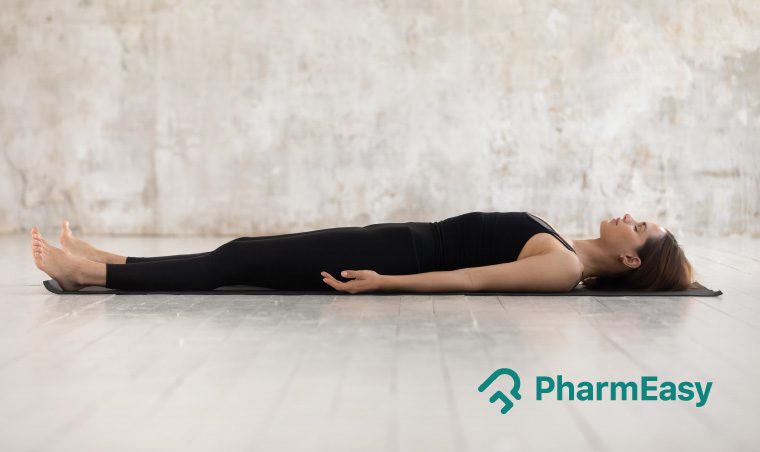
Meena, 45, a homemaker from Jaipur, noticed her stress levels soaring after a particularly demanding festival season. The constant cooking, cleaning, and social obligations left her feeling utterly depleted. She’d tried various calming techniques, but nothing seemed to quiet the persistent hum of anxiety.
Her yoga instructor suggested she focus more on Savasana, or the Corpse Pose, at the end of her yoga session. Honestly, Meena was skeptical. How could lying still possibly help?
What most people miss: Savasana is not merely an endpoint to a yoga session; it’s a vital discipline in itself, a powerful tool for integrating the physical and mental gains derived from the preceding asanas. Dr. Ankit Sankhe, a renowned yoga therapist, emphasizes that this pose, often perceived as passive, is where the true magic of yoga unfolds. It’s a conscious act of surrender, allowing the body and mind to absorb the therapeutic effects of the discipline.
Have you ever wondered why? The body, having undergone physical exertion, is primed for deep rest and rejuvenation. Without this crucial period of stillness, the tension-reducing gains might remain superficial.
The reality is, Savasana is a cornerstone of yogic philosophy, designed to bring about a state of conscious calm. Unlike sleep, where consciousness is largely absent, Savasana cultivates a state of alert calm. This means you are deeply resting, yet remain aware. This unique state allows the nervous system to shift from its sympathetic (fight-or-flight) mode to the parasympathetic (rest-and-digest) mode. Think about it this way: your body has been working hard, perhaps holding tension from daily life or the intensity of the yoga session. Savasana provides the necessary signal for your system to downshift, repair, and restore itself. Studies published in the Journal of Alternative and Complementary Medicine have indicated that regular Savasana discipline can significantly reduce cortisol levels, the primary tension hormone.
But why does this happen? During Savasana, the brain waves slow down, transitioning from the active beta waves to the more relaxed alpha and theta waves, similar to those experienced during meditation or light sleep. This shift is crucial for mental clarity, emotional regulation, and overall well-being.
It sounds simple. It rarely is.
The deliberate letting go of tension in every muscle group, from the toes to the crown of the head, sends powerful signals of safety and peace to the brain. This can be particularly beneficial in India, where the pace of life can be fast, and stressors like traffic, work pressure, and family responsibilities are common.
The physical gains of Savasana are extensive and often underestimated. By consciously relaxing the body, we allow blood pressure to decrease and heart rate to slow. This deep rest aids in muscle recovery after physical exertion, reducing soreness and fatigue.
It can also enable alleviate chronic pain conditions, such as lower back pain, by releasing muscular tension that often contributes to discomfort. For individuals who spend long hours sitting, perhaps at a desk or even sitting on the floor for extended periods during religious ceremonies or family gatherings, Savasana offers a much-needed release for the spine and hips.
On top of that,, the parasympathetic activation during Savasana improves digestion and can enable regulate bodily functions that are often disrupted by chronic tension. Some research even suggests that consistent discipline can bolster the immune system by reducing the immunosuppressive effects of prolonged tension.
Recovery is rarely linear.
The International Diabetes Federation (IDF) notes that tension can negatively impact blood sugar control, making calming techniques like Savasana particularly important for individuals managing diabetes.
Mentally and emotionally, Savasana is a powerhouse. It is instrumental in reducing anxiety and symptoms of depression. By training the mind to be still and present, it cultivates mindfulness—the ability to observe thoughts and feelings without judgment.
This discipline helps break the cycle of rumination and worry that plagues so many. Have you ever wondered why you feel so much calmer after just a few minutes of deep calm?
The conscious letting go process helps release pent-up emotional tension. It provides a safe space to acknowledge feelings that may have been suppressed during the day. This emotional release is not dramatic; it's a gentle letting go.
The discipline can improve focus and concentration in daily life, as the mind becomes less susceptible to distractions. A study from the All India Institute of Medical Sciences (AIIMS) highlighted the positive impact of yoga, including Savasana, on cognitive function and tension management among young adults.
Recovery is rarely linear.
What most people miss: Savasana teaches us the profound difference between being busy and being productive. It encourages a pause, a moment to simply be, which is often more restorative than continuous activity.
This is especially relevant during monsoon season in India, when outdoor activities might be curtailed, offering a perfect opportunity to deepen an indoor discipline like Savasana.
Performing Savasana correctly is key to unlocking its full potential. It’s not just about collapsing onto the mat; it requires gentle intention and mindful awareness.
Find a quiet, comfortable space where you won't be disturbed for at least 5-10 minutes. Lie down on your back on a yoga mat or a comfortable surface.
Ensure the room temperature is pleasant; you don't want to be too cold, as this can cause shivering and prevent calm. Many people find it comfortable to place a rolled blanket or bolster under their knees to support the lower back, especially if they have any back sensitivity.
Extend your legs comfortably apart, letting your feet fall open naturally, toes pointing outwards. Allow your arms to rest alongside your body, a few inches away from your torso, with your palms facing upwards. This gentle upward facing of the palms signals openness and receptivity.
Ensure your spine is in a neutral position, and your head is centered. You can place a thin cushion or folded blanket under your head if that feels more comfortable, ensuring your chin is not tilted upwards.
It sounds simple. It rarely is.
Close your eyes gently. Begin a systematic letting go of tension in your body, starting from your toes. Consciously instruct each part of your body to calm: 'My toes are calm... my feet are calm...
' Work your way up through your legs, hips, abdomen, chest, arms, neck, and face. Pay special attention to the muscles in your face—calm your jaw, soften your forehead, and let go of any tension around your eyes. Take a few deep, cleansing breaths to signal to your body that it's time to rest, then allow your breath to return to its natural, effortless rhythm.
The goal is not to fall asleep, but to remain consciously present in a state of deep calm. If your mind begins to wander—which it inevitably will—gently acknowledge the thought without judgment and guide your awareness back to the sensation of your breath or the feeling of calm in your body. You can also focus on the gentle rise and fall of your abdomen.
This discipline of returning your attention is, in itself, a powerful mental exercise. Honestly, the ability to gently redirect your focus is a skill that benefits all areas of life.
When it’s time to come out of Savasana, do so slowly and mindfully. Begin by gently wiggling your fingers and toes. Deepen your breath slightly. Slowly stretch your arms overhead as if waking up from a restful sleep.
Gently draw your knees towards your chest and roll onto one side, pausing for a moment in a fetal position. Using your hands for support, slowly press yourself up to a comfortable seated position, keeping your eyes closed for a few moments longer if you wish. Take a moment to notice how you feel physically and mentally before opening your eyes.
It sounds simple. It rarely is.
Restlessness is a usual challenge. If you find yourself unable to settle, focus intently on the physical sensations in your body—the contact of your body with the mat, the feeling of your clothes against your skin. Sometimes, a slight adjustment in position or the use of an eye pillow can enable deepen calm.
The key is patience and consistent discipline. The World Health Organization (WHO) highlights the growing burden of non-communicable diseases, many of which are exacerbated by tension, underscoring the importance of disciplines like Savasana.
Think about it this way: learning to calm is a skill that needs to be cultivated, just like any other. Don't get discouraged if your mind races initially. Every time you gently bring your awareness back, you are strengthening your ability to find calm amidst chaos.
Even 5 minutes of dedicated Savasana can make a significant difference. The National Health Portal of India also provides resources that emphasize the role of lifestyle modifications, including yoga, in managing chronic conditions.
This is where most patients struggle.
While Savasana is traditionally performed at the end of a yoga session, its gains can be extended by incorporating short periods of conscious calm throughout the day. A brief 2-3 minute Savasana after a stressful meeting or before starting a demanding task can be incredibly restorative.
It can serve as a mental reset button. The Lancet’s research consistently points to the mind-body connection, advocating for disciplines that bridge the gap between physical health and mental well-being.
Consider dedicating 10 minutes each evening before bed to Savasana. This discipline can significantly boost sleep quality.
Many individuals, especially those living in bustling cities like Delhi or Mumbai, find that this dedicated time helps them transition from the day's activities to a state of restful sleep, combating insomnia which affects millions globally. The Indian Journal of Medical Research (IJMR) has published numerous studies on the efficacy of yoga and meditation in improving sleep patterns.
Savasana is far more than just a resting pose; it is an active discipline of self-awareness, tension reduction, and deep healing. By dedicating time to this seemingly simple posture, you allow your body and mind to integrate the gains of your yoga session and life's challenges. It teaches us to be present, to let go, and to find profound peace in stillness.
It sounds simple. It rarely is.
Remember, consistent discipline is more key than duration. Even a few minutes can yield marked gains.
Always consult a qualified physician before making any medical decisions.
Visit Hospital
Near You
Does intermittent fasting weight loss actually last? A 2026 one-year follow-up study says yes — people who did just 12 weeks of time-restricted eating kept more weight off a full year later than those who got standard diet advice alone. But a separate Cochrane review of nearly 2,000 adults found int
July 23, 2026

A study of nearly 13,000 Brazilian adults found that people who consumed the most artificial sweeteners had noticeably faster memory and thinking decline over eight years than those who consumed the least. The effect was strongest in adults under 60 and in people with diabetes. Researchers stress th
July 23, 2026
Discover how to find a top nephrologist in Alipurduar. Expert advice on kidney care and choosing the right specialist for your health.
May 20, 2026