

Emergency & Help
24/7 Emergency & General Advisory
🚨 24/7 Medical Emergency
Non-Emergency Advisory
10:00 AM – 6:00 PM, Mon–Sat
For appointments & general queries.
24/7 Emergency & General Advisory
🚨 24/7 Medical Emergency
Non-Emergency Advisory
10:00 AM – 6:00 PM, Mon–Sat
For appointments & general queries.
Learn Utkatasana (Chair Pose) benefits for strength, flexibility & pain relief. Step-by-step guide by Dr. Himani Bisht. Improve posture and boost energy.
Meena, 45, a homemaker from Jaipur, noticed persistent lower back pain after long hours spent sitting on the floor during family gatherings, a common practice during festivals like Diwali. She also felt a general lack of energy and stiffness in her legs. Sound familiar?
Many of us experience similar discomforts in our daily lives, often exacerbated by sedentary habits or prolonged physical postures. Have you ever wondered why even simple activities leave you feeling drained or achy? This is where the ancient wisdom of yoga, particularly poses like Utkatasana, can offer profound benefits.
Utkatasana, commonly known as Chair Pose, is a foundational standing asana in Hatha Yoga. Its name derives from Sanskrit: 'Utkata' meaning fierce, intense, or powerful, and 'Asana' meaning pose. This pose is deceptively simple, yet it intensely engages numerous muscle groups, building resilience, stamina, and flexibility throughout the body.
It’s a pose that truly lives up to its 'fierce' moniker, demanding focus and effort, but rewarding practitioners with significant health advantages. In many cases, regular practice can lead to a noticeable improvement in overall vitality and resilience.
That alone changes everything.
The advantages of incorporating Utkatasana into your yoga routine are extensive, touching upon physical resilience, mental clarity, and even physiological well-being. It’s a pose that works on multiple levels.
Chair Pose is a fantastic way to strengthen the quadriceps, hamstrings, and glutes. Imagine holding yourself in a squatting position; the muscles in your thighs and buttocks work intensely to maintain the pose. This isometric contraction not only builds muscle endurance but also enhances stability in the hips and lower extremities.
Think about it this way: it’s like performing a sustained bodyweight squat, but with the added benefits of mindful breathing and alignment. Additionally, the pose requires meaningful engagement of the abdominal muscles to maintain an upright torso, thereby strengthening the core. A strong core is fundamental for good posture and preventing back pain.
By strengthening the core and back muscles, Utkatasana makes a real difference in correcting postural imbalances. Slouching, a typical issue in our tech-driven world, can be counteracted by the pose’s emphasis on an elongated spine. Keeping the chest open and shoulders down and back helps to realign the spine, reducing the strain on the neck and upper back.
That alone changes everything.
This pose can be particularly beneficial for individuals who spend long hours at desks or engage in activities that promote a rounded upper back. The ICMR (Indian Council of Medical Research) has highlighted the rising prevalence of non-communicable diseases linked to sedentary lifestyles, and improving posture is a key step in mitigating these risks.
The deep flexion in the hips and the slight compression of the abdomen during Utkatasana can help stimulate the abdominal organs. This internal massage is believed to improve digestion and can be beneficial for conditions like constipation. While not a direct cure, the gentle pressure aids in promoting regular bowel movements.
For individuals experiencing digestive discomfort, incorporating this pose into a gentle yoga sequence might offer some relief. Worth knowing: the interconnectedness of our physical and digestive health is profound, and practices that support one often benefit the other.
As you balance in Chair Pose, your feet and ankles work hard to keep you stable. This engagement strengthens the muscles and ligaments in your feet and ankles, improving overall balance and reducing the risk of sprains.
It sounds simple. It rarely is.
For many Indians, especially those who are accustomed to sitting on the floor for extended periods or performing activities like gardening, strong ankles and feet are essential for mobility and preventing injuries. The pose encourages a mindful connection with the ground, grounding you both physically and mentally.
Despite its demanding nature, Utkatasana is considered an energizing pose. It increases blood circulation throughout the body, delivering oxygen-rich blood to the muscles and organs. This improved circulation can enable combat feelings of fatigue and lethargy.
The pose also opens up the chest and lungs, promoting deeper breathing, which further enhances oxygen intake and revitalizes the entire system. Many practitioners report feeling a surge of energy after holding the pose, making it an excellent addition to a morning yoga routine or as a pick-me-up during a midday slump.
When performed with proper alignment, Utkatasana can benefit alleviate mild sciatica and lower back pain. The strengthening of the gluteal muscles and hamstrings can take pressure off the sciatic nerve. Additionally, the elongation of the spine helps to decompress the vertebrae.
That's the part worth remembering.
However, individuals with acute back pain or sciatica should approach this pose with caution and guidance. It is essential to listen to your body and modify the pose as needed. Over 101 million Indians have diabetes (ICMR, 2023), a condition that can sometimes be associated with nerve issues, making poses that promote circulation and reduce inflammation potentially beneficial as part of a broader wellness plan.
Utkatasana builds the necessary resilience and endurance required for many more challenging yoga postures. The stability developed in the legs and core serves as a solid foundation for inversions, arm balances, and deep backbends.
It’s a preparatory pose that cultivates the physical and mental discipline needed to progress safely and effectively in your yoga journey.
Mastering Utkatasana requires attention to alignment and breath. Follow these steps for a safe and effective practice:
Begin standing in Tadasana (Mountain Pose) at the top of your yoga mat, with your feet hip-width apart or the big toes touching (if comfortable). Distribute your weight evenly across both feet. Stand tall with your spine elongated, shoulders relaxed down and away from your ears, and your gaze forward.
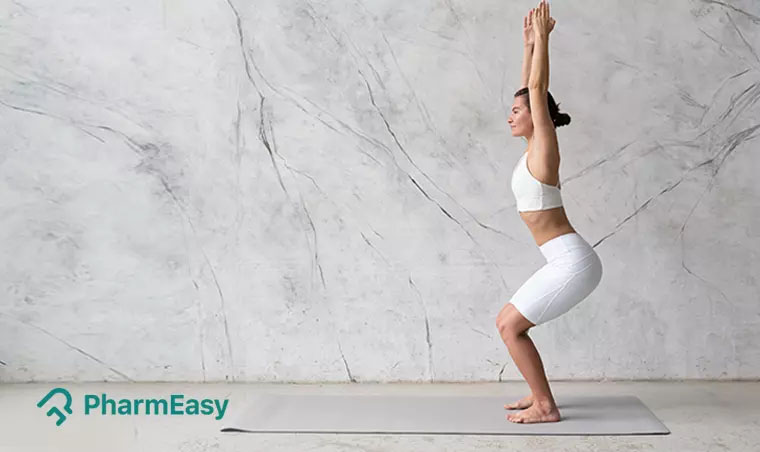
As you inhale, sweep your arms up alongside your ears. Keep your palms facing each other or gently touching. Extend your fingers towards the ceiling, feeling a stretch along your sides. Ensure your shoulders remain relaxed and not hunched up towards your ears. Your arms should be parallel to each other.
Recovery is rarely linear.
On an exhale, bend your knees as if you are about to sit back into a chair. Your thighs should move towards being parallel to the floor. Crucially, make sure your knees track over your ankles and do not extend past your toes.
This alignment is vital for protecting your lower extremity joints. Imagine sitting back, pushing your hips towards the wall behind you.
As you sink deeper into the pose, actively engage your abdominal muscles to support your spine. Keep your torso upright, avoiding leaning too far forward. The chest should remain lifted and open.
Your gaze should remain fixed forward (Drishti). The weight should be primarily in your heels, allowing you to lift your toes slightly off the mat. This subtle action helps to ensure proper engagement and balance.
Hold the pose for 5-10 deep breaths, or as long as is comfortable for you. Focus on maintaining steady, even breaths. Inhale to lengthen the spine, and exhale to deepen the bend in the knees, if possible. Remember, the goal isn't to go as low as possible, but to maintain good form and stability.
To release, inhale and straighten your legs, bringing your arms back down by your sides as you exhale. Return to Tadasana. Take a moment to notice the sensations in your body.
Utkatasana is a powerful pose, and modifications can make it more accessible and safer for everyone.
What should you actually do if you experience discomfort? Always consult a qualified healthcare professional or a certified yoga instructor. They can provide personalized guidance based on your specific health issue and physical capabilities. Remember, yoga is a journey of self-discovery, not a competition.
Here's where it gets interesting.
Utkatasana, or Chair Pose, is more than just a physical exercise; it's a practice that builds resilience, cultivates mindfulness, and enhances overall well-being. From strengthening your legs and core to improving posture and boosting energy levels, the benefits are truly remarkable. As Dr.
Himani Bisht emphasizes, incorporating this powerful asana into your regular yoga practice can be a transformative step towards a healthier, more balanced life. It's a testament to how simple, ancient practices can provide profound solutions to modern-day health challenges. Over 50% of adults in urban India report some form of musculoskeletal pain, making resilience-building and posture-correcting exercises like Utkatasana increasingly relevant.
Always consult a qualified physician before making any medical decisions.
Visit Hospital
Near You

Does intermittent fasting weight loss actually last? A 2026 one-year follow-up study says yes — people who did just 12 weeks of time-restricted eating kept more weight off a full year later than those who got standard diet advice alone. But a separate Cochrane review of nearly 2,000 adults found int
July 23, 2026

A study of nearly 13,000 Brazilian adults found that people who consumed the most artificial sweeteners had noticeably faster memory and thinking decline over eight years than those who consumed the least. The effect was strongest in adults under 60 and in people with diabetes. Researchers stress th
July 23, 2026
Discover how to find a top nephrologist in Alipurduar. Expert advice on kidney care and choosing the right specialist for your health.
May 20, 2026