

Natural Remedies for Asthma: What Actually Helps
Natural remedies for asthma cannot replace prescribed inhalers or medications, but some evidence-based lifestyle approaches — including breathing exercises, an anti-inflammatory diet, and trigger avoidance — can meaningfully support asthma control. This article breaks down what the research actually
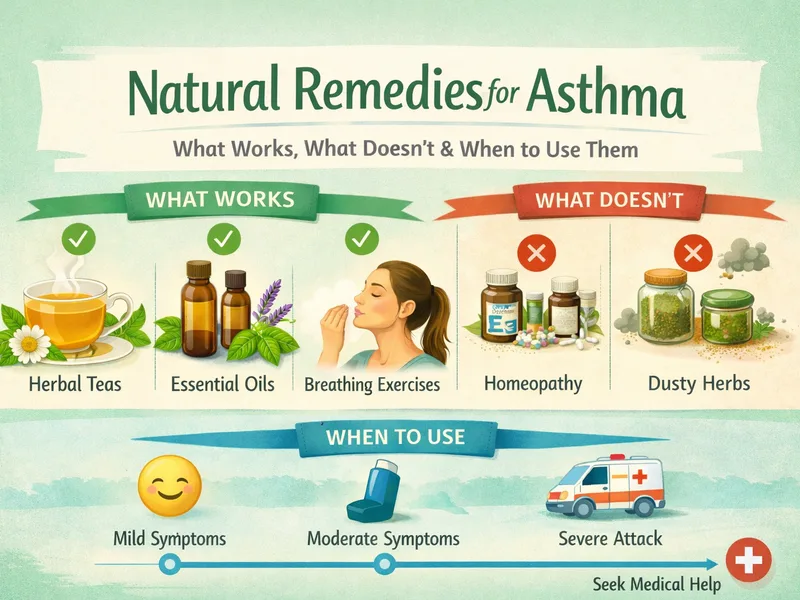
Natural Remedies for Asthma: What the Evidence Actually Shows
No natural remedy can cure asthma or replace a prescribed inhaler. But several evidence-backed lifestyle approaches — from specific breathing techniques to an anti-inflammatory diet — can reduce symptom frequency and improve quality of life when used alongside medical treatment, not instead of it.
Natural asthma remedies should only supplement, not replace, evidence-based medical treatments and prescribed medications. That's the consensus from respiratory specialists. Relying on unproven treatments can allow airway inflammation to go unchecked — with serious consequences. PubMed Central
Here's what the research says, and what it doesn't.
How Serious Is Asthma?
According to the Global Initiative for Asthma (GINA), asthma affects approximately 300 million people worldwide, with prevalence continuing to rise. In the United States alone, around 25 million people are living with the condition. PeerJPubMed Central
Asthma is a chronic inflammatory disease of the airways. When triggered — by allergens, exercise, cold air, or stress — the airways narrow, mucus production increases, and breathing becomes labored. The goal of any treatment, natural or pharmaceutical, is to reduce that underlying inflammation and prevent bronchospasm (the sudden tightening of airway muscles).
Breathing Techniques With Real Evidence
This is where the strongest non-pharmaceutical data lives.
Breathing exercises have been widely used worldwide as a non-pharmacological therapy for asthma, including the Buteyko breathing technique, yogic breathing, deep diaphragmatic breathing, and the Papworth Method. PubMed Central
The Buteyko technique — developed in Russia in the 1950s — teaches patients to breathe more slowly and shallowly through the nose, theoretically reducing airway irritation caused by hyperventilation. There is some evidence of benefit from meditation, yoga, and breathing exercises for adults with asthma, while massage therapy shows promise in children with asthma — though the evidence remains inconsistent and more research is needed. nih
A 2025 randomized controlled trial in children aged 7–12 found statistically significant improvements in asthma control scores among those who practiced the Buteyko technique alongside standard treatment, compared to standard treatment alone.
These techniques won't open a closing airway in a crisis — that's what a rescue inhaler is for. But practiced regularly, they may reduce the frequency and intensity of symptoms.
[REVIEWER: add clinical insight here — e.g., your experience recommending or cautioning against specific breathing protocols in patients with moderate-to-severe asthma]
Diet and Asthma: An Underrated Connection
Asthma is fundamentally an inflammatory disease, and diet directly influences systemic inflammation.
One way the Mediterranean diet may reduce asthma symptoms is through its high intake of omega-3 polyunsaturated fatty acids, commonly found in marine sources such as salmon, herring, and sardines. A cross-sectional study published in Nutrients (PMC, 2020) found that a higher omega-3 index was observed in subjects with controlled or partially controlled asthma compared to those with uncontrolled asthma.
Available evidence also suggests a protective effect from increasing fruit, vegetable, and whole grain intake, and from increasing physical activity levels. nih
On the other side of the plate: a "Western diet" high in processed foods, sweetened beverages, and saturated fats can lead to weight gain and obesity — a recognized risk factor for asthma — and can alter gut microbiota in ways that reduce immune-regulatory effects.
The practical takeaway? An anti-inflammatory diet won't reverse asthma, but the cumulative evidence points toward it reducing symptom burden. Talk to a registered dietitian before making significant changes.
Trigger Avoidance: The Most Underused Natural Strategy
You don't need a supplement for this one — just awareness.
Common asthma triggers include dust mites, mold, pet dander, pollen, cigarette smoke, air pollution, cold air, and certain medications like NSAIDs. Food allergies or additives like sulfites and MSG can also trigger asthma attacks in some people. nih
Keeping a symptom diary, using allergen-proof bedding covers, maintaining indoor humidity below 50%, and avoiding smoking environments are all cost-free interventions with a solid rationale. None of them replace controller medication — but they reduce the load on your airways.
What About Herbal Remedies?
Many traditional medicine systems have used herbs like turmeric, ginger, boswellia, and tylophora for respiratory conditions. In Ayurvedic medicine, herbs like turmeric and vasaka are used to address respiratory issues including asthma, while ginger combined with turmeric and honey appears in Indonesian traditional medicine as an asthma remedy. Wiley Online Library
In a systematic review of 26 studies covering over 20 herbal compounds, some — including boswellia, Pycnogenol (pine bark extract), and Tylophora indica — showed increases in lung function. However, the data are not definitive enough to make clinical recommendations for herbal remedies in asthma treatment, either in children or adults. nih
Herbal products also carry real risks: interactions with medications, inconsistent dosing, and lack of regulatory oversight. Never start herbal supplementation without telling your doctor.
[REVIEWER: add clinical insight here — e.g., patients who have asked about specific supplements and what guidance you offer them]
Weight Management
Weight loss is recommended for obese asthmatic patients, as just 5–10% weight loss has been found to improve quality of life and asthma control in most obese asthmatic patients. nih
This is one of the most actionable "natural" interventions with clear clinical backing. Excess weight increases pressure on the diaphragm, promotes systemic inflammation, and worsens sleep apnea — all of which make asthma harder to control.
FAQ
Can natural remedies cure asthma?
No. Asthma is a chronic inflammatory condition with no known cure, natural or pharmaceutical. Certain lifestyle strategies — breathing exercises, an anti-inflammatory diet, trigger avoidance, and weight management — can reduce symptom burden, but they work best as complements to prescribed medical treatment. Never stop prescribed medication without your doctor's guidance.
Is the Buteyko breathing technique effective for asthma?
Evidence suggests it can help. Multiple randomized controlled trials show that the Buteyko technique, used alongside standard treatment, improves asthma control scores and quality of life, particularly in adults and children with mild-to-moderate asthma. It should not be used as a substitute for a rescue inhaler during an acute attack.
Which foods are worst for asthma?
Processed foods high in saturated fats, sulfite-containing foods (like wine, dried fruits, and some processed meats), and individual trigger foods such as shellfish or dairy in sensitive individuals may worsen symptoms. A Mediterranean-style diet rich in fruits, vegetables, fish, and whole grains is associated with better asthma control.
Can exercise trigger asthma, and should people with asthma avoid it?
Exercise can trigger what's called exercise-induced bronchoconstriction, but that's not a reason to avoid activity. Regular moderate exercise strengthens respiratory muscles and reduces systemic inflammation. Work with your doctor on a pre-exercise inhaler strategy if needed, and warm up gradually.
Does stress make asthma worse?
Yes. Psychological stress activates inflammatory pathways and can heighten airway sensitivity. Practices like yoga, mindfulness, and slow breathing have shown modest benefits for stress-related asthma symptom worsening, though they should be combined with standard medical care.
Practical Takeaway
If you have asthma, the most impactful things you can do beyond your prescribed medications are: practice nasal breathing and a structured technique like Buteyko or yoga breathing daily; shift toward a Mediterranean-style diet; identify and reduce your personal triggers; and, if overweight, pursue gradual weight loss with your doctor's support. Herbal supplements remain largely unproven and carry risks — approach them with caution and always disclose use to your healthcare provider.


