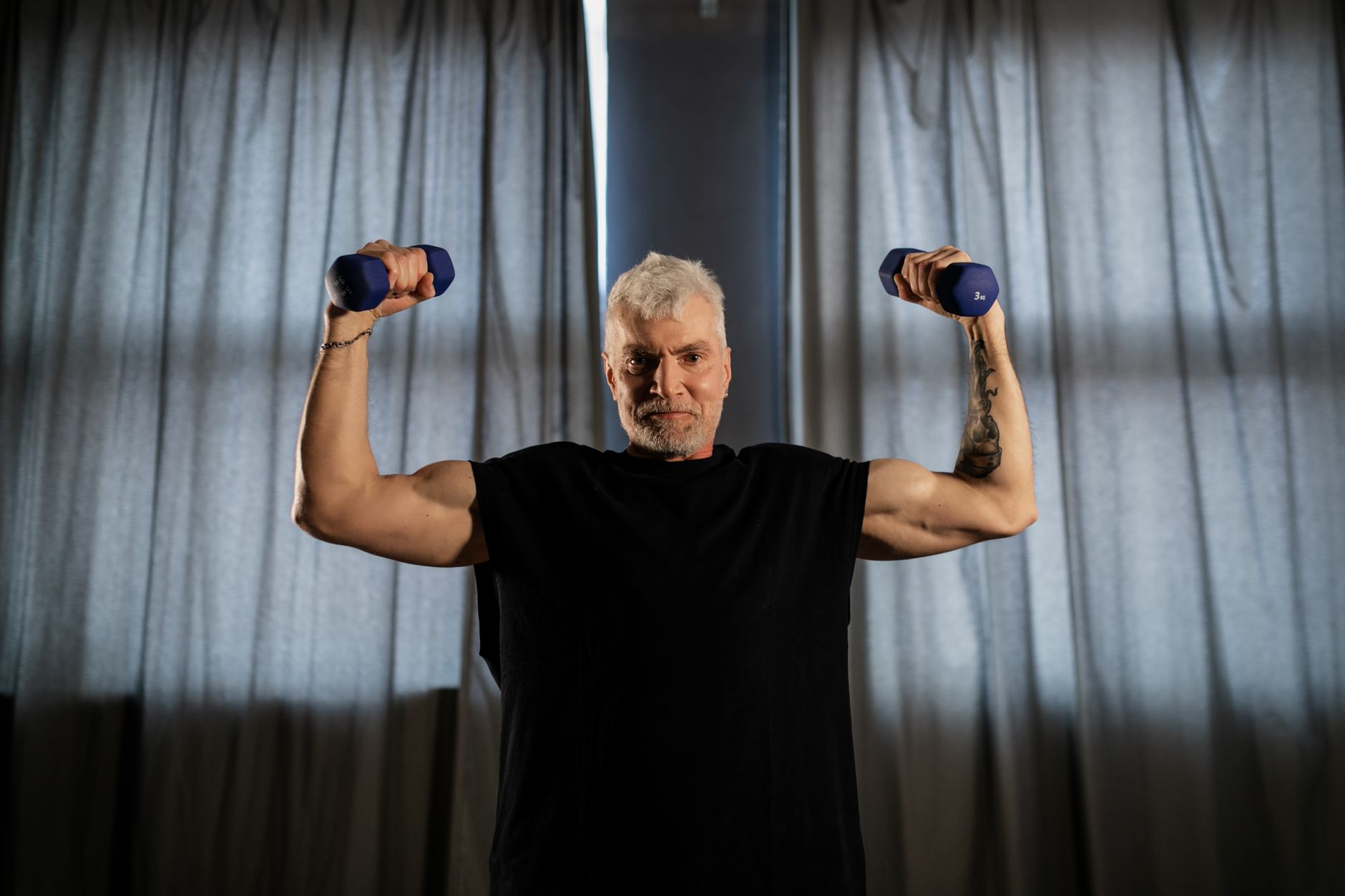
As the years roll by, maintaining our physical prowess becomes a central focus. It's not just about looking good; it's about feeling good, moving freely, and staying independent. The concerns about strength, balance, and mobility that often accompany aging are real, but they are not insurmountable. The fantastic news? You don't need a fancy gym or hours of your day to combat these changes. Integrating resistance training and stretching into your routine, right in the comfort of your home, can make a world of difference. Think of it as an investment in your future self – a self that is vibrant, capable, and ready for anything! Why Strength Training and Stretching Matter as You Age Weight lifting and stretching aren't just for the young and spry. In fact, their benefits amplify as we get older. They are powerful tools to help prevent or at least delay the onset of many age-related ailments. Imagine this: fewer aches, better balance preventing falls, and the energy to enjoy life's adventures. That's the promise of a consistent fitness routine tailored for aging bodies. It's about more than just muscle; it's about enhancing your quality of life. We're talking about maintaining the ability to carry groceries, play with grandchildren, and simply navigate your day with ease and confidence. Resistance training builds the muscle mass that naturally declines with age, while stretching keeps your joints flexible and reduces stiffness. It's a dynamic duo for healthy aging. Setting Up Your At-Home Strength Training Program The beauty of an at-home program is its flexibility and accessibility. You can achieve significant results with minimal equipment, even just your body weight. The key is consistency and a well-rounded approach. Forget the idea that you need to spend hours sweating it out. A focused, 20- to 30-minute strength training session, just three days a week, can be incredibly effective. Your program should aim for: Full-Body Engagement: Don't neglect any part! Ensure your routine works your upper body, lower body, and core. This holistic approach yields the best results and prevents imbalances. Consistency is King: The more regularly you strength train, the more pronounced the benefits will be. Aim for a schedule you can stick to, even if it's just a few times a week. Progressive Overload (Gentle Version): As you get stronger, you can gradually increase the challenge, perhaps by doing an extra repetition, an extra set, or using slightly more resistance. Listen to your body, though! Your At-Home Strength Workout: 6 Essential Exercises Ready to get started? Here are six effective exercises you can do at home to build strength and stability. Unless specified, aim for 3 sets of 10–12 repetitions for each exercise. Remember to focus on proper form over speed or quantity. The Squat: A Foundation of Strength The squat is a true powerhouse. It mimics everyday movements like sitting and standing, making it indispensable. If you sit in a chair, you benefit from squatting! Here’s how to master it: Stand with your feet about shoulder-width apart, toes pointing slightly outward. Arms can be down at your sides. Initiate the movement by pushing your hips back, then bend your knees. Lower yourself down as if you're about to sit in a chair. Aim to get your thighs parallel to the ground, or as close as you comfortably can. Keep your chest lifted and proud; don't let it collapse forward. Push up evenly through your entire foot, returning to the starting position. Feel the engagement in your glutes and thighs. Push-Ups: Upper Body Powerhouse Push-ups are fantastic for upper body strength, and you don't need any equipment. If a traditional push-up feels too challenging, start with a modified version. Begin in a plank position. For a modification, place your hands on a wall at shoulder height, with your feet about 3–4 feet away from the wall. Maintain a straight line from your head to your ankles. Bend your elbows, keeping them at about a 45-degree angle from your body, and lower yourself closer to the wall (or the floor if doing a traditional or kneeling push-up). Push back strongly to the starting position. Keep your core engaged throughout. Resistance Band Rows: Back and Posture Booster A strong back is vital for good posture and overall stability. Resistance bands are wonderfully versatile for this. Grab a resistance band, holding a handle in each hand. Step on the band with both feet, shoulder-width apart, to create tension. With a straight back, hinge slightly at your hips. Now, pull the handles up towards your chest, squeezing your shoulder blades together at the top of the movement. Think about rowing a boat. Pause briefly, then slowly release the band back to the starting position. Control the movement throughout. Bird Dog: Core and Balance Challenge This exercise is a fantastic way to challenge your full body while improving core stability and balance. Get on your hands and knees, ensuring your hands are directly under your shoulders and your knees are under your hips. Keeping your neck in a neutral position (look down at the floor), simultaneously extend your right arm forward and your left leg straight back. Crucially, keep your hips square to the ground – don't let them tilt. Hold this position for a moment, feeling the core engagement. Return to the starting position and repeat on the opposite side (left arm, right leg). That’s one rep. Single-Leg Stance: Balance Builder As we age, balance can decline, increasing the risk of falls. Proactively working on your balance is key. This simple drill helps identify and improve imbalances. Stand near a wall or a sturdy chair for support if needed. Begin with your feet together and arms relaxed at your sides. Slowly lift one foot off the ground, bending the knee. Try to hold this position for 30 seconds. Focus on maintaining an upright posture and engaging your core. Repeat on the other leg. This is a great way to suss out any differences in stability between your legs. Calf Raises: Lower Leg Strength Strong calf muscles contribute to better balance and mobility, especially when walking or climbing stairs. Stand with your feet hip-width apart. You can hold onto a wall or chair for balance if needed. Slowly rise up onto the balls of your feet, lifting your heels as high as you can. Hold for a moment at the top, feeling the contraction in your calves. Slowly lower your heels back down to the ground. Essential Stretches for Flexibility and Mobility Complement your strength training with these five stretches. They target major muscle groups, helping to improve flexibility, reduce stiffness, and enhance your range of motion. Hold each stretch for about 30 seconds, breathing deeply. Hamstring Stretch: Sit on the floor with one leg extended straight and the other bent, foot tucked near your inner thigh. Lean forward from your hips towards the extended foot, keeping your back straight. Repeat on the other side. Quadriceps Stretch: Stand tall and hold onto a wall for balance. Bend one knee and grasp your ankle or foot, gently pulling your heel towards your glutes. Keep your knees close together and feel the stretch in the front of your thigh. Repeat on the other side. Chest Stretch: Stand in a doorway and place your forearms on the doorframe, elbows bent at 90 degrees and slightly below shoulder height. Step forward gently until you feel a stretch across your chest and the front of your shoulders. Triceps Stretch: Reach one arm overhead, then bend the elbow, letting your hand fall behind your head. Use your other hand to gently push the elbow down or back. You'll feel this in the back of your upper arm. Repeat on the other side. Spinal Twist: Lie on your back with your knees bent and feet flat on the floor. Extend your arms out to the sides. Let both knees fall gently to one side, keeping your shoulders pressed to the floor. Turn your head to look in the opposite direction of your knees. Hold, then switch sides. When to Seek Professional Guidance While these exercises and stretches are generally safe and beneficial, it’s always wise to listen to your body. If you experience any sharp pain, dizziness, or have pre-existing health conditions, it’s essential to consult with a healthcare professional or a qualified fitness trainer before starting a new routine. They can help tailor a program specifically to your needs and ensure you're performing movements correctly. Don't push through pain – modify or stop if something doesn't feel right. Frequently Asked Questions Q: How often should I strength train? A: Aim for 2-3 strength training sessions per week, with at least one rest day in between to allow your muscles to recover and rebuild. Q: What if I can't do 10-12 repetitions? A: That's perfectly fine! Start with as many repetitions as you can do with good form. Gradually increase the number as you get stronger. Even 5-8 good repetitions are beneficial. Q: Do I really need resistance bands? A: While
In summary, timely diagnosis, evidence-based treatment, and prevention-focused care improve long-term health outcomes.