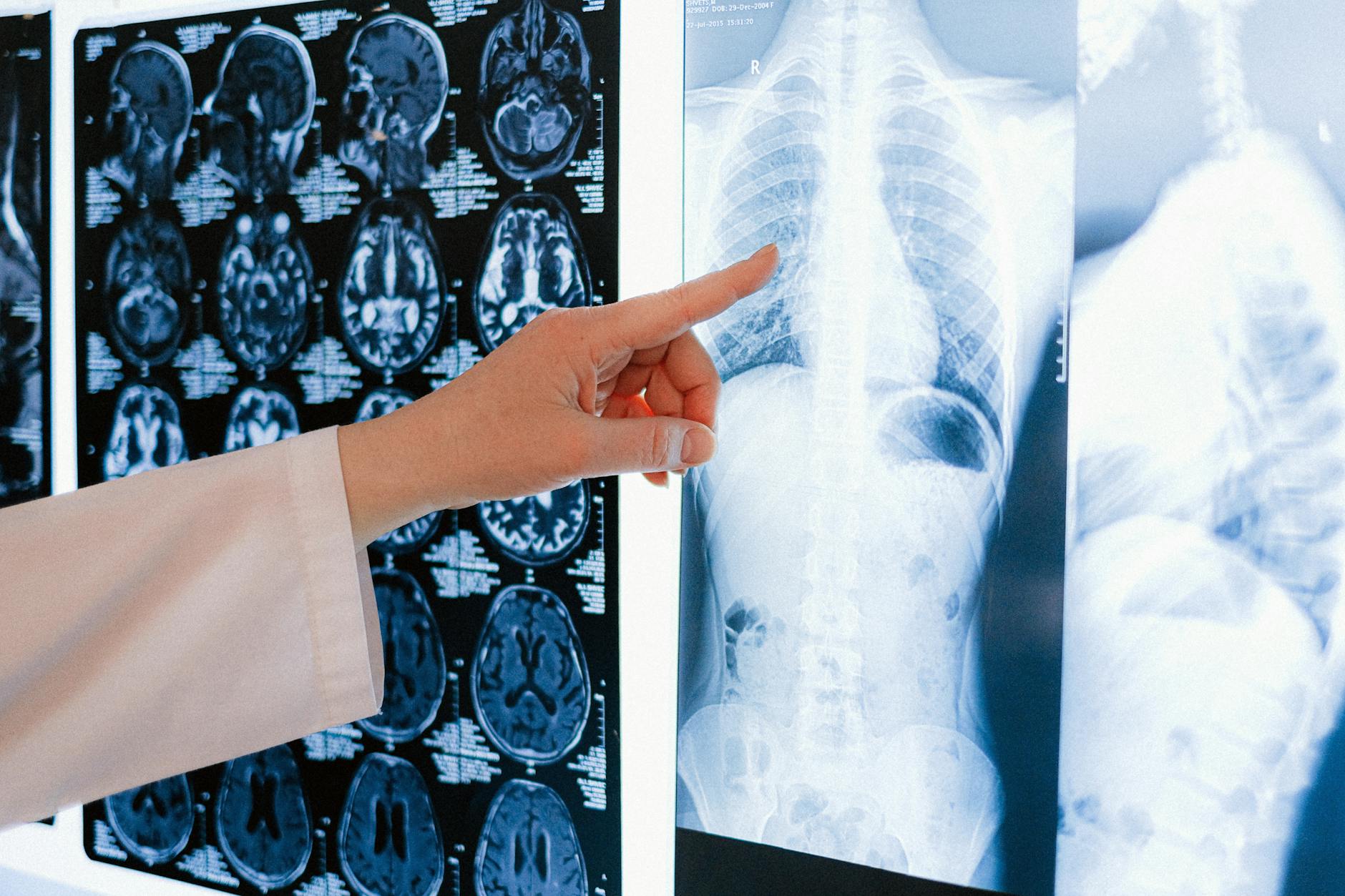
When your doctor suggests an X-ray, it's natural to have questions. This common imaging test helps us see inside your body without surgery, playing a vital role in diagnosing and managing many health conditions. From a broken bone to a persistent cough, X-rays provide a crucial window into what’s happening beneath the surface. Let’s explore what an X-ray is, how it works, and what you can expect during the procedure.
What Exactly is an X-Ray?
An X-ray, also known as radiography, is a quick and painless medical imaging technique. It uses a type of electromagnetic radiation called X-rays to create images of the inside of your body. Think of it like a special camera that can see through your skin and tissues to reveal your bones, organs, and other structures. These images, called radiographs, help doctors assess injuries, detect diseases, and monitor treatment progress.
How Do X-Rays Work?
The magic behind X-rays lies in how different body parts interact with radiation. The X-ray machine sends a beam of radiation through the area of your body being examined. As this beam passes through, dense materials like bone absorb most of the radiation, appearing white on the resulting image. Less dense tissues, such as muscles and organs, allow more radiation to pass through, appearing in shades of grey. Air, like in your lungs, appears black because it absorbs very little radiation. This contrast allows doctors to distinguish between different structures and identify abnormalities.
A common scenario: Imagine you’ve had a fall and suspect a broken wrist. Your doctor might order an X-ray. The machine will take images from different angles. When you see the picture, the bone fracture will be clearly visible as a break in the white bone structure, while the surrounding soft tissues will be darker shades of grey.
Why Might Your Doctor Order an X-Ray?
X-rays are incredibly versatile and used for a wide range of medical purposes:
- Diagnosing Injuries: This is perhaps the most well-known use. X-rays are excellent for identifying bone fractures, dislocations, and other skeletal injuries.
- Detecting Diseases: They can help spot signs of infections like pneumonia in the lungs, tumors, or conditions like osteoporosis (weakening of bones).
- Monitoring Conditions: If you have a chronic condition, like arthritis, X-rays can track its progression over time.
- Evaluating Treatment: Doctors use X-rays to see if a treatment, such as surgery to set a bone, is healing correctly.
- Locating Foreign Objects: Sometimes, X-rays are used to find swallowed or embedded foreign objects.
What Conditions Can X-Rays Help Identify?
The applications are broad, but some common conditions X-rays assist in diagnosing include:
- Bone fractures and dislocations
- Arthritis
- Osteoporosis
- Infections (e.g., pneumonia, tuberculosis)
- Certain types of cancer (e.g., lung cancer, bone cancer)
- Blockages in the digestive tract
- Enlarged heart
Preparing for Your X-Ray
Good news! Most X-rays require very little preparation. However, here’s what you can generally expect:
- Clothing: Wear comfortable, loose-fitting clothing. You might be asked to change into a hospital gown to ensure no metal fasteners or accessories interfere with the images.
- Jewelry and Metal Objects: Remove any jewelry, eyeglasses, hearing aids, or metallic items like zippers, buttons, or underwire bras, as these can block the X-rays and obscure the image.
- Medical Implants: Always inform your doctor or the X-ray technologist if you have any metal implants from previous surgeries (e.g., pins, screws, artificial joints). They can still perform the X-ray, but they need to be aware of the implants.
- Contrast Agents: In some specific cases, your doctor might use a contrast agent (a special dye, often containing iodine or barium) to make certain tissues or organs show up more clearly. This might be given orally, as an injection, or as an enema before the X-ray. You’ll be informed well in advance if this is necessary.
What Happens During an X-Ray Procedure?
The procedure itself is usually quite fast. You’ll be taken to a special X-ray room, often in a hospital’s radiology department, a clinic, or a dental office.
Positioning is Key: An X-ray technologist or radiologist will guide you on how to position your body. This might involve standing, sitting, or lying down. They may ask you to hold certain poses for a few seconds. For some X-rays, you might stand in front of a large plate, while for others, you’ll lie on a table, and a camera-like device will be moved over the area being imaged.
Staying Still: It’s important to remain as still as possible while the X-ray is being taken. Even small movements can blur the images, making them harder to interpret. The technologist might ask you to hold your breath for a moment during the exposure.
Radiation Protection: Depending on the area being X-rayed, you might be asked to wear a lead apron or vest to protect other parts of your body from radiation exposure. The technologist will always ensure you are positioned safely.
Duration: A typical X-ray procedure, like a chest X-ray, often takes only about 15 minutes from start to finish, including preparation and image capture. However, the exact duration can vary based on the body part being examined and the number of images needed.
After Your X-Ray
Once the images are taken, you can usually resume your normal activities immediately, unless your doctor advises otherwise. You’ll be able to change back into your clothes. The X-ray images are then reviewed by a radiologist, a doctor specialized in interpreting medical images. They will send a report to your referring doctor, who will discuss the results with you.
Understanding the Risks of X-Rays
X-rays use ionizing radiation, which, at very high doses, can increase the risk of developing cancer over time. However, the amount of radiation used in diagnostic X-rays is very small. For most people, the benefits of getting an accurate diagnosis and appropriate treatment far outweigh the minimal risks associated with these procedures.
Healthcare professionals are trained to use the lowest possible radiation dose necessary to obtain clear images. They also take precautions, like using lead shields, to protect sensitive areas of your body.
When Should You Consult a Doctor About X-Rays?
You should always discuss any concerns about X-rays with your doctor. This includes:
- Pregnancy: If you are pregnant or suspect you might be, it is absolutely essential to inform your doctor before an X-ray. While many X-rays can be done safely during pregnancy with proper precautions, alternatives might be considered.
- Concerns about radiation: If you have significant anxiety about radiation exposure, talk to your doctor. They can explain the risks and benefits specific to your situation.
- Understanding results: After your X-ray, your doctor will explain the findings and what they mean for your health. Don't hesitate to ask questions about the diagnosis and treatment plan.
Frequently Asked Questions About X-Rays
Are X-rays painful?
No, X-rays are completely painless. You won't feel anything during the procedure.
How long does it take to get X-ray results?
Results are usually available within a day or two, but this can vary depending on the facility and the complexity of the images. Your doctor will contact you to discuss them.
Can I have an X-ray if I have a pacemaker?
Yes, you can generally have an X-ray if you have a pacemaker. However, you must inform the X-ray technologist about your pacemaker so they can take appropriate measures and ensure the imaging is done safely.
Do I need to fast before an X-ray?
For most standard X-rays, like a chest or limb X-ray, no fasting is required. However, if a contrast agent is used, especially for abdominal X-rays, you might be asked to fast for several hours beforehand. Your doctor will provide specific instructions.
What is the difference between an X-ray and an MRI?
X-rays use radiation to create images of dense structures like bones. MRIs (Magnetic Resonance Imaging) use strong magnetic fields and radio waves to create detailed images of soft tissues, organs, and bones. They are used for different diagnostic purposes.