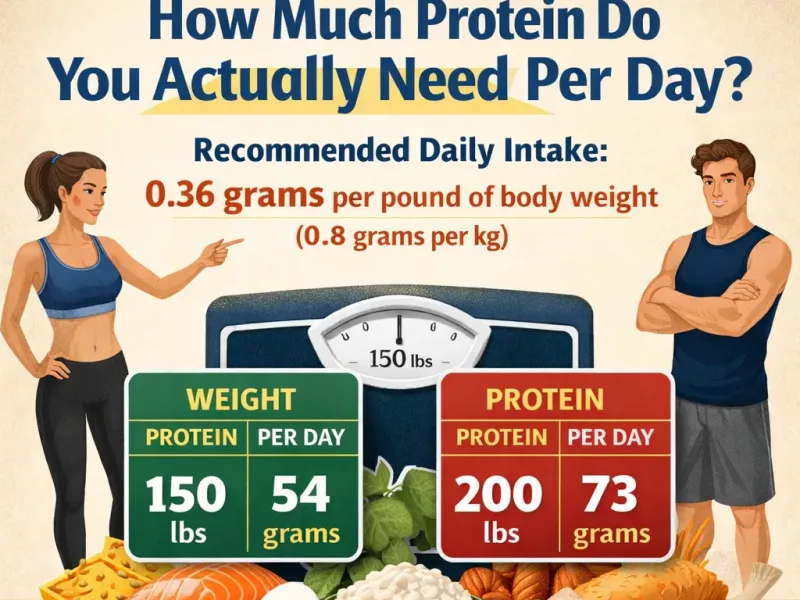
The RDA for protein is widely considered outdated. Find out how much protein you actually need based on your age, activity level, and health goals.
How Much Protein should you get in a day?
Talk to a nutritionist on how much protein you should take and you would probably hear 0.8 grams per kilogram of body weight - the old RDA. Pose the same question to a sports scientist or longevity researcher, and the answer is much different. Science on daily protein requirements has developed significantly in the last twenty years and opinion is taking a new direction. Knowing your real protein requirements is the backbone to muscle wellbeing, fullness, metabolic efficiency and healthy ageing.
The reasons the RDA is sure to be too low.
The reason why the 0.8g/kg RDA was set was to avoid protein deficiency in sedentary adults not to maximise health or performance.
Several studies on nitrogen balance and muscle protein synthesis currently indicate that the range between 1.2 and 1.6g/kg/day is more likely to be the ideal consumption of most active adults.
In older adults (65+) the threshold increases even more. Sarcopenia -Senile loss of muscle- starts in the middle of 30s and gains strength after 60.
A study conducted in American Journal of Clinical Nutrition revealed that older adults who were fed 1.216g/kg/day and maintained better lean mass than those who only met the RDA.
Protein requirements are raised above the baseline by obesity, recovery after illness and strength training.
The hypothesis that consumption of high protein levels harms the kidneys of healthy people is not backed by any evidence; this is the case of individuals with already existing renal disease, not of the general population.
Targets of proteins based on evidence by objective:
Sedentary adults 1.0-1.2g per kg of body weight per day.
Active adults and recreational exercisers: 1.4 -1.7g/kg/day.
Strength athletes and bodybuilders: 1.6 -2.2g/kg/day.
Adults 65+: 1.2–1.6g/kg/day minimum
Weight loss preserving muscle: To 2.4g/kg/day in caloric deficit.
The timing of proteins is also important. Leucine threshold, which is about 2.5-3g of leucine per meal, seems to be the amount needed to optimally stimulate muscle protein synthesis. Normally, this needs 30-40g of good protein each meal. Consuming the same amount of food per meal (three meals) is more effective in muscle synthesis than eating the majority of protein in a single sitting.
Quality vs. Quantity Not All Protein is Equal.
The essential amino acids are found in favourable proportions in animal proteins (meat, eggs, dairy, fish) and are also highly bioavailable. Plant proteins tend to be incomplete or less digestible - a combination of sources (rice and beans, tofu with edamame) solves this issue. Of particular interest is the leucine content: whey, eggs, and beef are highest. When plant proteins are the main source, it is likely to consider the upper end of recommendations and this reduces bioavailability.
Conclusion
The true protein requirement of the day is almost definitely more than what the authorities say, particularly when you are active, or older than 50, or trying to maintain the body composition. Goal of 1.4 1.7g per kilogram of body weight, evenly divide the intake between meals, and make high-leucine a priority.
Author: Doctar Team
Disclaimer- For more infor mation connect with Doctor on Doctar.