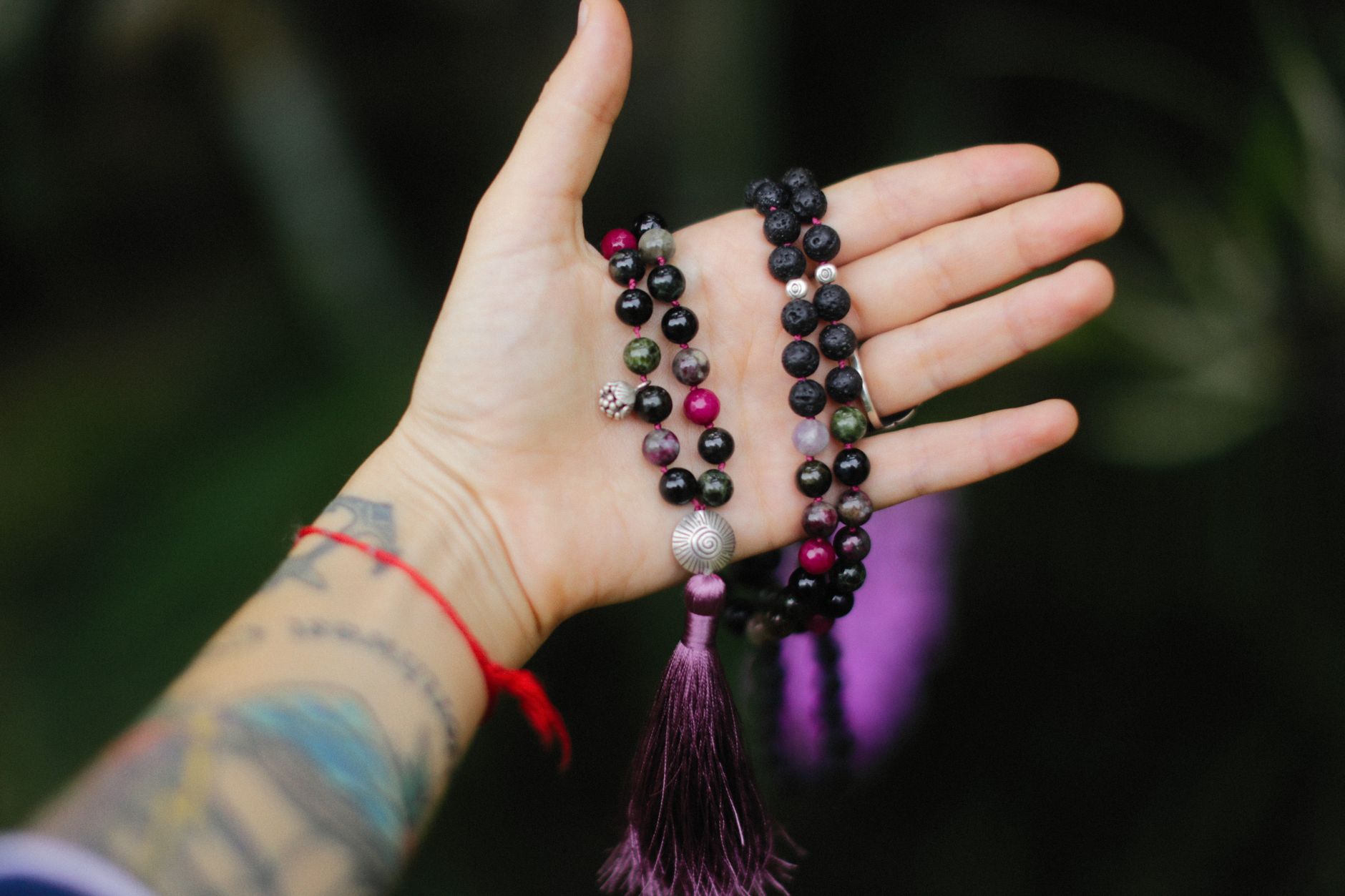
In today's fast-paced world, finding moments of calm can feel like a luxury. Many of us struggle with scattered thoughts, stress, and difficulty focusing, especially during meditation. If you've ever found yourself trying to meditate and your mind races with to-do lists or worries, you're not alone. It's a common hurdle that can make the practice feel frustrating rather than freeing. But what if there was a simple, tangible tool that could help guide your focus and deepen your practice? Enter mala beads.
Often seen as beautiful accessories, mala beads, also known as japa malas, are much more than just decorative items. They are ancient tools with roots in various spiritual traditions, including Hinduism and Buddhism, used for centuries to aid in prayer and meditation. Their primary purpose is to help you stay grounded and focused, transforming your meditation from a potentially chaotic experience into a serene and centering one.
Why Use Mala Beads?
Mala beads are designed to support your meditation practice in two key ways:
- Grounding through Repetitive Touch: The simple, tactile sensation of moving your fingers from one bead to the next provides a gentle anchor to the present moment. This physical connection helps to quiet the mental chatter and bring your awareness back to your breath or mantra.
- Tracking Repetitions: For practices involving mantras or specific affirmations, each bead serves as a marker, allowing you to count repetitions without needing to consciously keep track. This frees up your mental energy to focus on the meaning and feeling of your mantra.
These benefits are significant because consistent meditation is linked to a wealth of health advantages. Studies suggest it can help reduce stress, improve sleep quality, lower blood pressure, and enhance overall mental well-being. However, the effectiveness of meditation hinges on your ability to maintain focus. This is precisely where mala beads shine, acting as a supportive companion on your journey to inner peace.
Understanding the Structure of a Mala
A traditional mala consists of 108 beads, a number considered sacred in many Eastern religions. This number is believed to represent various spiritual concepts, such as the 108 earthly desires or delusions humans face, or the 108 energy lines converging to form the heart chakra. Alongside the main beads, you'll find a larger bead called the 'guru bead.' This bead signifies the start and end point of your mantra or breath cycle. Many malas also feature a decorative tassel attached to the guru bead, adding a sense of completion.
While 108 is traditional, you might also encounter malas with 54 or 27 beads. These shorter versions are perfect for those who prefer a quicker meditation session or find the full 108 beads a bit lengthy. Some malas incorporate beads of a different texture or shape after every 27th bead, providing a subtle cue to help you keep track of your progress, especially if you're using a shorter cycle.
How to Use Mala Beads for Breath Meditation
Breath awareness is a foundational meditation technique. It's accessible anywhere, anytime, and mala beads can make it even more effective.
Getting Started:
- Hold the Mala: Let the mala rest comfortably on your fingers. Many people prefer to use their thumb and middle finger, as some traditions suggest avoiding the index finger. Drape the mala so you can easily slide it from bead to bead.
- Begin at the Guru Bead: Start with one of the beads next to the guru bead.
- Focus on Your Breath: Take one full breath – inhale and exhale.
- Move to the Next Bead: Gently slide your fingers to the next bead and repeat the process: one full breath (inhale and exhale) per bead.
- Complete the Cycle: Continue this practice, moving from bead to bead, until you reach the guru bead again. This completes one round of 108 breaths.
- Continuing the Practice: If you wish to continue, you can simply reverse the direction of the mala and start again from the bead closest to the guru bead on the other side. Avoid crossing over the guru bead itself.
Imagine you're sitting at your desk, feeling overwhelmed by emails. You take a moment, pick up your mala, and focus on your breath, moving bead by bead. After a few rounds, you feel a sense of calm return, ready to tackle your tasks with a clearer mind.
How to Use Mala Beads with Mantras
A mantra is a word, sound, or phrase repeated silently or aloud to aid concentration. Whether it's a traditional sound like 'Om' or a personal affirmation such as 'I am peaceful,' a mantra focuses your mind.
Practicing with a Mantra:
- Prepare Your Mantra: Choose a mantra that resonates with you. It could be a single word, a short phrase, or a sound.
- Hold and Position: Hold your mala as described for breath meditation, typically using your thumb and middle finger.
- Repeat the Mantra: As you move from one bead to the next, repeat your chosen mantra. You can whisper it, say it aloud, or repeat it silently in your mind. Choose the method that feels most comfortable and conducive to focus for you.
- Complete the Round: Continue this process until you have traversed all 108 beads and returned to the guru bead.
For instance, if you're feeling anxious before a presentation, you might choose the mantra 'I am confident.' Moving through your mala, repeating 'I am confident' with each bead, can help dissolve anxiety and instill a sense of self-assurance.
Choosing Your Mala Beads
Mala beads come in a wide array of styles, colors, and materials. The beads can be crafted from seeds, wood, various gemstones, or other natural elements. Since you'll be using your mala as a tool for peace and relaxation, it's essential to select one that feels right for you.
What to Consider:
- Material and Feel: Does the texture of the beads feel pleasant in your hands? Some people are drawn to the smooth coolness of stones, while others prefer the warmth of wood.
- Aesthetic Appeal: Choose a mala whose appearance resonates with you. The colors and designs can hold personal meaning and enhance your meditative experience.
- Personal Significance: Consider if any particular gemstones or seeds have special meaning for you. For example, rose quartz is often associated with love, while sandalwood is known for its calming aroma.
Ultimately, the 'best' mala is the one that you feel a connection with and are inspired to use regularly. Don't overthink it; trust your intuition. If a mala speaks to you, it's likely the right one for your practice.
When to Consult a Doctor
Mala beads are a tool for mindfulness and meditation, which can support overall well-being. However, they are not a substitute for professional medical advice or treatment. If you are experiencing significant stress, anxiety, depression, or other mental health concerns, it is important to consult with a qualified healthcare provider or mental health professional. They can provide an accurate diagnosis and recommend appropriate treatment options. Similarly, if you have physical health issues, always seek the guidance of your doctor.
Frequently Asked Questions About Mala Beads
Are mala beads religious?
Mala beads have their origins in religious traditions like Hinduism and Buddhism, where they are used for prayer and chanting. However, they are now widely adopted as secular mindfulness tools for meditation, stress reduction, and focus, regardless of religious belief.
Do I have to use 108 beads?
No, you don't have to use 108 beads. While 108 is traditional, many people use malas with 54 or 27 beads for shorter meditation sessions. The most important aspect is finding a practice that works for you.
Can I make my own mala?
Absolutely! Many people find creating their own mala to be a deeply personal and rewarding experience. You can choose beads and materials that hold special significance for you, making the mala even more meaningful.