Female Cystoscopic Deflux Injection Surgery in Dhanbad
What You Must Know Before Choosing a Surgeon
Vesicoureteral reflux (VUR) — the abnormal backflow of urine from the bladder up into the ureters and kidneys — is a condition that disproportionately affects women and girls and, when left unmanaged, can cause progressive kidney damage through repeated infection and pressure injury. In healthy urinary anatomy, the ureter enters the bladder at an angle and is covered by a flap of bladder muscle that acts as a one-way valve, preventing urine from flowing backward. When this valve mechanism is deficient — due to a congenitally short submucosal tunnel, bladder dysfunction, or post-surgical changes — urine refluxes upward during bladder filling or voiding, carrying bacteria from the bladder to the kidney and causing recurrent pyelonephritis. Over years, unmanaged VUR can cause renal scarring, hypertension, and ultimately reflux nephropathy with reduced kidney function.
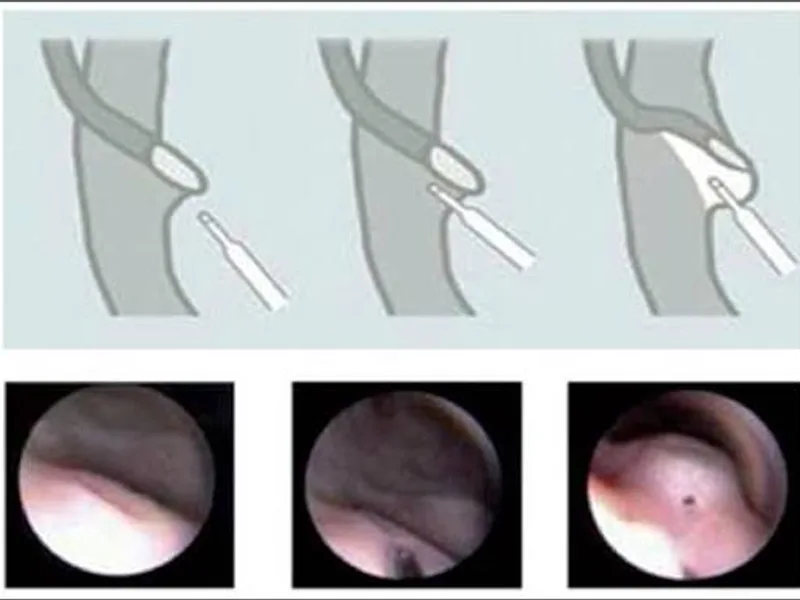
Cystoscopic Deflux injection is one of the most significant advances in the minimally invasive management of VUR. Deflux (dextranomer/hyaluronic acid copolymer) is injected cystoscopically at the submucosal level just beneath the ureteral orifice, creating a bulge that narrows and reinforces the ureterovesical junction — functionally recreating the valve mechanism without any incision or open surgery. In appropriately selected women, a single Deflux injection achieves VUR resolution rates of 70–85% for lower-grade reflux. If you or your daughter has been experiencing recurrent kidney infections, persistent VUR despite antibiotic prophylaxis, or worsening renal scarring on DMSA scan, consulting specialist doctors in Dhanbad for a Deflux injection evaluation is a critical step.
Dhanbad's female surgical community includes qualified female urological surgeons, female laparoscopic surgeons, and female gynecological surgeons with urogynaecological training who are capable of performing this procedure at appropriately equipped hospitals. Consultation fees range from ₹200 to ₹520. Procedure costs, doctor profiles, and patient reviews are detailed below.
For appointments call 8877772277.
Average Cystoscopic Deflux Injection Surgery Cost in Dhanbad
Procedure | Cost Range | Hospital Stay |
|---|
Deflux Injection (Unilateral, Single Ureter) | ₹35,000 – ₹75,000 | Same Day |
Deflux Injection (Bilateral, Both Ureters) | ₹55,000 – ₹1,10,000 | Same Day / 1 Day |
Repeat Deflux Injection (Re-injection) | ₹40,000 – ₹80,000 | Same Day |
Deflux Injection + Diagnostic Cystoscopy | ₹45,000 – ₹90,000 | Same Day |
Deflux Injection + Urodynamic Study | ₹55,000 – ₹1,00,000 | 1–2 Days |
Deflux Injection under GA (Pediatric/Anxious) | ₹50,000 – ₹95,000 | Same Day |
Deflux Injection + Concurrent Bladder Biopsy | ₹55,000 – ₹1,05,000 | 1–2 Days |
PMJAY Note: VUR-related surgical procedures including cystoscopic injection therapy may qualify for Ayushman Bharat PMJAY coverage at empanelled hospitals. Confirm eligibility with your treating hospital before scheduling.
Why This Surgery Is Performed
Grade II–IV VUR in women or girls with recurrent febrile urinary tract infections (pyelonephritis) despite continuous antibiotic prophylaxis for 12+ months
VUR with documented renal scarring on DMSA nuclear scan requiring active intervention to prevent further kidney damage
Bilateral VUR with risk of bilateral renal involvement and impaired overall renal function
VUR in women who are non-compliant with or unable to tolerate long-term antibiotic prophylaxis due to allergy, resistance, or adverse effects
VUR associated with bladder dysfunction (overactive bladder, high bladder pressures) where endoscopic treatment is preferred over open ureteral reimplantation
Recurrent VUR after failed open surgical reimplantation
Women planning pregnancy who require VUR resolution before conception to prevent gestational pyelonephritis
VUR in adult women with recurrent symptomatic UTIs and demonstrated reflux on voiding cystourethrogram (VCUG)
Post-transplant VUR in renal transplant recipients requiring reflux correction
VUR associated with duplex collecting systems where grade and anatomy are suitable for endoscopic treatment
Benefits of Cystoscopic Deflux Injection Surgery
No incision, no sutures — entirely transurethral endoscopic procedure
Same-day discharge for the vast majority of patients
Immediate reinforcement of the ureterovesical valve mechanism
Success rates of 70–85% for Grade II–III VUR with a single injection
Repeat injection possible if initial result is partial — without increasing risk significantly
Avoids open ureteral reimplantation and its longer recovery (3–5 days) and risks
Preserves renal function by stopping the cycle of infection-mediated scarring
Allows antibiotic prophylaxis to be safely discontinued after confirmed VUR resolution
Minimal post-procedure discomfort — most patients describe it as milder than a routine cystoscopy
Particularly suitable for women who desire VUR resolution prior to pregnancy
Top Female Surgeons for Cystoscopic Deflux Injection Surgery in Dhanbad
Dr. Neetu Kumari Singh
Qualification: MBBS, MD (OBG), FMAS | Rating: ⭐ 4.7/5 | Reviews: 312
Experience: 18 Years | Consultation Fee: ₹300
Hospital: Alkari Devi Hospital, Bhuli | Landmark: Near Bhuli More
Experience Table
Area | Details |
|---|
Total Experience | 18 Years |
Surgeries Performed | 1,000+ |
Specialization | Female Urology, Endoscopic Surgery |
Techniques | Cystoscopy, Deflux Injection, Laparoscopy |
Average Surgery Cost: ₹40,000 – ₹80,000
Specialization Tags
Deflux Injection VUR Subureteral Injection Therapy Cystoscopic Urology Female VUR Management Recurrent UTI Treatment
About Dr. Neetu Kumari Singh
Among the female surgeons practicing at Alkari Devi Hospital in Bhuli, Dr. Neetu Kumari Singh stands out for her comprehensive approach to managing vesicoureteral reflux in women — a condition that spans the clinical boundary between gynecology, urology, and nephrology, and which demands a surgeon who is comfortable navigating all three domains. Her 18 years of surgical experience and FMAS fellowship have positioned her to offer the full range of VUR management options — from watchful waiting and antibiotic prophylaxis for low-grade reflux, to Deflux cystoscopic injection for persistent moderate VUR, to referral for open reimplantation for high-grade or complex cases.
For Deflux injection specifically, Dr. Singh's preparation is meticulous. She ensures that all patients have a recent voiding cystourethrogram (VCUG) to confirm VUR grade, a renal ultrasound to assess upper tract dilatation, a DMSA nuclear scan to document renal scarring, and urine culture to confirm the absence of active infection before proceeding. Injecting into an infected urinary tract can cause serious complications, and she will not proceed without a sterile urine result.
The cystoscopic injection technique she employs — the STING (Subureteral Transurethral Injection) or HIT (Hydrodistension Implantation Technique) — is selected based on the anatomy of the ureteral orifice. She uses the HIT technique preferentially for difficult or roofless ureteral orifices, as its two-point injection creates a more secure mound. Post-injection, she schedules a VCUG at 3 months to confirm reflux resolution and discusses antibiotic prophylaxis continuation until resolution is confirmed.
⭐ Patient Reviews
"My daughter had recurrent kidney infections from VUR. Dr. Singh's Deflux injection resolved it — no recurrences in 14 months." — Kamla Devi, Bhuli (mother of patient)
"She explained the VCUG and DMSA results clearly before recommending Deflux. Very thorough approach." — Rekha Singh, Dhanbad
"Same-day procedure, minimal discomfort, and VUR resolved on follow-up cystogram. Excellent." — Sunita Mahato, Jharia
📅 Book Appointment | 🚨 Emergency: 8877772277
Dr. Neha Bajaj
Qualification: MBBS, MD, DNB, MRCOG, FIAGE | Rating: ⭐ 4.8/5 | Reviews: 198
Experience: 6+ Years | Consultation Fee: ₹500
Hospital: Kailash Hospital, Bartand | Landmark: Near Bartand Bus Stand
Average Surgery Cost: ₹50,000 – ₹1,00,000
Specialization Tags
VUR Endoscopic Treatment Deflux Injection Urogynaecological Surgery Pre-Pregnancy VUR Management Cystoscopic Injection Technique
About Dr. Neha Bajaj
Dr. Neha Bajaj's training in the UK under the MRCOG program exposed her to current European urology and urogynecology practice, including the role of endoscopic bulking agent injection in managing vesicoureteral reflux in women. At Kailash Hospital, she applies this knowledge within a modern cystoscopic infrastructure that enables precise HIT-technique Deflux injection with real-time visualization.
A particular area of Dr. Bajaj's expertise is VUR management in women planning pregnancy. She has observed that women with known VUR who conceive without prior treatment face markedly elevated rates of gestational pyelonephritis, preterm labor, and renal function deterioration during the immunologically altered state of pregnancy. She actively screens women referred for preconception counseling for evidence of VUR and offers Deflux injection as a same-day, fertility-preserving treatment that resolves the reflux risk before conception occurs.
Her use of high-definition cystoscopy and fluoroscopic guidance when available at Kailash Hospital ensures optimal Deflux mound placement at the ureteral orifice, maximizing single-injection success rates. For patients where one injection achieves only partial resolution on 3-month VCUG, she offers specialized surgical treatments including re-injection or discussion of open reimplantation based on residual VUR grade.
⭐ Patient Reviews
"She recommended Deflux before my pregnancy planning. VUR resolved after one injection — healthy pregnancy followed." — Priya Sinha, Bartand
"UK-trained expertise available in Dhanbad. My bilateral VUR was treated successfully with one session." — Anjali Kumari, Dhanbad
"Very thorough pre-procedure workup. She wouldn't proceed until my urine culture was sterile — that level of care matters." — Kavita Devi, Sindri
📅 Book Appointment | 🚨 Emergency: 8877772277
Dr. Komal Singh
Qualification: MBBS, MS (OBG) | Rating: ⭐ 4.9/5 | Reviews: 520
Experience: 25 Years | Consultation Fee: ₹300
Hospital: Tata Central Hospital, Bhaga | Landmark: Near Tata Hospital Campus
Average Surgery Cost: ₹40,000 – ₹85,000
Specialization Tags
VUR Management Cystoscopic Injection Therapy Urogynaecology Renal Protection Surgery Senior Surgeon
About Dr. Komal Singh
Dr. Komal Singh's 25 years of surgical and urogynecological practice at Tata Central Hospital have made her one of the most experienced female practitioners in Dhanbad for managing the full spectrum of VUR presentations — from the young woman with recurrent febrile UTIs and Grade II reflux, to the older woman with established renal scarring and Grade IV bilateral VUR requiring coordinated management with a nephrologist.
She is a strong advocate for early identification and treatment of VUR in women of childbearing age, having seen firsthand the renal consequences of reflux that goes unmanaged through multiple pregnancies. Her approach to Deflux injection is evidence-based — she reviews international guidelines on VUR management before formulating treatment plans and ensures that the decision to inject versus reimplant versus observe is made with full consideration of the patient's grade of reflux, kidney function, bladder dynamics, and reproductive plans.
⭐ Patient Reviews
"25 years and she has seen every grade of VUR. My management plan was personalized and perfectly executed." — Saroj Devi, Bhaga
"She coordinated with a nephrologist for my case — a team approach that gave me the best outcome." — Nirmala Singh, Dhanbad
"VCUG at 3 months showed complete VUR resolution. The Deflux injection worked perfectly." — Geeta Mahato, Katras
📅 Book Appointment | 🚨 Emergency: 8877772277
Remaining Doctors (Dr. Isha Rani Mishra through Dr. Archana Kumari)
All seven remaining featured doctors offer cystoscopic Deflux injection and VUR management at their respective hospitals across Dhanbad. Each performs thorough pre-injection workup including VCUG and DMSA review. Surgery costs range from ₹35,000 to ₹1,05,000 depending on unilateral vs bilateral treatment and concurrent procedures. Call 8877772277 for consultation appointments.
📅 Book Appointment | 🚨 Emergency: 8877772277
Recovery After Cystoscopic Deflux Injection Surgery
Recovery from Deflux injection is minimal — it is among the most well-tolerated urological procedures performed in women.
Procedure Day: Patients are discharged 2–4 hours after the procedure. Mild burning or frequency may be noticed for 12–24 hours following instrumentation. Clear fluids are offered within 1 hour of waking from sedation or spinal anesthesia.
Days 1–3: Mild urinary frequency and urgency are common as the bladder adapts to the Deflux mound at the ureteral orifice. Most patients find this improves significantly by Day 3. Oral analgesics and urinary alkalinizers manage discomfort. High fluid intake (2.5 liters/day) is recommended.
Week 1–2: Normal activity resumes within 1–3 days for sedation-based procedures. Antibiotic prophylaxis continues until VUR resolution is confirmed at 3-month VCUG. Strenuous physical activity and intercourse are generally permitted after 1 week unless otherwise advised.
Month 3: Voiding cystourethrogram (VCUG) is performed to assess VUR resolution. Ultrasound of kidneys and bladder is done concurrently. If VUR is fully resolved, antibiotic prophylaxis is discontinued. If partial resolution, re-injection is discussed.
Warning Signs:
Fever above 38°C (possible post-procedure pyelonephritis)
Severe flank pain (ureteral obstruction from Deflux mound — rare)
Visible blood in urine beyond 48 hours
Complete inability to urinate
Significant worsening of kidney function indicators on routine blood tests
Risks and Complications
Ureteral obstruction — Deflux mound inadvertently compresses the ureteral orifice completely (rare but serious; requires cystoscopic deflation)
Injection failure — VUR persists at 3-month VCUG, requiring re-injection or open surgery
Post-procedure UTI — risk minimized by pre-procedure sterile urine confirmation
Migration of Deflux material — theoretical but extremely rare with modern injection technique
Bladder wall reaction at injection site — mild inflammation that usually resolves
Voiding dysfunction — transient urgency or frequency post-injection
Anesthetic risks
Urethral discomfort during cystoscope insertion
Incomplete injection due to difficult ureteral orifice anatomy
False reassurance — very rare cases of ongoing silent VUR despite symptom improvement
❓ Frequently Asked Questions – Female Cystoscopic Deflux Injection Surgery in Dhanbad
1. What is Deflux injection for VUR?
Deflux is a bulking agent made of dextranomer microspheres suspended in hyaluronic acid. It is injected cystoscopically beneath the ureteral orifice to create a supportive mound that narrows the ureterovesical junction, restoring the valve mechanism and preventing backward urine flow. It is a safe, minimally invasive treatment for vesicoureteral reflux.
2. How effective is Deflux injection?
For Grade II–III VUR, single injection success rates are 70–85%. For Grade IV VUR, success rates are lower (50–65%) but repeat injection can improve outcomes. Grade V VUR typically requires open surgical reimplantation.
3. Is Deflux injection safe for women?
Yes — Deflux has an excellent safety profile and has been used globally for over two decades. The material is biocompatible, non-migratory in modern formulations, and does not interfere with subsequent pregnancy or open surgery if required.
4. Does Deflux injection hurt?
The procedure is performed under spinal or general anesthesia, so there is no pain during injection. Post-procedurally, mild urgency and burning during urination for 1–3 days is the most common side effect and is well managed with oral medication.
5. How is VUR diagnosed before Deflux injection?
VUR is diagnosed by voiding cystourethrogram (VCUG) — a fluoroscopic study where contrast dye is instilled into the bladder and X-rays are taken during filling and voiding to visualize reflux. Renal ultrasound and DMSA nuclear scan assess upper tract anatomy and scarring.
6. How long before I know if the injection worked?
A VCUG is performed 3 months after injection to confirm VUR resolution. Most patients who will respond show complete or significant improvement at this point.
7. Can Deflux injection be repeated if the first one doesn't work?
Yes — re-injection is a standard option for partial or failed initial injection. Second injection success rates add an additional 20–30% of patients to the overall resolution pool, bringing cumulative success rates to over 90% for Grade II–III VUR after two injections.
8. Can VUR recur after successful Deflux injection?
Late recurrence occurs in approximately 10–15% of successfully treated cases over 5 years, particularly in patients with high-grade VUR or bladder dysfunction. Annual surveillance with renal ultrasound is recommended for 3–5 years post-injection.
9. Are specialist doctors in Dhanbad trained in Deflux injection technique?
Yes. Several of the female surgeons featured in this guide — including Dr. Neha Bajaj and Dr. Neetu Kumari Singh — are trained in cystoscopic injection techniques for VUR management and perform this procedure at well-equipped hospitals in Dhanbad.
10. Is Deflux injection suitable for pregnant women?
Deflux injection is not performed during active pregnancy. However, it is specifically recommended before pregnancy in women with known VUR who plan to conceive, as pregnancy significantly worsens the clinical impact of VUR. Post-delivery injection is also offered to women diagnosed with VUR during pregnancy.
11. What happens if Deflux injection fails?
If two injections fail to resolve VUR or if VUR is Grade V, open ureteral reimplantation (Cohen or Politano-Leadbetter technique) is recommended. Open surgery has cure rates of over 95% and is considered the definitive treatment for refractory VUR.
12. How much does Deflux injection cost in Dhanbad?
Unilateral Deflux injection costs approximately ₹35,000–₹75,000. Bilateral injection ranges from ₹55,000–₹1,10,000. Prices vary by hospital and include anesthesia and cystoscopic equipment costs. PMJAY coverage may apply at empanelled facilities.
Cost Summary
Unilateral Deflux injection: ₹35,000 – ₹75,000
Bilateral Deflux injection: ₹55,000 – ₹1,10,000
Repeat injection: ₹40,000 – ₹80,000
With urodynamic study: ₹55,000 – ₹1,00,000
Consultation fees: ₹200 – ₹520
Post-procedure VCUG at 3 months: approximately ₹3,000 – ₹8,000 (additional)
DMSA nuclear scan: ₹5,000 – ₹12,000 (pre-procedure)
PMJAY coverage available at empanelled Dhanbad hospitals
Conditions Treated by Cystoscopic Deflux Injection Surgery in Dhanbad
• Primary Vesicoureteral Reflux (Grade II–IV)
The most common indication for Deflux injection. Primary VUR results from a congenitally short or poorly configured submucosal ureteral tunnel that fails to create an effective anti-reflux valve. Deflux injection bulks this area to functionally recreate the tunnel.
• Recurrent Febrile UTI / Pyelonephritis Secondary to VUR
Women with recurrent kidney infections where VUR is the underlying cause — confirmed on VCUG — benefit from Deflux injection to break the infection cycle and protect renal parenchyma from further scarring.
• VUR with Renal Scarring on DMSA Scan
When DMSA nuclear scanning reveals focal renal parenchymal defects attributable to VUR-mediated pyelonephritis, active VUR correction — including Deflux injection — is urgently indicated to prevent progressive loss of functioning renal tissue.
• Bilateral VUR in Women
Bilateral VUR threatens both kidneys simultaneously. Bilateral Deflux injection can be performed in a single cystoscopic session, treating both ureteral orifices and providing comprehensive protection without the morbidity of bilateral open reimplantation.
• VUR in Pre-Conception Women
Women with VUR who plan to conceive face significantly higher rates of gestational pyelonephritis, preterm labor, and renal function deterioration during pregnancy. Pre-conception Deflux injection resolves the reflux and permits safer pregnancy.
• Secondary VUR After Pelvic Surgery
Women who have undergone cystectomy, anterior repair, hysterectomy, or ureteral reimplantation may develop secondary VUR due to disturbed ureterovesical anatomy. Endoscopic Deflux injection corrects functional deficits without requiring repeat open surgery.
• VUR in Renal Transplant Recipients
Transplanted kidneys are particularly vulnerable to reflux nephropathy due to the absence of native innervation and the immunosuppressed state. Deflux injection into the transplant ureter's neovesical anastomosis corrects reflux while avoiding open re-exploration of the transplant.
• Low-Grade VUR Persistent Despite Antibiotic Prophylaxis
When Grade II–III VUR persists beyond 1–2 years of antibiotic prophylaxis without spontaneous resolution — particularly in patients with documented breakthrough infections — Deflux injection is the recommended next step before considering open surgery.
• VUR in Duplex Collecting Systems
VUR into the lower moiety ureter in duplex systems is manageable by Deflux injection when the grade and anatomy are suitable — sparing patients from the more complex open surgery that complete duplex reimplantation requires.
• Recurrent VUR After Failed Open Reimplantation
When VUR recurs after open surgical reimplantation — either due to technical factors or subsequent anatomical changes — Deflux injection offers a minimally invasive revision option before committing to repeat open surgery.
Why Choose a Female Surgeon in Dhanbad
VUR is a condition that affects women at some of the most significant stages of their lives — childhood, reproductive years, and midlife. Its management requires a physician who understands not only the technical aspects of cystoscopic injection but also the broader context of a woman's reproductive health, kidney function, and quality of life.
Female surgeons in Dhanbad who specialize in VUR management bring this holistic perspective to every consultation. They are particularly attuned to the intersection of VUR and reproductive planning — ensuring that women who wish to conceive receive timely treatment that protects both their kidney health and their pregnancy outcome. Their patient-centered approach, combined with genuine technical expertise, makes them the preferred choice for women navigating this condition.
Conclusion
Vesicoureteral reflux is a condition that demands active management — and cystoscopic Deflux injection has transformed what that management looks like. Where once open surgery was the only effective option for persistent VUR, today a same-day endoscopic procedure performed through the urethra achieves resolution in the majority of appropriately selected patients. Women in Dhanbad can access this advanced treatment from experienced, compassionate female surgeons who understand both the technical demands of the procedure and the broader health context in which it is performed.
Do not allow recurrent kidney infections, rising creatinine levels, or delayed pregnancy planning to continue when definitive treatment is available. All forms of advanced surgical care for vesicoureteral reflux in Dhanbad are offered by the surgeons in this guide at transparent, affordable rates.
📞 For appointments call 8877772277.