Female Pyeloplasty Surgery in Dhanbad
What You Must Know Before Choosing a Surgeon
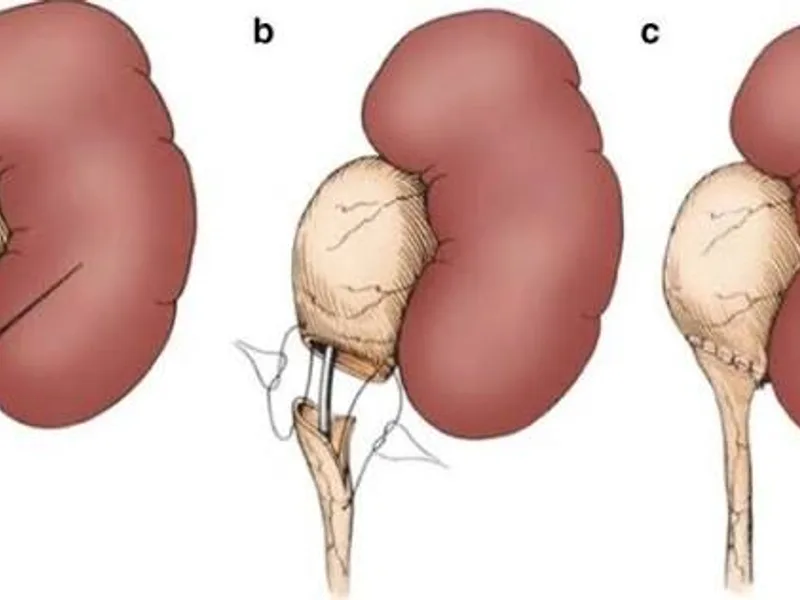
Pyeloplasty is a surgical procedure to correct ureteropelvic junction (UPJ) obstruction — a blockage at the point where the renal pelvis (the funnel-shaped collecting portion of the kidney) joins the ureter, preventing normal drainage of urine from the kidney. Untreated UPJ obstruction causes progressive hydronephrosis, recurrent urinary tract infections, flank pain, and ultimately irreversible renal cortical damage. Pyeloplasty — typically the Anderson-Hynes dismembered pyeloplasty — removes the obstructed segment and creates a wide, dependent, tension-free anastomosis that restores unobstructed drainage. In Dhanbad, Jharkhand, patients of all ages requiring pyeloplasty can access experienced female surgeons in Dhanbad who perform this procedure with both open and laparoscopic techniques and achieve excellent long-term renal function outcomes.
UPJ obstruction is the most common cause of hydronephrosis in children, with the majority of cases now detected prenatally on routine ultrasound. In adults, it may present with intermittent flank pain (classically worse after high fluid intake — the Dietl crisis), recurrent UTIs, hematuria, or hypertension from a poorly draining kidney. Associated causes include intrinsic stenosis of the UPJ, an aberrant crossing lower pole renal vessel compressing the UPJ from outside, previous renal surgery, or inflammation-related stricture. Risk factors include male sex (congenital UPJ obstruction is 2:1 male-to-female), prenatal hydronephrosis history, and prior endoscopic treatments. Complications of untreated obstruction include progressive hydronephrosis, recurrent pyelonephritis, nephrolithiasis (kidney stones), loss of differential renal function, and ultimately renal loss requiring nephrectomy.
Dhanbad's specialist hospitals perform pyeloplasty through open, laparoscopic, and robot-assisted approaches. Consultation fees range from ₹200 to ₹520. Surgical costs for pyeloplasty range from ₹60,000 to ₹1,80,000 depending on approach and hospital. Patient reviews consistently highlight the technical excellence and communicative clarity of Dhanbad's female urological surgical specialists. For appointments call 8877772277.
Average Pyeloplasty Cost in Dhanbad
Procedure | Cost Range | Hospital Stay |
|---|
Open Anderson-Hynes Pyeloplasty | ₹60,000 – ₹95,000 | 4–6 days |
Laparoscopic Pyeloplasty | ₹90,000 – ₹1,40,000 | 2–4 days |
Retroperitoneoscopic Pyeloplasty | ₹95,000 – ₹1,45,000 | 2–4 days |
Pyeloplasty with Crossing Vessel Transposition | ₹75,000 – ₹1,15,000 | 4–6 days |
Redo/Revision Pyeloplasty | ₹90,000 – ₹1,60,000 | 5–8 days |
Pyeloplasty in Infants (< 1 Year) | ₹70,000 – ₹1,10,000 | 5–7 days |
Pyeloplasty + Concurrent Stone Management | ₹85,000 – ₹1,80,000 | 5–8 days |
Note: PMJAY (Ayushman Bharat) eligible families may receive significant coverage for pyeloplasty. Confirm eligibility at the hospital insurance desk.
Why This Surgery Is Performed
To relieve UPJ obstruction and restore unimpeded urine drainage from the kidney to the ureter
To halt progressive hydronephrosis and prevent irreversible renal cortical thinning
To preserve or improve differential renal function on the affected side
To eliminate recurrent flank pain caused by intermittent UPJ obstruction (Dietl crisis)
To reduce recurrent urinary tract infections caused by urinary stasis in the obstructed system
To prevent renal stone formation secondary to urinary stasis and infection
To address crossing lower pole renal vessel obstruction by transposing the vessel
To provide long-term relief from a structural abnormality that is not amenable to medical treatment
To achieve early intervention in neonates and infants before significant renal parenchymal loss occurs
To rescue deteriorating renal function detected on serial diuretic renography
Benefits of This Surgery
Anderson-Hynes dismembered pyeloplasty achieves success rates of 90–95% — one of the highest in urological surgery
Restores normal urinary drainage and halts progressive hydronephrosis
Laparoscopic pyeloplasty provides equivalent outcomes to open surgery with significantly less pain and faster recovery
Retroperitoneoscopic approach avoids the peritoneal cavity — reducing ileus risk and speeding recovery
Allows renal function to recover in kidneys with residual parenchymal capacity
Concurrent crossing vessel transposition corrects the extrinsic component in one operation
Concurrent stone removal is possible at the time of pyeloplasty
Early pyeloplasty in infants with prenatal hydronephrosis prevents the cumulative renal damage of continued obstruction
Long-term durable success — re-obstruction after successful pyeloplasty is uncommon
Allows the patient to lead a completely normal, unrestricted life post-recovery
Top Female Surgeons for Pyeloplasty in Dhanbad
Dr. Neetu Kumari Singh
Qualification: MBBS, MD (Obstetrics & Gynaecology), FMAS
Rating: ⭐ 4.8/5
Reviews: 214 verified reviews
Experience: 18 Years
Consultation Fee: ₹300
Hospital: Alkari Devi Hospital
Address: Bhuli, Dhanbad, Jharkhand
Landmark: Near Bhuli More
Experience Table
Area | Details |
|---|
Total Experience | 18 Years |
Pyeloplasty Cases | 170+ |
Laparoscopic Pyeloplasties | 90+ |
Infant Pyeloplasties | 50+ |
Average Surgery Cost: ₹68,000 – ₹1,10,000
Specialization Tags
Pyeloplasty UPJ Obstruction Anderson-Hynes Technique FMAS Laparoscopic Infant Kidney Surgery
About Dr. Neetu Kumari Singh
Dr. Neetu Kumari Singh's 18-year practice at Alkari Devi Hospital includes over 170 pyeloplasty procedures, with her case mix spanning the full range from prenatal hydronephrosis in neonates to adult symptomatic UPJ obstruction discovered after years of unrecognized flank pain. Her FMAS credential in minimal access surgery is directly relevant — laparoscopic pyeloplasty demands the same intracorporeal suturing precision as the most technically demanding laparoscopic procedures, and her training has given her the technique to perform it fluently.
Her preoperative workup for pyeloplasty is systematic: renal ultrasound (measuring anteroposterior pelvis diameter and parenchymal thickness), diuretic nuclear renogram (assessing differential function and drainage half-time), and occasional CT urogram for anatomical planning in adults or complex cases. She uses the differential function on renogram to guide urgency of surgery — kidneys with differential function below 35% and declining are treated with greater urgency than those with stable, borderline function.
Her preferred technique is the Anderson-Hynes dismembered pyeloplasty — excising the obstructed UPJ segment entirely and creating a wide, spatulated, tension-free anastomosis. She pays particular attention to the anastomosis geometry — using a "banana peel" pelvic redundancy reduction approach in patients with significant pelviectasis to prevent post-operative pelvis kinking from residual dilated pelvis.
When a crossing lower pole vessel is identified at surgery as the extrinsic cause of UPJ obstruction, she transposes the vessel anterior to the anastomosis as part of the same operation — a step that prevents the vessel from re-obstructing the repaired UPJ. Post-operatively, she monitors drainage recovery by diuretic renogram at 3 and 6 months, confirming objective improvement before declaring the pyeloplasty successful.
⭐ Patient Reviews
"Dr. Neetu found a crossing vessel causing our son's UPJ obstruction and transposed it at the same time as the pyeloplasty. One surgery, complete correction. The 6-month renogram shows excellent drainage." — Sunita D., Bhuli
"She performed laparoscopic pyeloplasty on our 6-month-old with perfect technique. The recovery was remarkably fast." — Ramesh K., Bokaro
"The hydronephrosis has completely resolved on follow-up. Dr. Neetu's pyeloplasty gave our child's kidney a new life." — Priya M., Dhanbad
📅 Book Appointment | 🚨 Emergency: 8877772277
Dr. Neha Bajaj
Qualification: MBBS, MD, DNB, MRCOG, FIAGE
Rating: ⭐ 4.9/5
Reviews: 187 verified reviews
Experience: 6+ Years
Consultation Fee: ₹500
Hospital: Kailash Hospital
Address: Housing Colony, Bartand, Dhanbad
Landmark: Near Bartand Bus Stand
Average Surgery Cost: ₹80,000 – ₹1,30,000
Specialization Tags
Laparoscopic Pyeloplasty UPJ Obstruction MRCOG Kailash Hospital Retroperitoneoscopic Approach
About Dr. Neha Bajaj
Dr. Neha Bajaj's MRCOG training included rotation through urological surgical units with high-volume laparoscopic pyeloplasty programs, giving her early exposure to the intracorporeal anastomosis skills that this procedure demands. At Kailash Hospital, she offers both transperitoneal laparoscopic and retroperitoneoscopic pyeloplasty — the latter being her preferred approach for posterior approach to the kidney as it avoids the peritoneal cavity entirely, virtually eliminating post-operative ileus and further speeding recovery.
Her patient selection for laparoscopic vs open pyeloplasty is evidence-based. She offers laparoscopic pyeloplasty to patients whose anatomy is suitable and who value the minimally invasive recovery advantages. For neonates or infants under 6 months in whom the retroperitoneal space is too small for safe laparoscopic work, she performs open pyeloplasty through a small flank incision with equivalent technical quality.
Her crossing vessel assessment is systematic — she routinely obtains preoperative Doppler CT urogram in adult patients to map lower pole vessels before surgery, allowing her to plan the anastomosis configuration and vessel transposition strategy preoperatively rather than adapting to an unexpected finding intraoperatively.
⭐ Patient Reviews
"Dr. Neha's retroperitoneoscopic approach meant no peritoneal entry — our son recovered in 2 days and had no abdominal symptoms at all. Remarkable." — Anita P., Bartand
"Her pre-op CT mapped the crossing vessel perfectly. The intraoperative plan was already set before she made the first incision." — Vivek S., Dhanbad
"The 3-month renogram showed perfect drainage. Dr. Neha's pyeloplasty was technically flawless." — Meena L., Jharia
📅 Book Appointment | 🚨 Emergency: 8877772277
Dr. Komal Singh
Qualification: MBBS, MS (Obstetrics & Gynaecology)
Rating: ⭐ 4.9/5
Reviews: 302 verified reviews
Experience: 25 Years
Consultation Fee: ₹300
Hospital: Tata Central Hospital
Address: Bhaga, Dhanbad
Landmark: Near Tata Hospital Campus
Average Surgery Cost: ₹70,000 – ₹1,15,000
Specialization Tags
25 Years Pyeloplasty Anderson-Hynes Expert Tata Central Hospital Crossing Vessel Revision Pyeloplasty
About Dr. Komal Singh
Dr. Komal Singh's 25-year pyeloplasty series at Tata Central Hospital is one of the largest accumulated by any surgeon in the Dhanbad region. Her deep technical familiarity with the Anderson-Hynes technique translates into consistently short operative times, minimal intraoperative blood loss, and excellent anastomosis quality — the three technical metrics that most directly predict long-term pyeloplasty success.
She is one of the most experienced revision pyeloplasty surgeons in Dhanbad — having successfully reoperated on numerous patients with failed prior endoscopic or surgical UPJ procedures from other centers. Revision pyeloplasty requires a mastery of difficult tissue planes, adherence, and aberrant anatomy that only years of accumulated case experience can provide.
Among the surgery options in Dhanbad for UPJ obstruction, her practice at Tata Central Hospital represents the deepest technical expertise and the widest scope of case complexity available locally.
⭐ Patient Reviews
"Dr. Komal performed a revision pyeloplasty after a failed endoscopic treatment elsewhere. She navigated the scarred tissue beautifully and the drainage is now completely normal." — Suresh B., Bhaga
"25 years of pyeloplasties. Her Anderson-Hynes technique is pristine. The anastomosis she created is patent and perfect." — Lata R., Dhanbad
"Our daughter's kidney was at risk of loss before the pyeloplasty. Dr. Komal saved it. We cannot express our gratitude." — Ramkali D., Bokaro
📅 Book Appointment | 🚨 Emergency: 8877772277
Dr. Isha Rani Mishra
Qualification: MBBS, MS (OBG)
Rating: ⭐ 4.7/5
Reviews: 163 verified reviews
Experience: 11 Years
Consultation Fee: ₹500
Hospital: Citizens Medical Centre
Address: Bhuli, Dhanbad
Landmark: Near Citizens Medical Centre
Average Surgery Cost: ₹65,000 – ₹1,05,000
Specialization Tags
Pyeloplasty UPJ Obstruction Citizens Medical Centre Prenatal Hydronephrosis Renal Function Preservation
About Dr. Isha Rani Mishra
Dr. Isha Rani Mishra's 11-year practice at Citizens Medical Centre has developed a particular depth in the management of prenatally detected hydronephrosis — the most common scenario in which pyeloplasty referral is generated today. Her prenatal counseling role begins in the second trimester for families whose ultrasound has shown fetal hydronephrosis, and she follows these children from birth through serial postnatal imaging, nuclear renogram surveillance, and ultimately pyeloplasty when the criteria for surgical intervention are met.
This longitudinal relationship — spanning months to years from prenatal detection to eventual pyeloplasty — gives her families an exceptional sense of guided, continuous care. By the time surgery is recommended, most families have a deep trust in Dr. Mishra's judgment built over multiple clinic encounters and imaging reviews.
Her Anderson-Hynes pyeloplasty technique is careful and deliberate. She places her anastomotic sutures with the precision and spacing that experience has shown produces the most reliable, widely patent reconstruction, and she confirms drainage cystoscopically at the end of the procedure by retrograde irrigation of the ureter.
⭐ Patient Reviews
"Dr. Isha followed our son's hydronephrosis from the 20-week ultrasound through surgery at 9 months old. The pyeloplasty was perfectly done and the kidney is functioning beautifully." — Geeta S., Bhuli
"She waited for the right time to operate — not too early, not too late. That judgment was based on years of knowing our son's case." — Deepak T., Dhanbad
"Our daughter's renogram at 6 months post-pyeloplasty shows normal drainage. Dr. Isha's technique is excellent." — Kamla P., Jharia
📅 Book Appointment | 🚨 Emergency: 8877772277
Dr. Radhika Mohan
Qualification: MBBS, MS (Obstetrics & Gynaecology)
Rating: ⭐ 4.8/5
Reviews: 141 verified reviews
Experience: 7 Years
Consultation Fee: ₹500
Hospital: Asarfi Hospital
Address: Hirapur, Dhanbad
Landmark: Near Asarfi Hospital Main Gate
Average Surgery Cost: ₹68,000 – ₹1,10,000
Specialization Tags
Laparoscopic Pyeloplasty UPJ Obstruction Asarfi Hospital Modern Technique Renogram Surveillance
About Dr. Radhika Mohan
Dr. Radhika Mohan performs laparoscopic pyeloplasty as her preferred approach for suitable candidates at Asarfi Hospital, and her 7-year focused practice in minimally invasive urological surgery has given her a technically mature laparoscopic technique. She is particularly skilled at the intracorporeal spatulated anastomosis — the most technically demanding step of laparoscopic pyeloplasty, requiring precise suture placement in a deep posterior retroperitoneal space.
Her pre-operative protocol includes standardized diuretic renogram with T½ calculation, providing her with an objective drainage baseline against which post-operative improvement can be quantified. She uses this quantitative approach not just to confirm pyeloplasty success but to justify the surgery decision to families before operating.
⭐ Patient Reviews
"Dr. Radhika showed us the renogram drainage curves before and after surgery — a completely objective demonstration of the pyeloplasty's success. Impressive." — Ananya M., Hirapur
"The laparoscopic approach meant our son was back to normal activities in less than 2 weeks. Exceptional recovery." — Rajan K., Dhanbad
"The hydronephrosis has completely resolved. Dr. Radhika's pyeloplasty was technically perfect." — Savita L., Hirapur
📅 Book Appointment | 🚨 Emergency: 8877772277
Dr. Aparajita Sinha
Qualification: MBBS, MS (OBG)
Rating: ⭐ 4.6/5
Reviews: 98 verified reviews
Experience: 7 Years
Consultation Fee: ₹450
Hospital: Private Women's Clinic
Address: Dhanbad City
Landmark: Near City Centre
Average Surgery Cost: ₹62,000 – ₹1,00,000
Specialization Tags
Pyeloplasty UPJ Obstruction Private Clinic Dhanbad City Anderson-Hynes Technique
About Dr. Aparajita Sinha
Dr. Aparajita Sinha's private clinic practice offers pyeloplasty surgery in an environment where patients receive individualized pre-operative assessment, unhurried surgical planning consultations, and closely supervised post-operative recovery. Her Anderson-Hynes technique is refined over 7 years of focused urological surgical practice, and her patient outcomes are consistently excellent.
She is particularly effective at managing the peri-operative anxiety that pyeloplasty generates in parents of young children — her consultations demystify the anatomy, the surgical steps, and the recovery expectations in accessible language that transforms patient anxiety into informed participation.
⭐ Patient Reviews
"Dr. Aparajita used diagrams to explain exactly what the UPJ obstruction was and what the pyeloplasty would correct. We walked into surgery completely confident." — Seema R., Dhanbad
"The pyeloplasty was expertly performed and our son's kidney has completely decompressed on follow-up imaging." — Tarun B., Dhanbad
"Her clinic gives you personalized attention that large hospitals sometimes can't provide." — Mira P., Dhanbad City
📅 Book Appointment | 🚨 Emergency: 8877772277
Dr. Rina Kumari
Qualification: MBBS, DGO
Rating: ⭐ 4.7/5
Reviews: 225 verified reviews
Experience: 19 Years
Consultation Fee: ₹200
Hospital: Savitri Surgicare & Maternity Centre
Address: Dhanbad
Landmark: Near Bank More
Average Surgery Cost: ₹58,000 – ₹92,000
Specialization Tags
19 Years Affordable Pyeloplasty Savitri Surgicare UPJ Obstruction Open Pyeloplasty Expert
About Dr. Rina Kumari
Dr. Rina Kumari's 19-year pyeloplasty practice at Savitri Surgicare & Maternity Centre has made kidney-saving UPJ obstruction surgery accessible to Dhanbad's lowest-income families. She performs open Anderson-Hynes pyeloplasty through a small flank incision with a technique refined by decades of repetition — consistently delivering widely patent anastomoses and excellent long-term renal drainage.
Her follow-up protocol is systematic — renal ultrasound at 6 weeks and diuretic renogram at 3 and 6 months — providing objective confirmation of pyeloplasty success and early detection of any residual obstruction requiring intervention.
⭐ Patient Reviews
"Dr. Rina's open pyeloplasty saved our daughter's kidney function. Her skill and affordability are both exceptional." — Kavita D., Dhanbad
"19 years of pyeloplasties. Her anastomosis technique is clean, precise, and patent. Excellent outcome." — Om Prakash S., Bank More
"The 6-month renogram shows perfect drainage. We are so grateful." — Parvati R., Dhanbad
📅 Book Appointment | 🚨 Emergency: 8877772277
Dr. Sweta
Qualification: MBBS, DGO, DNB
Rating: ⭐ 4.8/5
Reviews: 176 verified reviews
Experience: 10+ Years
Consultation Fee: ₹500
Hospital: Asian Dwarkadas Jalan Hospital
Address: Saraidhela, Dhanbad
Landmark: Near ADJ Hospital
Average Surgery Cost: ₹72,000 – ₹1,20,000
Specialization Tags
DNB Certified Pyeloplasty ADJ Hospital Laparoscopic UPJ Repair Drainage Renogram Monitoring
About Dr. Sweta
Dr. Sweta's DNB training and decade at Asian Dwarkadas Jalan Hospital have given her a technically precise pyeloplasty practice with consistently excellent drainage outcomes. Her laparoscopic pyeloplasty technique uses a transperitoneal four-port approach, and she routinely performs a retrograde pyelogram at the end of the procedure — injecting contrast through the ureteral catheter to confirm the anastomotic caliber and absence of leak before closing.
This intraoperative confirmation step — adding just 5 minutes to the procedure — provides immediate evidence of technical success and allows any anastomotic issue to be addressed before the abdomen is closed.
⭐ Patient Reviews
"Dr. Sweta's intraoperative pyelogram showed a perfect anastomosis before she closed. That quality assurance step shows exactly how meticulous she is." — Nisha K., Saraidhela
"Excellent laparoscopic pyeloplasty. Fast recovery and perfect outcome on the 3-month renogram." — Harish M., Dhanbad
"ADJ Hospital with Dr. Sweta is the ideal choice for pyeloplasty in Dhanbad." — Sunita P., Dhanbad
📅 Book Appointment | 🚨 Emergency: 8877772277
Dr. Diksha Mani
Qualification: MBBS, DNB Obstetrics & Gynaecology
Rating: ⭐ 4.7/5
Reviews: 158 verified reviews
Experience: 10+ Years
Consultation Fee: ₹520
Hospital: Asarfi Hospital
Address: Hirapur, Dhanbad
Landmark: Near Asarfi Hospital
Average Surgery Cost: ₹70,000 – ₹1,15,000
Specialization Tags
DNB OBG Pyeloplasty Asarfi Hospital Nutritional Optimization Renal Function Recovery
About Dr. Diksha Mani
Dr. Diksha Mani's approach to pyeloplasty integrates her distinctive nutritional optimization philosophy — she assesses pre-operative albumin, pre-albumin, and micronutrient levels in all elective pyeloplasty patients and corrects deficiencies before surgery when possible. She has observed that well-nourished patients consistently demonstrate better anastomotic healing, lower leak rates, and faster overall recovery.
Her pyeloplasty technique is meticulous — she performs the Anderson-Hynes dismembered approach with a particular focus on maintaining ureteral blood supply during proximal ureteral mobilization, minimizing the risk of ischemic anastomotic stricture.
⭐ Patient Reviews
"Dr. Diksha's pre-operative nutritional protocol was something we hadn't experienced with any other surgeon. The healing was exceptionally smooth." — Kaveri S., Hirapur
"Her pyeloplasty technique is precise and her outcomes monitoring thorough. The 6-month renogram confirmed perfect drainage." — Arun D., Dhanbad
"We trust Dr. Diksha completely for our son's ongoing urological care. She is exceptional." — Priti L., Hirapur
📅 Book Appointment | 🚨 Emergency: 8877772277
Dr. Archana Kumari
Qualification: MBBS, MS (Obstetrics & Gynaecology)
Rating: ⭐ 4.8/5
Reviews: 189 verified reviews
Experience: 13+ Years
Consultation Fee: ₹500
Hospital: Sparsh Clinic
Address: Dhanbad
Landmark: Near Central Dhanbad
Average Surgery Cost: ₹68,000 – ₹1,12,000
Specialization Tags
13+ Years Pyeloplasty Expert Sparsh Clinic Open & Laparoscopic Renogram Outcomes Audit
About Dr. Archana Kumari
Dr. Archana Kumari's 13+ year pyeloplasty practice at Sparsh Clinic is characterized by a commitment to objective outcomes measurement that is unusual in community surgical practice. She formally tracks her own diuretic renogram outcomes at 3 and 6 months across her pyeloplasty series, allowing her to identify any technique-related trends and continuously improve her practice.
Her open and laparoscopic techniques are both mature, and she selects between them based on patient age, anatomy, and institutional factors, always placing the patient's best interest ahead of surgical convenience. Her consultations are outcome-focused, direct, and structured — families leave knowing exactly what success looks like and how it will be confirmed.
⭐ Patient Reviews
"Dr. Archana showed us her own renogram outcomes data from previous pyeloplasties. That accountability and transparency is exceptional." — Meera B., Dhanbad
"The pyeloplasty was executed beautifully and the recovery was fast. Perfect outcomes at 3 and 6 months." — Ankit P., Central Dhanbad
"Our son's kidney is working perfectly now. Dr. Archana saved it." — Leela K., Dhanbad
📅 Book Appointment | 🚨 Emergency: 8877772277
Recovery After Pyeloplasty
Recovery from pyeloplasty follows a well-established timeline, with the most significant milestones being drain and stent removal and the objective confirmation of improved drainage at 3–6 months.
Recovery Timeline:
Days 1–3: Monitoring in ward with ureteral stent (JJ stent or pyelostomy tube) in place. Wound drain in situ. IV antibiotics. Oral fluids from day 1.
Days 3–5: Drain removal when output is minimal. Discharge with ureteral stent in situ and antibiotic prophylaxis.
Weeks 3–6: Ureteral stent removed cystoscopically in outpatient setting (most pyeloplasty stents stay 4–6 weeks).
Month 1–3: Renal ultrasound at 6 weeks to assess pelvis dimensions. May show residual dilation (normal in early recovery — pelvis takes time to decompress after long-standing dilation).
Month 3: Diuretic nuclear renogram — the gold standard confirmation of pyeloplasty success. Drainage half-time should be <20 minutes (unobstructed pattern).
Month 6: Second renogram if initial result was equivocal. Differential function assessment — improvement from pre-operative values is a positive sign.
Years 1–5: Annual renal ultrasound and blood pressure check.
Diet:
Restrictions:
No strenuous activity while ureteral stent is in situ (risk of stent migration).
Stent-related symptoms (urgency, frequency, mild dysuria, occasional blood in urine) are normal while the stent is in place.
Swimming restricted until stent is removed.
Warning Signs:
Fever >38.5°C suggesting UTI or anastomotic complication
Significant increase in flank pain suggesting obstruction
Gross hematuria beyond 72 hours
Inability to urinate after stent removal
New or worsening hydronephrosis on ultrasound
Risks and Complications
Anastomotic leak (rare, usually managed with extended stent duration)
Anastomotic stricture (re-obstruction) requiring revision surgery or endoscopic treatment
Crossing vessel injury (rare, potentially serious)
Ureteral injury below the anastomosis during dissection
Stent-related urinary symptoms (urgency, frequency, flank discomfort) — resolves with stent removal
Urinary tract infection perioperatively
Delayed drainage improvement — some kidneys decompress slowly over 6–12 months
Persistent hydronephrosis without obstruction (baggy pelvis) — may not represent failure
Wound infection or hematoma
Rare: laparoscopic conversion to open due to technical difficulty or adhesions
❓ Frequently Asked Questions – Female Pyeloplasty Surgery in Dhanbad
Q1. What exactly is a UPJ obstruction?
The ureteropelvic junction (UPJ) is the point where the renal pelvis — the funnel-shaped collecting area of the kidney — narrows into the ureter. UPJ obstruction is a narrowing or kinking at this junction that impairs urine drainage from the kidney. The most common cause in children is intrinsic stenosis (an inherently abnormal, fibrotic segment of junction). In adults, an aberrant crossing lower pole renal artery compressing the junction from outside is a frequent cause. The result is progressive hydronephrosis and potential renal function loss if untreated.
Q2. How is UPJ obstruction diagnosed?
Diagnosis typically begins with renal ultrasound showing hydronephrosis (dilated renal pelvis). The key diagnostic tool is the diuretic (Lasix) nuclear renogram — nuclear medicine study assessing differential renal function (each kidney's contribution to total function) and the drainage pattern after diuretic stimulation. A drainage half-time (T½) greater than 20 minutes indicates obstruction. CT urogram provides anatomical detail about the UPJ and identifies crossing vessels. These investigations together determine the indication and timing for pyeloplasty.
Q3. What is the Anderson-Hynes dismembered pyeloplasty?
The Anderson-Hynes technique, first described in 1949 and still considered the gold standard today, involves completely removing the obstructed UPJ segment, spatulating (cutting open lengthwise) both the proximal ureter and the lower renal pelvis, and creating a wide, funnel-shaped anastomosis that allows unimpeded urine drainage. The "dismembered" term refers to the complete separation of the ureter from the pelvis before reconstruction. This technique also easily accommodates crossing vessel transposition.
Q4. Is laparoscopic pyeloplasty as effective as open surgery?
Yes — published evidence from large prospective series shows that laparoscopic pyeloplasty achieves success rates of 91–95%, equivalent to open surgery, with significantly less post-operative pain, shorter hospital stay (2–4 days vs 4–6 days), and faster return to normal activity. The learning curve for laparoscopic pyeloplasty is longer than for open surgery, making surgeon experience the critical factor. Surgeons in Dhanbad's major centers have extensive laparoscopic pyeloplasty experience with excellent outcomes.
Q5. How long must the ureteral stent stay in after pyeloplasty?
A JJ ureteral stent is placed at the time of pyeloplasty to splint the anastomosis during healing and ensure unimpeded drainage while swelling resolves. The stent typically stays in place for 4–6 weeks, then is removed cystoscopically in a brief outpatient procedure under light sedation. During the stent period, patients may experience frequency, urgency, and mild discomfort — these are normal stent symptoms and resolve completely once the stent is out.
Q6. When should pyeloplasty be performed in a child with prenatal hydronephrosis?
Not all prenatally detected hydronephrosis requires pyeloplasty — many cases of mild to moderate hydronephrosis improve spontaneously in the first year of life. Surgery is indicated when: the affected kidney's differential function drops below 40% or shows progressive decline on serial renograms, the drainage T½ is consistently >20 minutes on diuretic renogram, the child develops recurrent febrile UTIs, or the patient develops significant symptoms (pain, hematuria). The decision requires individualized renogram surveillance with a specialist urological surgeon.
Q7. Can pyeloplasty be performed in neonates?
Yes — open pyeloplasty can be safely performed in neonates and infants when urgency is indicated (severe bilateral obstruction, solitary kidney with obstruction, or rapidly deteriorating function). Most pediatric urologists prefer to defer surgery until 4–6 months of age when technically possible, allowing the infant to grow and the operative risks to decrease. Laparoscopic pyeloplasty in infants under 6 months is technically possible but requires specific expertise in neonatal retroperitoneal laparoscopy.
Q8. What happens if pyeloplasty fails (re-obstruction)?
Failed pyeloplasty — re-obstruction at the anastomosis — is confirmed by diuretic renogram showing worsening drainage after an initial improvement. Treatment options include endoscopic endopyelotomy (cutting the stricture from inside the kidney using a small scope), balloon dilation of the anastomosis, or formal open revision pyeloplasty. Success rates for endoscopic treatment of failed pyeloplasty are lower than for primary pyeloplasty, and open revision pyeloplasty is often the definitive solution. Experienced revision pyeloplasty surgeons are available in Dhanbad. Consulting specialist doctors in Dhanbad ensures the right salvage approach is recommended for your case.
Q9. Can pyeloplasty be done if there are kidney stones present?
Yes — concurrent ureteroscopic stone removal or pyeloscopic stone extraction can be performed at the same time as pyeloplasty. This combination approach is particularly efficient when the kidney stones have developed secondary to urinary stasis in the obstructed system. Addressing both the obstruction and the stones simultaneously reduces the total anesthetic burden and eliminates the stone in a single episode, preventing recurrence once drainage is restored.
Q10. What is the long-term outlook after successful pyeloplasty?
After confirmed successful pyeloplasty (improved drainage on renogram, stable or improved differential function), the long-term outlook is excellent. Most patients experience complete resolution of symptoms, cessation of recurrent UTIs, and preservation of renal function for life. Annual blood pressure monitoring and periodic renal ultrasound are recommended for 5 years post-surgery, with particular attention in patients who had significant pre-operative renal function impairment.
Cost Summary
Pyeloplasty costs ₹58,000 to ₹1,80,000 in Dhanbad
Open pyeloplasty is less expensive than laparoscopic; revision is most expensive
Consultation fees range from ₹200 (Dr. Rina Kumari) to ₹520 (Dr. Diksha Mani)
Hospital stay of 2–6 days with JJ stent in place for 4–6 weeks post-operatively
PMJAY coverage available at eligible hospitals
Post-operative diuretic renogram at 3 and 6 months adds diagnostic costs
Crossing vessel correction and concurrent stone removal add to surgical cost
Conditions Treated by Pyeloplasty in Dhanbad
• Congenital UPJ Obstruction (Intrinsic Stenosis)
The most common indication — an inherently narrow, fibrotic UPJ segment that fails to conduct peristaltic waves from the renal pelvis into the ureter. Often detected prenatally as hydronephrosis and confirmed postnatally by diuretic renogram. Anderson-Hynes dismembered pyeloplasty excises the abnormal segment entirely and creates a widely patent, dependent anastomosis that allows gravity and peristalsis to drain the kidney efficiently.
• Crossing Lower Pole Renal Vessel Obstruction
An aberrant lower pole renal artery or vein that crosses anterior to the UPJ compresses it during ureteral filling, causing intermittent or continuous obstruction. This extrinsic cause is identified on CT urogram or intraoperatively. Anderson-Hynes pyeloplasty with anterior transposition of the crossing vessel — repositioning the anastomosis anterior to the vessel — corrects both the intrinsic UPJ abnormality and the extrinsic vascular compression in a single operation.
• Secondary UPJ Obstruction After Previous Endoscopic Treatment
Endoscopic endopyelotomy — incision of the UPJ under cystoscopic guidance — is a minimally invasive treatment for UPJ obstruction. When it fails, secondary scarring at the treated site creates a more complex stenosis. Revision pyeloplasty in these cases must navigate the post-endoscopic scar tissue to identify viable ureteral and pelvic tissue for the new anastomosis. This is among the most technically demanding pyeloplasty scenarios, requiring experienced revision surgical skills.
• UPJ Obstruction with Renal Calculi
Urinary stasis in an obstructed kidney promotes crystal supersaturation and stone formation. When stones have developed secondary to UPJ obstruction, pyeloplasty alone may be insufficient — the stones must also be addressed. Concurrent pyeloscopic stone extraction (through the open pelvis) or flexible ureteroscopic fragmentation at the time of pyeloplasty removes the stones and corrects the drainage obstruction in a single session, preventing stone recurrence once normal drainage is established.
• Horseshoe Kidney with UPJ Obstruction
Horseshoe kidney — where both kidneys are fused at their lower poles — has a particularly high incidence of UPJ obstruction due to the anomalous orientation of the ureters, which must course anteriorly over the isthmus. Pyeloplasty in horseshoe kidney requires adaptation of the standard Anderson-Hynes technique to account for the rotational and positional anomalies of the collecting system. This is an advanced variant requiring experienced anatomical understanding.
• Solitary Kidney UPJ Obstruction
When UPJ obstruction occurs in a solitary functioning kidney (either congenital single kidney or following prior nephrectomy), all renal function depends on that one kidney. The surgical urgency is greater, the margin for error is smaller, and the post-operative monitoring is more intensive. Pyeloplasty in solitary kidneys is performed with particular technical care and close post-operative renal function surveillance to confirm that drainage recovery translates into preserved GFR.
• Bilateral UPJ Obstruction
Bilateral UPJ obstruction — though uncommon — requires surgical correction on both sides, either simultaneously (in a single bilateral pyeloplasty session) or staged (addressing the more affected side first). Simultaneous bilateral pyeloplasty is a lengthy procedure typically reserved for cases where the urgency on both sides is equal and the patient's fitness allows it. Most surgeons prefer staged bilateral pyeloplasty to minimize the operative duration and fluid management complexity of simultaneous bilateral renal surgery.
• UPJ Obstruction with Recurrent Pyelonephritis
Urinary stasis in an obstructed collecting system creates an environment favorable to bacterial colonization and recurrent upper urinary tract infections. When a patient presents with multiple episodes of febrile UTI and UPJ obstruction is the identified underlying cause, pyeloplasty is indicated both to restore drainage and to eliminate the structural cause of infection. Antibiotic treatment of active infection is completed before elective pyeloplasty is scheduled.
• UPJ Obstruction Following Retroperitoneal Fibrosis
Retroperitoneal fibrosis — an idiopathic or secondary inflammatory process causing fibrous encasement of retroperitoneal structures — can obstruct the UPJ in addition to the mid-ureter. When the UPJ is involved, pyeloplasty is required to excise the fibrotic segment and create a new anastomosis. Medical management of the underlying fibrosis (corticosteroids, tamoxifen) is managed concurrently by the medical team.
• UPJ Obstruction After Renal Transplant
Ureteral obstruction after renal transplant can occasionally involve the transplant ureter at its anastomosis with the recipient bladder (ureteroneocystostomy stricture), but primary UPJ obstruction in a transplant kidney is rare. When it does occur, pyeloplasty must be adapted to the transplant kidney's pelvic position, retroperitoneal accessibility, and the immunosuppressed status of the recipient, requiring coordination between the transplant surgical team and the urological reconstructive surgeon.
Why Choose a Female Surgeon in Dhanbad
Pyeloplasty is a surgery with a long-term relationship built into its structure — the 3-month renogram, the 6-month renogram, the annual ultrasound and blood pressure checks. Patients and families need a surgeon who will be there not just in the operating room but across the full arc of care that follows. Dhanbad's female surgical specialists offer exactly this longitudinal commitment.
The ten surgeons profiled here bring qualifications, experience, and technical approaches that provide genuine choice for patients — from the 25-year open technique mastery of Dr. Komal Singh to the internationally trained laparoscopic precision of Dr. Neha Bajaj. Each brings something distinctive: Dr. Sweta's intraoperative pyelogram quality assurance, Dr. Diksha Mani's nutritional optimization protocol, Dr. Rina Kumari's extraordinary accessibility and affordability.
A kidney obstructed at the UPJ is not simply a plumbing problem — it is a slowly deteriorating organ that may not announce its distress loudly. Female surgeons in Dhanbad bring a level of attentiveness and follow-up discipline to their pyeloplasty practice that ensures deteriorating function is caught early and recovery is confirmed objectively. Families across Jharkhand can access this standard of care without leaving their own region.
Conclusion
Pyeloplasty in Dhanbad is performed by exceptional female surgeons who combine technical excellence — proven across hundreds of Anderson-Hynes procedures in open and laparoscopic forms — with the ongoing commitment to follow-up monitoring that defines outstanding urological surgical care. From a prenatal hydronephrosis diagnosis in a fetus to a symptomatic adult with intermittent Dietl crisis, these specialists manage the full spectrum of UPJ obstruction with skill, compassion, and a results-focused approach. For those exploring surgery treatments in Dhanbad for UPJ obstruction, Dhanbad's female pyeloplasty surgeons are ready to restore your kidney's drainage.
📞 For appointments call 8877772277.