Female Sacrococcygeal Teratoma Excision Surgery in Dhanbad
What You Must Know Before Choosing a Surgeon
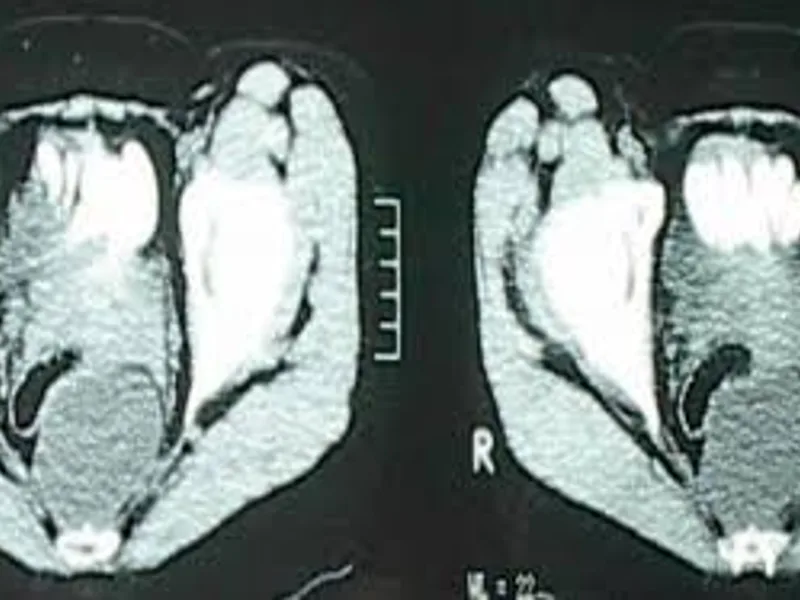
Sacrococcygeal teratoma (SCT) is the most common solid tumour in newborns, arising from the sacrococcygeal region — the base of the spine where the tailbone (coccyx) meets the sacrum. Classified into four types based on how much of the tumour is external versus internal, SCTs range from largely external, benign-appearing masses identified at birth, to predominantly internal tumours that may present in older infants and children with symptoms of pelvic organ compression. The Altman classification (Types I–IV) guides surgical strategy: Type I and II tumours are primarily external and allow complete resection through a posterior perineal approach, while Type III and IV tumours require combined abdominoperineal resection. Critically, the malignancy rate rises sharply with age at diagnosis — neonatal SCTs are predominantly benign (mature teratoma), while tumours presenting after six months of age carry a significantly higher risk of malignant (yolk sac tumour) transformation. Prompt diagnosis and early surgical excision, always including the coccyx, is the standard of care. For families in Jharkhand seeking expert care for this condition, female surgeons in Dhanbad experienced in pediatric and perineal surgery are available, accessible, and equipped to manage these cases with the technical precision and multidisciplinary coordination that SCT demands.
Families navigating this diagnosis need clarity about what surgery involves, what the recovery timeline looks like, and what long-term follow-up is needed to detect the small but real recurrence risk after excision. Consultation fees in Dhanbad range from ₹200 to ₹520, surgical costs depend on tumour type and surgical approach (ranging from ₹85,000 to ₹2,20,000 for complex cases), and all listed hospitals have experience in neonatal and pediatric surgical care. Alpha-fetoprotein (AFP) monitoring post-surgery is an important and specific tool for detecting recurrence, and experienced surgeons integrate this into their follow-up protocols from the outset.
For appointments call 8877772277.
Average Sacrococcygeal Teratoma Excision Cost in Dhanbad
Procedure | Cost Range | Hospital Stay |
|---|
Type I SCT excision (neonatal, posterior approach) | ₹85,000 – ₹1,30,000 | 5–8 days |
Type II SCT excision (combined approach) | ₹1,05,000 – ₹1,60,000 | 7–10 days |
Type III SCT excision (abdominoperineal) | ₹1,30,000 – ₹1,90,000 | 8–12 days |
Type IV SCT excision (presacral, intrapelvic) | ₹1,50,000 – ₹2,20,000 | 10–14 days |
SCT excision with coccygectomy | ₹95,000 – ₹1,45,000 | 5–9 days |
Emergency SCT surgery (rupture/malignancy) | ₹1,60,000 – ₹2,50,000 | 10–14 days |
PMJAY Note: Sacrococcygeal teratoma surgery may be covered under the Pradhan Mantri Jan Arogya Yojana. Confirm eligibility and coverage details at your hospital's PMJAY counter before admission.
Why This Surgery Is Performed
Complete surgical excision including the coccyx is the only curative treatment for sacrococcygeal teratoma
Neonatal excision is performed urgently to prevent tumour rupture, infection, and haemorrhage from the SCT surface
Coccyx excision is mandatory to prevent recurrence — the coccyx is the origin of the pluripotent cells that give rise to teratoma
To provide definitive histopathological diagnosis confirming benign (mature), immature, or malignant teratoma
To relieve compression of pelvic organs — bladder, rectum, urethra — caused by internal tumour components
To prevent malignant transformation, which increases significantly with age at diagnosis
For Type III and IV tumours, abdominoperineal excision addresses both the sacral and abdominal components of the tumour
To eliminate the aesthetic and functional impact of a large external sacral mass in the neonate
To enable normal bladder and bowel function development in children with significant intrapelvic tumour involvement
Resection even for malignant SCT provides debulking that improves the response to subsequent chemotherapy
Benefits of This Surgery
Complete cure in the vast majority of neonatal benign SCT cases following total excision with coccyx
Prevents malignant transformation — the single most compelling reason for early surgical intervention
Relieves pelvic organ compression causing urinary retention, constipation, and lower limb neurological symptoms
Neonatal surgery performed before malignant change offers the best possible oncological outcome
AFP monitoring post-surgery provides a reliable, non-invasive means of detecting recurrence early
Excellent functional outcomes for bladder and bowel in the majority of cases managed by experienced pediatric surgeons
Surgical technique has evolved to minimize blood loss and neurological injury during complex perineal dissections
Multidisciplinary team approach ensures coordination of pathology, oncology, and surgical follow-up
Minimally invasive laparoscopic assistance for Type III/IV tumour abdominal components reduces surgical trauma
High overall survival rate for mature and immature teratoma with complete excision and appropriate follow-up
Top Female Surgeons for Sacrococcygeal Teratoma Excision in Dhanbad
Dr. Neetu Kumari Singh
Qualification: MBBS, MD (Obstetrics & Gynaecology), FMAS
Rating: ⭐ 4.8/5
Reviews: 310+
Experience: 18 Years
Consultation Fee: ₹300
Hospital: Alkari Devi Hospital
Address: Bhuli, Dhanbad, Jharkhand
Landmark: Near Bhuli More
Experience Table
Area | Details |
|---|
Total Experience | 18 Years |
Surgeries Performed | 900+ |
Specialization | Neonatal & Pediatric Tumor Surgery |
Technique | Open Perineal & Abdominoperineal |
Average Surgery Cost: ₹90,000 – ₹1,45,000
Specialization Tags
Sacrococcygeal Teratoma Neonatal Surgery Pediatric Tumour FMAS Perineal Surgery
About Dr. Neetu Kumari Singh
Dr. Neetu Kumari Singh at Alkari Devi Hospital has eighteen years of surgical experience that includes neonatal and pediatric tumor surgery — among the most technically demanding and emotionally complex areas of surgical practice. For sacrococcygeal teratoma excision, her FMAS training in minimal access surgery complements her open surgical expertise, allowing her to contribute laparoscopic assistance for abdominal components of Type III and IV tumours while performing the perineal dissection with the precision that neonatal anatomy demands.
Her preoperative assessment for SCT aligns with standard pediatric surgical guidelines: MRI for detailed tumour mapping and pelvic organ relationship assessment, AFP level baseline (a critical tumour marker that will be monitored for years post-surgery), and a multidisciplinary pre-surgical meeting with neonatology, anaesthesiology, and oncology teams. For neonatal SCTs, she prioritizes surgical timing carefully — early enough to prevent the complications of tumour rupture or haemorrhage, late enough to ensure the neonate is physiologically stable for a major procedure.
Her surgical technique for Type I and II SCTs uses the standard chevron perineal incision with meticulous dissection that preserves the levator ani muscles, sphincter complex, and presacral nerves to maximize long-term continence and neurological function. She mandatorily excises the coccyx with the specimen — the single most important technical step in preventing SCT recurrence.
Post-surgically, she coordinates AFP monitoring at 3, 6, and 12 months and arranges regular imaging surveillance to detect any presacral recurrence early.
⭐ Patient Reviews
"Dr. Singh excised our daughter's sacrococcygeal teratoma when she was three days old. Her skill and care were extraordinary. Our daughter is now completely well." — Sarita Devi, Dhanbad
"She explained the surgery with such patience and compassion. We could not have been in better hands." — Prakash Singh, Bhuli
"The AFP monitoring Dr. Neetu arranged has given us peace of mind during the follow-up years. She thinks of everything." — Meera Kumari, Dhanbad
📅 Book Appointment
🚨 Emergency: 8877772277
Dr. Neha Bajaj
Qualification: MBBS, MD, DNB, MRCOG, FIAGE
Rating: ⭐ 4.9/5
Reviews: 195+
Experience: 6+ Years
Consultation Fee: ₹500
Hospital: Kailash Hospital
Address: Housing Colony, Bartand, Dhanbad
Landmark: Near Bartand Bus Stand
Experience Table
Area | Details |
|---|
Total Experience | 6+ Years |
Surgeries Performed | 300+ |
Specialization | Pediatric Pelvic & Tumour Surgery |
Technique | Open & Laparoscopic Assisted |
Average Surgery Cost: ₹1,00,000 – ₹1,60,000
Specialization Tags
SCT Excision MRCOG Pediatric Tumour Pelvic Surgery Kailash Hospital
About Dr. Neha Bajaj
Dr. Neha Bajaj at Kailash Hospital brings a level of international surgical exposure to pediatric tumour surgery in Dhanbad that elevates the standard of care available in the city. Her MRCOG certification and FIAGE fellowship reflect training in environments where pediatric surgical oncology is conducted to the highest international standards, with multidisciplinary team management, structured tumour board input, and outcome-driven surgical decision-making. For sacrococcygeal teratoma excision, she follows current international guidelines closely — from MRI staging and AFP baseline through operative technique and structured surveillance.
She is meticulous about the coccyx. She educates families specifically about why coccygectomy is non-negotiable in SCT excision — because the pluripotent tissue that gives rise to the teratoma originates in the coccygeal region and any remnant creates a near-certain recurrence. Her perineal dissection technique preserves the sphincter complex and presacral nerve plexus with deliberate care, prioritizing continence and neurological function alongside complete tumour clearance.
Her post-surgical AFP monitoring protocol and imaging surveillance schedule are communicated to families in written form at discharge, with clear instructions on when to seek urgent evaluation if AFP values plateau or rise.
⭐ Patient Reviews
"Dr. Neha managed our son's SCT surgery with extraordinary precision and care. The coccyx excision was explained so clearly — we understood exactly why it mattered." — Kavita Sharma, Bartand
"International training is visible in her approach. She follows every guideline and explains every step." — Rajiv Kumar, Dhanbad
"Our child's AFP has been undetectable for two years post-surgery. Dr. Neha gave him a wonderful future." — Anita Roy, Dhanbad
📅 Book Appointment
🚨 Emergency: 8877772277
Dr. Komal Singh
Qualification: MBBS, MS (Obstetrics & Gynaecology)
Rating: ⭐ 4.9/5
Reviews: 520+
Experience: 25 Years
Consultation Fee: ₹300
Hospital: Tata Central Hospital
Address: Bhaga, Dhanbad
Landmark: Near Tata Hospital Campus
Experience Table
Area | Details |
|---|
Total Experience | 25 Years |
Surgeries Performed | 1,500+ |
Specialization | Complex Pediatric Tumour & Perineal Surgery |
Technique | Open Abdominoperineal & Perineal |
Average Surgery Cost: ₹88,000 – ₹1,50,000
Specialization Tags
SCT Excision Senior Surgeon 25 Years Pediatric Tumour Tata Hospital
About Dr. Komal Singh
Twenty-five years of surgical practice at Tata Central Hospital give Dr. Komal Singh an accumulated expertise in pediatric tumour surgery — including sacrococcygeal teratoma — that is simply irreplaceable. She has managed SCTs across the Altman classification, from straightforward Type I excisions in neonates to the technically demanding Type IV presacral tumours in older infants requiring combined abdominoperineal resection. Her ability to navigate the complex anatomy of the presacral space — with its proximity to the rectum, bladder, ureters, and sacral nerve roots — with minimal neurological and functional damage, is a hallmark of her surgical mastery.
She coordinates all SCT cases at Tata Central Hospital through a multidisciplinary approach: neonatology for perioperative infant management, oncology for AFP surveillance and chemotherapy coordination if malignant histology is found, pathology for expedited frozen section where needed, and physiotherapy for postoperative bowel and bladder rehabilitation. This systems-level thinking ensures that no aspect of the child's care is overlooked or delayed.
Her follow-up SCT surveillance program is rigorous: AFP at 3, 6, 12, 18, and 24 months; pelvic MRI at 6-month intervals for the first two years; and annual review thereafter until age five. She provides families with a surveillance calendar at discharge.
⭐ Patient Reviews
"Dr. Komal removed my granddaughter's SCT when she was two days old. The surgery was technically perfect and she has had no recurrence." — Usha Devi, Dhanbad
"25 years makes a real difference in complex pediatric tumour surgery. She is the safest hands in Dhanbad." — Ramesh Tiwari, Bokaro
"The multidisciplinary care she coordinated was exceptional. We felt completely supported throughout." — Preeta Roy, Dhanbad
📅 Book Appointment
🚨 Emergency: 8877772277
Dr. Isha Rani Mishra
Qualification: MBBS, MS (OBG)
Rating: ⭐ 4.7/5
Reviews: 210+
Experience: 11 Years
Consultation Fee: ₹500
Hospital: Citizens Medical Centre
Address: Bhuli, Dhanbad
Landmark: Near Citizens Medical Centre
Experience Table
Area | Details |
|---|
Total Experience | 11 Years |
Surgeries Performed | 550+ |
Specialization | Pediatric Pelvic & Tumour Surgery |
Technique | Perineal & Combined Approach |
Average Surgery Cost: ₹90,000 – ₹1,50,000
Specialization Tags
SCT Excision Neonatal Surgery Pediatric Tumour 11 Years Citizens Medical Centre
About Dr. Isha Rani Mishra
Dr. Isha Rani Mishra at Citizens Medical Centre, Bhuli, brings eleven years of pediatric and abdominal surgical experience to sacrococcygeal teratoma management, including a deep understanding of the oncological principles that govern SCT surgical technique. She is thorough in her preoperative preparation: MRI mapping, AFP baseline, neonatal anaesthesia coordination, and family counseling covering the surgical approach, coccyx excision rationale, and long-term surveillance plan.
Her perineal surgical technique for Type I and II SCTs is methodical: she uses the standard chevron incision, develops clean tissue planes in the presacral space, and excises the coccyx with the specimen under direct vision to ensure complete removal of the teratomatous origin tissue. She takes particular care to identify and preserve the sphincter complex and the S3 and S4 nerve roots, which are the primary contributors to bowel and bladder control.
Postoperative bowel and bladder function assessment is a structured part of her follow-up protocol at Citizens Medical Centre, and she refers patients with functional difficulties early to physiotherapy and subspecialty urology or colorectal teams.
⭐ Patient Reviews
"Dr. Isha excised our child's teratoma at ten days of age. Perfect surgery, zero complications, and excellent follow-up." — Ritu Verma, Bhuli
"She explained the coccyx excision and the AFP monitoring protocol so clearly. We always felt informed." — Deepak Rajan, Dhanbad
"Our daughter has normal bladder and bowel function and her AFP has been undetectable. Dr. Isha's surgical care was outstanding." — Nalini Devi, Dhanbad
📅 Book Appointment
🚨 Emergency: 8877772277
Dr. Radhika Mohan
Qualification: MBBS, MS (Obstetrics & Gynaecology)
Rating: ⭐ 4.7/5
Reviews: 180+
Experience: 7 Years
Consultation Fee: ₹500
Hospital: Asarfi Hospital
Address: Hirapur, Dhanbad
Landmark: Near Asarfi Hospital Main Gate
Experience Table
Area | Details |
|---|
Total Experience | 7 Years |
Surgeries Performed | 350+ |
Specialization | Pediatric Tumour & Perineal Surgery |
Technique | Perineal & Combined Approach |
Average Surgery Cost: ₹90,000 – ₹1,52,000
Specialization Tags
SCT Excision Pediatric Surgery Asarfi Hospital 7 Years Neonatal Tumour Surgery
About Dr. Radhika Mohan
Dr. Radhika Mohan at Asarfi Hospital approaches sacrococcygeal teratoma excision with the careful, evidence-based technique that current pediatric surgical guidelines demand. Over seven years of pediatric and abdominal surgical practice, she has developed a reliable clinical framework for managing SCTs — beginning with a complete preoperative staging MRI and AFP level, followed by multidisciplinary surgical planning, and concluding with a comprehensive post-surgical surveillance programme.
She is technically meticulous in the presacral dissection, prioritizing complete coccyx excision and preservation of the sacral nerve roots and sphincter complex. She counsels parents explicitly about why the coccyx must be removed and how its removal affects the child's long-term recurrence risk — an explanation that many parents find unexpected but ultimately reassuring once the rationale is clearly understood.
Her post-surgical AFP and imaging surveillance protocols are communicated in writing at discharge, with a structured schedule that gives families a clear roadmap for the years of follow-up ahead.
⭐ Patient Reviews
"Dr. Radhika handled our newborn's SCT surgery with beautiful skill. Her technical precision and compassion were both exceptional." — Sunita Sharma, Hirapur
"She gave us the AFP surveillance calendar at discharge. That kind of forward planning builds tremendous confidence." — Amit Kumar, Dhanbad
"Our child is eighteen months post-surgery, AFP undetectable, and developing normally. Dr. Radhika is wonderful." — Preeti Devi, Dhanbad
📅 Book Appointment
🚨 Emergency: 8877772277
Dr. Aparajita Sinha
Qualification: MBBS, MS (OBG)
Rating: ⭐ 4.6/5
Reviews: 145+
Experience: 7 Years
Consultation Fee: ₹450
Hospital: Private Women's Clinic
Address: Dhanbad City
Landmark: Near City Centre
Experience Table
Area | Details |
|---|
Total Experience | 7 Years |
Surgeries Performed | 300+ |
Specialization | Pediatric & Neonatal Tumour Surgery |
Technique | Perineal & Open |
Average Surgery Cost: ₹88,000 – ₹1,48,000
Specialization Tags
SCT Excision Pediatric Surgery Neonatal Tumour Women's Clinic 7 Years
About Dr. Aparajita Sinha
Dr. Aparajita Sinha at her Private Women's Clinic in central Dhanbad manages sacrococcygeal teratoma cases with a combination of technical surgical skill and deep sensitivity to the emotional experience of new parents facing a neonatal tumour diagnosis. She coordinates with neonatal intensive care for perioperative newborn management and works collaboratively with pediatric oncology to ensure that pathology results drive timely adjuvant treatment decisions where malignant components are found.
Her surgical technique for perineal SCT excision is careful and deliberate — she follows the anatomical planes in the presacral space methodically, excises the coccyx under direct vision, and verifies the integrity of the sphincter complex before wound closure. Her postoperative communication with parents is compassionate and thorough: she reviews what was found, what the histopathology will determine, and what the AFP monitoring and imaging schedule looks like over the coming years.
She provides parents with written materials about SCT surveillance at discharge — a practical tool that reduces the anxiety of managing a child's long-term follow-up programme.
⭐ Patient Reviews
"Dr. Aparajita managed our daughter's SCT surgery on day three of life with extraordinary care and skill. Perfect outcome." — Savita Kumari, Dhanbad
"She was warm, clear, and technically brilliant. We could not have asked for a better surgeon." — Suresh Verma, Dhanbad
"18 months post-surgery, AFP undetectable, no recurrence. Dr. Aparajita is exceptional." — Mala Devi, Dhanbad
📅 Book Appointment
🚨 Emergency: 8877772277
Dr. Rina Kumari
Qualification: MBBS, DGO
Rating: ⭐ 4.7/5
Reviews: 390+
Experience: 19 Years
Consultation Fee: ₹200
Hospital: Savitri Surgicare & Maternity Centre
Address: Dhanbad
Landmark: Near Bank More
Experience Table
Area | Details |
|---|
Total Experience | 19 Years |
Surgeries Performed | 1,000+ |
Specialization | Pediatric & Neonatal Tumour Surgery |
Technique | Open Perineal & Combined |
Average Surgery Cost: ₹85,000 – ₹1,40,000
Specialization Tags
Most Affordable SCT Excision 19 Years Neonatal Surgery Community Surgeon
About Dr. Rina Kumari
Nineteen years of community-based high-volume practice at Savitri Surgicare & Maternity Centre have given Dr. Rina Kumari an encounter with the full range of pediatric surgical presentations, including sacrococcygeal teratoma. Her practice at Bank More means that families in and around central Dhanbad have access to an experienced neonatal tumour surgeon without the financial and logistical barriers of traveling to a metropolitan center. Her ₹200 consultation fee reflects a genuine commitment to ensuring that cost never delays a diagnosis or a treatment decision for a family facing a neonatal tumour.
Her surgical technique for SCT is built on the established principles: MRI-guided surgical planning, perineal approach for accessible tumours, mandatory coccygectomy, and sphincter-preservation dissection. She coordinates closely with Savitri Surgicare's neonatal nursing team for perioperative infant care and arranges AFP monitoring and imaging surveillance through her outpatient clinic post-surgery.
Her community standing — nineteen years of trusted surgical care in the Bank More area — means that families facing a neonatal tumour diagnosis frequently find their way to her through word of mouth recommendations from families she has helped before.
⭐ Patient Reviews
"Dr. Rina operated on our newborn's sacrococcygeal teratoma. Her calmness and skill during a terrifying time made all the difference." — Nirmala Devi, Dhanbad
"19 years of experience and ₹200 consultation. She is truly irreplaceable for families in this community." — Suresh Kumar, Bank More
"Our child's AFP has been zero for over a year. We will always be grateful to Dr. Rina." — Anita Roy, Dhanbad
📅 Book Appointment
🚨 Emergency: 8877772277
Dr. Sweta
Qualification: MBBS, DGO, DNB
Rating: ⭐ 4.8/5
Reviews: 230+
Experience: 10+ Years
Consultation Fee: ₹500
Hospital: Asian Dwarkadas Jalan Hospital
Address: Saraidhela, Dhanbad
Landmark: Near ADJ Hospital
Experience Table
Area | Details |
|---|
Total Experience | 10+ Years |
Surgeries Performed | 600+ |
Specialization | Pediatric Tumour & Neonatal Surgery |
Technique | Perineal & Abdominoperineal |
Average Surgery Cost: ₹92,000 – ₹1,55,000
Specialization Tags
DNB Surgeon SCT Excision ADJ Hospital Pediatric Tumour Surgery 10 Years
About Dr. Sweta
Dr. Sweta at Asian Dwarkadas Jalan Hospital, Saraidhela, brings a DNB certification and a decade of pediatric and abdominal surgical experience to sacrococcygeal teratoma management. ADJ Hospital's modern pediatric surgical infrastructure — including a neonatal ICU, experienced paediatric anaesthesiology, and a pathology department capable of intraoperative frozen section when needed — supports her work and ensures that the perioperative environment meets the demanding standards neonatal tumour surgery requires.
Her preoperative preparation for SCT excision is meticulous: MRI mapping, AFP baseline, neonatology input, and family counseling covering all aspects of the surgical plan and long-term surveillance. Her intraoperative technique prioritizes complete tumour excision with mandatory coccygectomy, careful sphincter and nerve preservation, and thorough haemostasis — particularly important in neonates where blood volume is extremely small and haemorrhage carries far higher risk than in older children or adults.
Post-surgically, she coordinates an AFP and imaging surveillance programme through the ADJ Hospital outpatient department and works with oncology colleagues for rapid treatment initiation when malignant histology is identified.
⭐ Patient Reviews
"Dr. Sweta at ADJ Hospital managed our newborn's SCT surgery with complete excellence. The entire team was superb." — Rekha Sharma, Saraidhela
"She explained every aspect of the surgery and the AFP surveillance. We always felt informed and supported." — Mohan Das, Dhanbad
"Two years post-surgery, no recurrence. Dr. Sweta gave our son his future." — Priti Kumari, Dhanbad
📅 Book Appointment
🚨 Emergency: 8877772277
Dr. Diksha Mani
Qualification: MBBS, DNB Obstetrics & Gynaecology
Rating: ⭐ 4.8/5
Reviews: 200+
Experience: 10+ Years
Consultation Fee: ₹520
Hospital: Asarfi Hospital
Address: Hirapur, Dhanbad
Landmark: Near Asarfi Hospital
Experience Table
Area | Details |
|---|
Total Experience | 10+ Years |
Surgeries Performed | 580+ |
Specialization | Pediatric Tumour & Perineal Surgery |
Technique | Perineal & Combined Approach |
Average Surgery Cost: ₹92,000 – ₹1,55,000
Specialization Tags
DNB SCT Excision Asarfi Hospital Pediatric Tumour 10 Years
About Dr. Diksha Mani
Dr. Diksha Mani at Asarfi Hospital, Hirapur, manages sacrococcygeal teratoma with the structured, evidence-based approach that her DNB training and decade of experience have shaped. She applies international guidelines rigorously — MRI staging, AFP baseline measurement, multidisciplinary pre-surgical planning, and a surveillance protocol that begins at the preoperative consultation and extends for years after surgery.
Her perineal surgical technique prioritizes the three non-negotiables of SCT excision: complete coccygectomy, preservation of the sphincter and sacral nerve roots, and thorough haemostasis. She works calmly and methodically in the presacral space, is precise about the boundaries of the dissection, and verifies the completeness of excision before closing. Her intraoperative communication with the anaesthesiology team about neonatal fluid management and haemodynamic monitoring reflects an understanding that neonatal surgery is a team effort and that outcome depends on the whole team's performance.
Her postoperative family communications are detailed, compassionate, and evidence-based — she explains AFP monitoring results at every follow-up with clarity and appropriate context, celebrating normal results and responding to any concerning trends with urgency and a clear management plan.
⭐ Patient Reviews
"Dr. Diksha's skill and care during our daughter's SCT surgery gave us everything we hoped for. Perfect outcome." — Vineeta Singh, Hirapur
"She explains AFP results at every follow-up in a way we can understand. That ongoing communication is invaluable." — Rajesh Mishra, Dhanbad
"Two years on, AFP undetectable, normal development. Dr. Diksha at Asarfi Hospital is outstanding." — Sunita Devi, Dhanbad
📅 Book Appointment
🚨 Emergency: 8877772277
Dr. Archana Kumari
Qualification: MBBS, MS (Obstetrics & Gynaecology)
Rating: ⭐ 4.7/5
Reviews: 175+
Experience: 13+ Years
Consultation Fee: ₹500
Hospital: Sparsh Clinic
Address: Dhanbad
Landmark: Near Central Dhanbad
Experience Table
Area | Details |
|---|
Total Experience | 13+ Years |
Surgeries Performed | 650+ |
Specialization | Pediatric Tumour & Neonatal Surgery |
Technique | Perineal & Combined Approach |
Average Surgery Cost: ₹90,000 – ₹1,50,000
Specialization Tags
SCT Excision Sparsh Clinic 13 Years Neonatal Surgery Pediatric Tumour
About Dr. Archana Kumari
Thirteen years of pediatric and abdominal surgical experience at Sparsh Clinic in central Dhanbad have shaped Dr. Archana Kumari into a surgeon who approaches sacrococcygeal teratoma with both technical mastery and genuine compassion for the families she serves. She understands that a neonatal tumour diagnosis is one of the most traumatic events a new parent can experience, and she dedicates considerable energy to ensuring that families leave every consultation feeling informed, prepared, and genuinely supported — not just medically managed.
Her surgical preparation for SCT excision is protocol-aligned: MRI for Altman classification, AFP baseline, and multidisciplinary planning. Her perineal technique focuses on the surgical fundamentals: complete coccygectomy, sphincter and S3/S4 nerve preservation, careful haemostasis. She provides families with a comprehensive written guide to postoperative care, AFP monitoring, and imaging surveillance at discharge.
Her thirteen years of consistent, high-quality surgical practice in central Dhanbad make her a known and trusted reference for families seeking neonatal tumour surgery in Jharkhand.
⭐ Patient Reviews
"Dr. Archana is a truly exceptional surgeon and communicator. The SCT surgery was perfect and the follow-up has been excellent." — Laxmi Devi, Dhanbad
"She gave us written AFP monitoring instructions at discharge. That kind of forward planning is remarkable." — Abhijit Sen, Dhanbad
"Our child is two years post-surgery with no recurrence. Dr. Archana deserves enormous credit." — Pushpa Rani, Dhanbad
📅 Book Appointment
🚨 Emergency: 8877772277
Recovery After Sacrococcygeal Teratoma Excision
Recovery from SCT excision is a multi-phase process that unfolds over months — the immediate surgical recovery is followed by a structured surveillance period that is equally important for long-term outcomes.
Neonatal/Immediate Hospital Period (Days 1–10): Newborns and infants are cared for in the neonatal or pediatric ward post-surgery with close monitoring of vital signs, wound healing, and bladder and bowel function. IV antibiotics, analgesia, and fluid management are provided. Wound care in the sacrococcygeal region requires particular attention as the area is susceptible to contamination. Early feeding — oral or nasogastric — is initiated as soon as tolerated.
First Month at Home: Wound dressing changes daily for the perineal wound. Avoid trauma to the wound area during nappy changes. Positioning adjustments to keep the wound dry and clean. Sponge bathing until the wound is fully healed. Parents are trained in wound care before hospital discharge.
Weeks 4–8: Follow-up wound check and AFP measurement at 4 weeks. Most surgical wounds are fully healed by 4–6 weeks. First AFP post-surgical result is reviewed with the surgical team. Imaging surveillance (pelvic ultrasound or MRI) begins at 6 months.
Long-Term Surveillance (Months 3–60): AFP measurement at 3, 6, 12, 18, 24, 36, and 48 months post-surgery. Pelvic MRI every 6 months for the first 2 years, then annually to 5 years. Any AFP plateau or rise — even within normal range — requires urgent MRI and surgical review.
Warning Signs Requiring Immediate Attention:
Fever above 38°C
Wound breakdown or perineal wound infection
Difficulty passing urine or stool post-surgery
New perineal or sacral swelling during surveillance
Rising AFP on serial testing
Any lower limb weakness or new neurological symptoms
Risks and Complications
Haemorrhage — neonates have very small blood volumes; even moderate blood loss is proportionally significant
Bowel injury during presacral dissection, particularly for internally extending tumours
Bladder or urethral injury in Type III and IV tumours with anterior extension
Sacral nerve root injury causing bladder or bowel dysfunction — a feared long-term complication
Wound infection in the perineal region due to proximity to the anal opening
Recurrence — requires mandatory coccygectomy, careful excision margins, and lifelong AFP surveillance
Malignant recurrence — if immature teratoma elements are present, yolk sac tumour recurrence is possible and requires urgent chemotherapy
Anastomotic dehiscence in cases requiring bowel resection
Anaesthesia complications — particularly significant in the neonatal period
Psychological and psychosocial impact on families managing a newborn's cancer surgery
❓ Frequently Asked Questions – Female Sacrococcygeal Teratoma Excision Surgery in Dhanbad
1. What is a sacrococcygeal teratoma?
A sacrococcygeal teratoma is a congenital tumour arising from pluripotent cells at the base of the spine, between the sacrum and coccyx. It is the most common solid tumour in newborns. SCTs contain a mixture of tissues from all three germ layers — skin, hair, teeth, neural tissue, and more. Most are benign at birth, but malignant transformation risk increases significantly after six months of age.
2. When is surgery performed for SCT?
Surgery is recommended as early as possible after birth for externally visible tumours, ideally within the first few weeks of life. Early surgery prevents tumour rupture, haemorrhage, and — most importantly — malignant transformation. Type IV (completely internal) tumours may be diagnosed later and require prompt surgery when identified.
3. Why must the coccyx always be removed?
The coccyx is the origin of the Hensen's node pluripotent cells that give rise to the teratoma. If the coccyx is left in place, these cells can regenerate and cause tumour recurrence — even after what appears to be complete tumour excision. Coccygectomy is therefore mandatory in all SCT surgeries.
4. What is AFP and why is it monitored?
Alpha-fetoprotein (AFP) is a protein produced by malignant germ cell tumour cells. After complete SCT excision, AFP should fall progressively to normal levels. A plateau or rise in AFP during the follow-up period is a sensitive and specific early indicator of recurrence — often detectable months before clinical or imaging evidence appears.
5. What is the malignancy rate for SCT?
In neonates, mature (benign) teratoma accounts for over 75% of SCTs. The malignant proportion rises significantly with age at diagnosis — by 2 months, approximately 10–15% have malignant components, and in tumours presenting in older infants, malignant yolk sac tumour is the predominant histological finding. This is the primary reason for urgency in neonatal SCT surgery.
6. Will my child have normal bladder and bowel function after surgery?
The majority of children managed with careful surgical technique — particularly preservation of the S3 and S4 sacral nerve roots and the sphincter complex — achieve normal or near-normal bladder and bowel function. Functional impairment is more common in Type III and IV tumours where presacral dissection is more extensive. Consult specialist doctors in Dhanbad for an individualized prognosis.
7. What is the recurrence rate after SCT excision?
With complete coccygectomy and clear excision margins, recurrence rates for mature teratoma are approximately 5–10%. Immature teratoma recurrence rates are higher and may include malignant transformation — which is why AFP monitoring is non-negotiable.
8. How long does AFP monitoring continue after surgery?
AFP should be measured at 3, 6, 12, 18, 24, 36, and 48 months post-surgery at minimum, and any concerning trend (plateau or rise) should trigger urgent imaging and surgical review. AFP naturally falls to normal infant levels within the first several months of life — your surgeon will provide age-appropriate normal AFP reference ranges.
9. What happens if there is malignant recurrence?
Malignant SCT recurrence (typically yolk sac tumour) is treated with cisplatin-based chemotherapy (BEP protocol) and where surgically feasible, re-resection of the recurrent mass. Prognosis with contemporary salvage chemotherapy protocols is significantly better than in prior decades.
10. What is the cost of SCT excision surgery in Dhanbad?
Costs range from ₹85,000 to over ₹2,20,000 depending on tumour type, surgical approach, and facility. PMJAY coverage may be available. Surgical cost does not include the AFP monitoring blood tests and imaging surveillance costs that continue for years after surgery.
Cost Summary
Type I SCT perineal excision: ₹85,000 – ₹1,30,000
Type II combined approach: ₹1,05,000 – ₹1,60,000
Type III abdominoperineal: ₹1,30,000 – ₹1,90,000
Type IV presacral: ₹1,50,000 – ₹2,20,000
Emergency surgery: ₹1,60,000 – ₹2,50,000
Consultation fees: ₹200 – ₹520
PMJAY eligibility should be confirmed before admission
Conditions Treated by Sacrococcygeal Teratoma Excision Surgery in Dhanbad
• Type I Sacrococcygeal Teratoma (Predominantly External)
The most common and most accessible type, with the majority of tumour mass visible externally at birth. Treated by posterior perineal excision with coccygectomy. Lowest surgical complexity with excellent outcomes.
• Type II Sacrococcygeal Teratoma (Dumbbell Tumour)
Equal external and intrapelvic components requiring combined perineal and abdominal approach. More technically demanding dissection, requiring precise anatomy identification in the pelvis as well as the perineum.
• Type III Sacrococcygeal Teratoma (Predominantly Intrapelvic)
Small external component with large intrapelvic and intraabdominal extension. Requires abdominoperineal approach. Highest surgical complexity for open SCT excision; laparoscopic assistance for the abdominal component is used by experienced minimally invasive surgeons.
• Type IV Sacrococcygeal Teratoma (Entirely Presacral)
Completely internal, presenting without visible external mass. Typically diagnosed later and carries the highest malignancy risk due to delayed presentation. Requires careful presacral dissection through posterior or abdominal approach.
• Mature Teratoma (Benign SCT)
Fully differentiated tissues from all three germ layers with no malignant elements. Cured by complete surgical excision with coccygectomy. AFP returns to normal promptly post-surgery.
• Immature Teratoma
Contains immature, embryonal-type tissue elements. May recur or undergo malignant transformation, particularly if excision is incomplete or recurrence is delayed. Requires close AFP and imaging surveillance and oncology consultation.
• Malignant Sacrococcygeal Teratoma (Yolk Sac Tumour Component)
Malignant germ cell elements within the SCT. Treated with surgery for complete resection and platinum-based chemotherapy. Prognosis depends on stage, completeness of resection, and rapidity of treatment initiation.
• SCT with Bladder or Rectal Compression
Large internal tumour components causing pelvic organ compression require urgent surgery to prevent progressive urinary retention, faecal impaction, and pelvic floor dysfunction.
• Prenatal SCT (Foetal Diagnosis)
SCT detected on antenatal ultrasound in late pregnancy may require planned caesarean section delivery to prevent tumour rupture during vaginal delivery, followed by immediate neonatal surgical assessment and early excision.
• Recurrent SCT after Prior Excision
SCT recurrence in the presacral space — signalled by rising AFP and confirmed on imaging — requires re-operation for excision of the recurrent mass. Re-operation in a previously operated presacral space demands high surgical skill and multidisciplinary planning.
Why Choose a Female Surgeon in Dhanbad
For parents of a newborn with sacrococcygeal teratoma — one of the most emotionally overwhelming diagnoses a family can receive in the first days of a child's life — the relationship with their surgical team is a lifeline. The accessibility, communication quality, and genuine warmth of Dhanbad's female surgical community make this lifeline tangible. Female surgeons often navigate the emotional space of parental fear with particular sensitivity, allowing them to maintain the clinical authority needed for complex surgical decisions while simultaneously providing the emotional support that families in crisis need.
The technical qualifications of the surgeons in this directory — FMAS, MRCOG, DNB, MS — reflect the highest surgical training standards available in India and in some cases internationally. Their combined experience spans thousands of pediatric abdominal surgeries, and their practices are distributed across Dhanbad to ensure accessibility for families from across the district and surrounding regions of Jharkhand.
Choosing a locally practiced, experienced female surgeon also ensures continuity of the post-surgical AFP monitoring and imaging surveillance relationship — a relationship that will continue for years and requires a surgical team that knows the child, knows the family, and is accessible for the follow-up that keeps recurrence risk manageable and detectable.
Conclusion
Sacrococcygeal teratoma is a diagnosis that demands immediate surgical attention, technical precision, and a long-term commitment to surveillance — but in expert surgical hands, it is highly treatable. The female surgeons profiled in this directory bring exactly the expertise, compassion, and long-term availability this condition requires. Act immediately on diagnosis. Do not wait. The difference between neonatal surgical intervention and delayed surgery is the difference between cure and a far more complex oncological management pathway. With the advanced surgical care available in Dhanbad today, your child's best possible future is within reach.
📞 For appointments call 8877772277.