

Emergency & Help
24/7 Emergency & General Advisory
🚨 24/7 Medical Emergency
Non-Emergency Advisory
10:00 AM – 6:00 PM, Mon–Sat
For appointments & general queries.
24/7 Emergency & General Advisory
🚨 24/7 Medical Emergency
Non-Emergency Advisory
10:00 AM – 6:00 PM, Mon–Sat
For appointments & general queries.
Understand IVF in India: Explore the procedure, steps, success rates, potential side effects, costs, and when to consider this fertility treatment.

Meena, 45, a homemaker from Jaipur, felt a growing unease as years passed without the sound of children. Her husband, Rajesh, a diligent accountant, shared her deep desire.
After consulting numerous doctors and undergoing various evaluations, they received a diagnosis of unexplained infertility. The prospect of not having a child weighed heavily on them, a sentiment shared by many individuals and partners facing similar challenges across India, particularly during festive periods when family gatherings intensify the longing for little ones.
For millions of Indian individuals and partners navigating these difficulties, In Vitro Fertilization (IVF) has emerged as a groundbreaking medical development, providing a route to parenthood. This sophisticated form of assisted reproductive technology (ART) involves combining an egg with a sperm outside the body, within a laboratory setting.
The resulting nascent life is then carefully placed into the woman's womb. While IVF is not a miracle cure, it signifies a substantial scientific advancement, offering optimism where natural conception proves elusive.
The World Health Organization (WHO) indicates that difficulties conceiving affect approximately 1 in 6 individuals globally, with the prevalence potentially higher in India owing to various socio-economic and lifestyle influences. Grasping the nuances of IVF is essential for making well-informed choices.
This is where most patients struggle.
In Vitro Fertilization, commonly referred to as IVF, encompasses a series of intricate procedures designed to address reproductive challenges or prevent genetic issues and aid conception. It stands as the most effective form of assisted reproductive technology (ART). The process involves collecting eggs from a woman's ovaries and combining them with a sperm in a controlled laboratory environment.
Following this union, the resulting nascent life(s) are nurtured for a few days before being transferred into the woman's uterus. The ultimate aspiration is a healthy gestation and a live birth.
Commencing an IVF journey is a significant undertaking, frequently demanding considerable emotional and physical dedication. The procedure itself is meticulously planned and executed over several weeks.
Does this sound familiar? Many individuals and partners find the detailed nature of the process reassuring, as it highlights the scientific precision involved.
The process typically commences with a thorough medical assessment of both individuals. This includes physical examinations, blood tests to evaluate hormone levels, and ultrasounds to examine the reproductive organs. Once deemed suitable, the woman undergoes ovarian stimulation.
This phase involves administering injectable reproductive medications (hormones) for approximately 8-14 days. These medications prompt the ovaries to produce multiple mature eggs, rather than the single egg typically released during each menstrual cycle. Regular oversight through ultrasounds and blood tests monitors egg development and adjusts medication dosages as necessary.
Recovery is rarely linear.
When the eggs reach maturity, a minor surgical intervention known as oocyte pickup is performed. This is usually conducted under light sedation or anesthesia. Employing an ultrasound-guided needle, the physician aspirates the fluid from each mature follicle within the ovaries, which contains an egg.
This outpatient procedure generally lasts 20-30 minutes. The retrieved eggs are immediately transported to the laboratory.
On the same day as egg retrieval, the male partner provides a semen sample. This sample is then processed in the lab to identify the most robust and mobile sperm.
In instances of severe male factor infertility or prior unsuccessful attempts, techniques such as Intracytoplasmic Sperm Injection (ICSI) may be utilized, where a single sperm is directly introduced into each egg.
In the laboratory, the collected eggs are combined with the prepared sperm. Traditionally, this involves placing eggs and sperm together in a culture dish (conventional insemination). Alternatively, ICSI might be employed, as previously noted.
The dishes are then incubated under specific conditions to facilitate the union. Experts at the Indian Council of Medical Research (ICMR) underscore the rigorous quality control measures implemented in embryology laboratories.
That alone changes everything.
Fertilized eggs are now referred to as embryos. The embryologists meticulously observe their development over the subsequent 3 to 5 days. They evaluate cell division and overall quality. The highest quality embryo(s) are selected for transfer.
This is a relatively straightforward and typically painless procedure, often likened to a Pap smear. The chosen embryo(s) are loaded into a thin, flexible catheter, which is then gently guided through the cervix into the uterus. The physician carefully deposits the embryo(s) into the uterine cavity.
The quantity of embryos transferred is a critical determination, frequently guided by age, embryo quality, and clinic protocols, with the aim of maximizing conception chances while minimizing the likelihood of multiple gestations. What many overlook is that the success of this stage is heavily reliant on the skill of the practitioner and the caliber of the laboratory.
Following embryo transfer, the woman is usually prescribed progesterone medication to help sustain the uterine lining and promote implantation. Approximately 9-14 days after the embryo transfer, a blood test is conducted to detect pregnancy (by measuring hCG levels).
The numbers don't lie.
If the test is positive, further monitoring with ultrasounds will be arranged to confirm implantation and fetal development.
IVF success rates can show considerable variation among clinics and individuals. Several elements play a pivotal role:
In India, reported live birth rates per embryo transfer can span from 25% to over 50%, depending substantially on these factors and the specific clinic's data. The International Journal of Fertility and Sterility has published findings indicating varied success rates across Indian centers.
While IVF is generally considered safe, like any medical intervention, it carries potential side effects and risks. Understanding these is integral to informed consent.
Worth noting: Many of these risks are effectively managed through diligent monitoring and medical expertise. The emotional toll can be substantial, impacting individuals and partners particularly during periods like the monsoon, when outdoor pursuits are limited and people may spend more time indoors reflecting on their situation.
, ICSI, PGT), and the number of treatment cycles needed. A single IVF cycle in India can range from approximately ₹1,00,000 to ₹3,00,000 or more. This cost generally encompasses consultations, medications, monitoring, egg retrieval, union, nascent life culture, and embryo transfer.
Additional charges may apply for genetic testing, gamete preservation, or donor gametes. The Foundation for Reproductive Medicine in India has released data illustrating a broad cost spectrum. It is imperative to obtain a detailed breakdown of all potential expenditures from your chosen clinic.
The numbers don't lie.
IVF is frequently recommended for individuals and partners encountering various conception challenges, including:
In numerous scenarios, individuals and partners who have struggled to conceive naturally for over a year (or six months if the woman is over 35) are advised to explore reproductive assistance such as IVF.
A successful IVF cycle often begins with diligent preparation. This involves not only physiological readiness but also psychological preparedness. Individuals and partners are encouraged to:
What most people overlook is that preparing your body and mind can significantly contribute to a more positive IVF experience and potentially improved results.
IVF technology is in a state of continuous advancement. Innovations such as enhanced nascent life culture media, sophisticated genetic screening techniques (PGT-A, PGT-M, PGT-SR), and single nascent life transfer strategies are elevating success rates and reducing the incidence of multiple gestations. Research involving stem cells and the application of artificial intelligence in nascent life selection are also areas of active exploration.
The Indian government, through entities like the National Health Mission, is also investigating avenues to make ART more accessible. The Gamete Preservation Market is experiencing growth, with an increasing number of individuals opting for egg or sperm freezing. The International Diabetes Federation (IDF) reports a rising prevalence of diabetes, which can impact reproductive health, making advanced reproductive technologies even more critical.
Always consult a qualified physician before making any medical decisions.
Visit Hospital
Near You

A cesarean section (C-section) is a surgical delivery in which a baby is born through an incision in the mother's abdomen and uterus. In Kolkata, several experienced obstetricians and well-equipped hospitals offer C-section services for planned and emergency deliveries. Understanding when a C-sectio
July 31, 2026

If you are searching for a Menstrual Disorders in Adolescent Girls Doctor in Kolkata, early evaluation by an experienced gynecologist can help identify the underlying cause of irregular or painful periods. While menstrual irregularities are common during the first few years after puberty, persistent
July 31, 2026
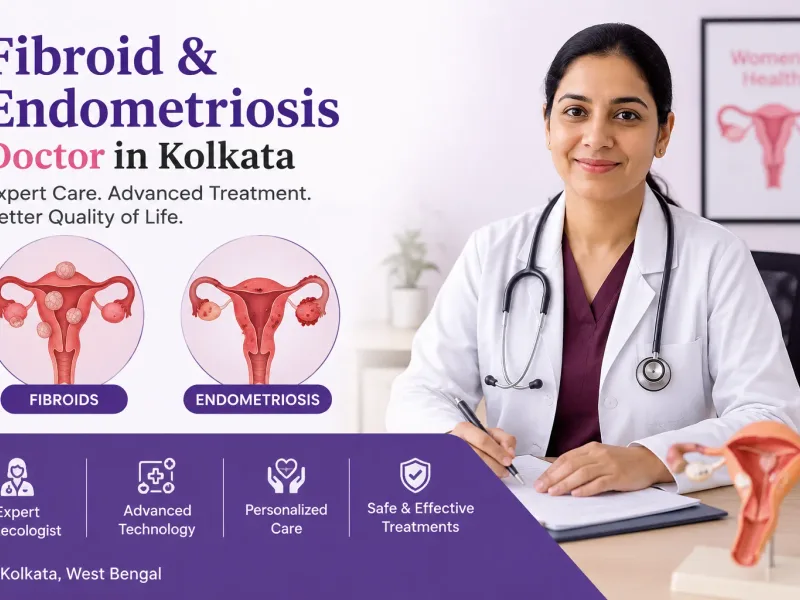
If you are searching for a Fibroid & Endometriosis doctor in Kolkata, choosing an experienced gynecologist with expertise in minimally invasive gynecological surgery is essential. Uterine fibroids and endometriosis are two common but different conditions that can cause pelvic pain, heavy menstrual b
July 31, 2026