

Emergency & Help
24/7 Emergency & General Advisory
🚨 24/7 Medical Emergency
Non-Emergency Advisory
10:00 AM – 6:00 PM, Mon–Sat
For appointments & general queries.
24/7 Emergency & General Advisory
🚨 24/7 Medical Emergency
Non-Emergency Advisory
10:00 AM – 6:00 PM, Mon–Sat
For appointments & general queries.
Learn about heart valve specialists, their role in diagnosing and treating heart valve conditions, common symptoms, diagnostic tests, and treatment options. Understand when you might need to consult one.

What is a Heart Valve Specialist? Your heart is a remarkable organ, working tirelessly to pump blood throughout your body. It has four valves – the aortic, mitral, tricuspid, and pulmonary valves – that ensure blood flows in the correct direction. When these valves don't function properly, it can lead to a range of health issues. This is where a heart valve specialist comes in. A heart valve specialist is a doctor who has dedicated their career to understanding, diagnosing, and treating conditions affecting these crucial components of your heart. They possess advanced knowledge and skills in managing heart valve diseases, which can sometimes be complex and require specialized care. Why Are Heart Valves Important? Heart valves act like one-way doors within the heart. They open to allow blood to flow forward into the next chamber or into the main artery leaving the heart, and then they close to prevent blood from flowing backward. This precise mechanism ensures that your body receives an adequate supply of oxygenated blood. When a valve is damaged or diseased, this flow can be disrupted, leading to symptoms and potential complications. Common Heart Valve Conditions Several conditions can affect heart valves. Some of the most common include: Stenosis: This occurs when a heart valve doesn't open fully, restricting blood flow. For example, aortic stenosis means the aortic valve is narrowed. Regurgitation (or Insufficiency): This happens when a valve doesn't close tightly, allowing blood to leak backward. Mitral valve regurgitation is a common example, where the mitral valve doesn't seal properly. Prolapse: In this condition, the valve flaps bulge or collapse backward. Mitral valve prolapse is a well-known example. Atresia: This is a congenital condition where a heart valve doesn't form properly, often being completely blocked or absent at birth. Symptoms of Heart Valve Problems The symptoms of heart valve problems can vary significantly depending on which valve is affected and the severity of the condition. Some people may have no noticeable symptoms, especially in the early stages. However, as the condition progresses, you might experience: Shortness of breath: Especially during physical activity or when lying down. Fatigue: Feeling unusually tired or weak. Chest pain or tightness: Often described as pressure or squeezing. Irregular heartbeat: Your heart may feel like it's racing, pounding, or skipping beats (palpitations). Swelling: In your ankles, feet, legs, or abdomen (edema). Dizziness or fainting: Feeling lightheaded or actually passing out. Rapid weight gain: Due to fluid retention. In newborns, heart valve problems can sometimes manifest as: Low blood oxygen levels: Giving the skin a bluish tint (cyanosis). Difficulty breathing. It's crucial to pay attention to these signs and consult a doctor if you experience any of them. Diagnosis of Heart Valve Disease When you visit a heart valve specialist, they will typically start by taking a detailed medical history and performing a thorough physical examination. They will listen to your heart with a stethoscope for any abnormal sounds, such as murmurs, which can indicate valve issues. To confirm a diagnosis and assess the extent of the problem, they may order several diagnostic tests: Diagnostic Tests Performed by a Heart Valve Specialist: Echocardiogram (Echo): This is the most common and crucial test for diagnosing heart valve problems. It uses ultrasound waves to create moving pictures of your heart, showing its size, shape, and how well the valves are working. It can reveal valve damage, blood flow patterns, and the heart's pumping function. Electrocardiogram (EKG or ECG): This test records the electrical activity of your heart. It helps detect irregular heart rhythms and can provide clues about heart muscle strain caused by valve problems. Exercise Stress Test: You'll exercise on a treadmill or stationary bike while your heart's activity is monitored. This test helps determine how your heart responds to physical stress and can reveal valve issues that may not be apparent at rest. Chest X-ray: While not specific for valve issues, an X-ray can show the overall size and shape of your heart and lungs. It can help rule out other conditions causing similar symptoms and assess for signs of heart failure. Cardiac MRI (Magnetic Resonance Imaging): In some cases, an MRI may be used to get detailed images of the heart and its structures, providing more information about valve function and heart muscle health. Cardiac Catheterization: This invasive procedure involves inserting a thin, flexible tube (catheter) into a blood vessel, usually in the groin or arm, and guiding it to the heart. It allows doctors to measure pressures within the heart chambers and arteries and can be used to visualize the valves and coronary arteries. Treatment Options for Heart Valve Disease The treatment for heart valve disease depends on the specific valve affected, the type and severity of the problem, your symptoms, and your overall health. Treatment strategies can range from conservative management to surgical intervention: 1. Lifestyle Changes and Monitoring: For mild valve issues, especially if you have no symptoms, your doctor might recommend regular monitoring. Lifestyle changes can also play a role: Healthy Diet: Low in sodium and saturated fats to help manage blood pressure and fluid retention. Regular Exercise: As advised by your doctor, to maintain cardiovascular health. Weight Management: Maintaining a healthy weight reduces strain on the heart. Avoiding Smoking: Smoking damages blood vessels and worsens heart conditions. Limiting Alcohol: Excessive alcohol can harm the heart. 2. Medications: Medications don't typically fix a faulty valve, but they
In summary, timely diagnosis, evidence-based treatment, and prevention-focused care improve long-term health outcomes.
Visit Hospital
Near You
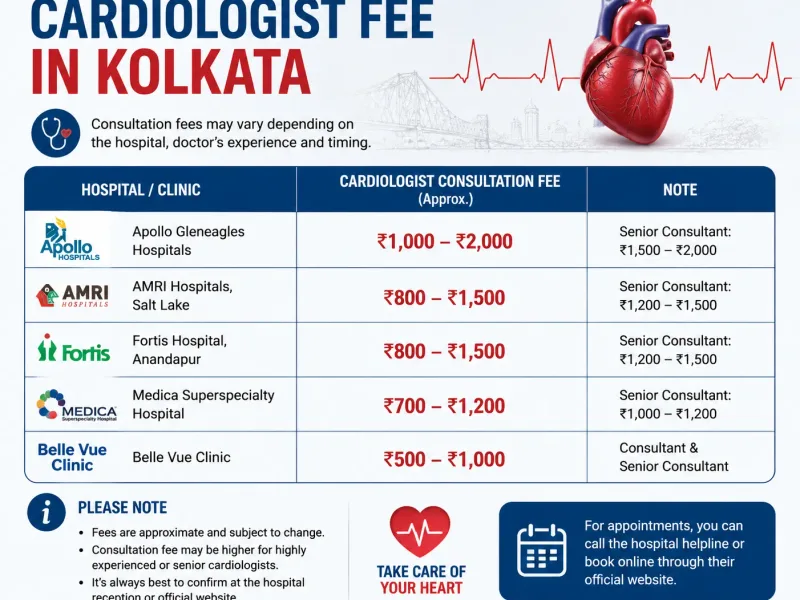
Learn about cardiologist fee in Kolkata, consultation charges, factors affecting costs, and tips to choose the right heart specialist.
May 29, 2026
A simple guide to the best shortness of breath specialist in Kolkata, including causes, symptoms, treatment options, and expert medical advice.
May 29, 2026

Find the best chest pain doctor in Kolkata. Learn causes, symptoms, tests, and treatment options from top heart specialists in simple English.
May 29, 2026