

Emergency & Help
24/7 Emergency & General Advisory
🚨 24/7 Medical Emergency
Non-Emergency Advisory
10:00 AM – 6:00 PM, Mon–Sat
For appointments & general queries.
24/7 Emergency & General Advisory
🚨 24/7 Medical Emergency
Non-Emergency Advisory
10:00 AM – 6:00 PM, Mon–Sat
For appointments & general queries.
Understand Medicare coverage for occupational therapy, including what's covered under Parts A, B, and C, associated costs, and how to ensure your services are approved.

Occupational Therapy (OT) plays a vital role in helping individuals regain independence and improve their quality of life after illness, injury, or surgery. For many, especially seniors, understanding how healthcare coverage, like Medicare, applies to these essential services is paramount. This guide aims to demystify Medicare's coverage for occupational therapy, outlining what's covered, what costs you might expect, and how to navigate the process. Whether you are recovering from a stroke, managing a chronic condition, or adapting to a new physical challenge, knowing your Medicare benefits can empower you to access the care you need.
Occupational therapy is a rehabilitative healthcare profession focused on helping people of all ages participate in the things they want and need to do through the therapeutic use of everyday activities (occupations). Occupational therapists (OTs) work with individuals to help them develop, recover, or maintain the skills needed for daily living and working. This can include everything from bathing and dressing to cooking, managing finances, and returning to work or hobbies.
The goal of OT is to enable people to live life to its fullest by promoting health and wellness and preventing injury and disability. For individuals covered by Medicare, understanding when and how OT is covered is a significant step towards accessing this life-changing therapy.
Medicare generally covers occupational therapy services when they are deemed medically necessary. This means the therapy must be prescribed by a doctor and is essential for treating a diagnosed medical condition, recovering from an injury that affects your ability to function, recuperating from a medical procedure or surgery, or reducing the risk of further injury or decline.
Medicare comprises several parts, and coverage for OT can fall under different parts depending on where you receive the services:
Part A is your inpatient hospital insurance. It covers OT services when you receive them during an inpatient stay in a hospital. This often happens after a major accident, significant surgery, or a serious illness requiring intensive medical supervision and specialized equipment.
Part A can also cover part-time or intermittent OT services provided at your home by a home health agency. These services are typically part of a broader home health care plan.
Part B covers OT services you receive when you are not admitted as an inpatient. This includes appointments with healthcare professionals in outpatient settings, such as clinics or private practices. Your healthcare team might recommend outpatient OT as part of a long-term care plan for a chronic condition, or following an event like a stroke or orthopedic injury that impacts your functional abilities.
Scenario: Mrs. Sharma, after a hip replacement surgery, found it difficult to manage everyday tasks like getting dressed and preparing meals. Her doctor recommended outpatient occupational therapy. She attends weekly sessions at a local clinic where an OT helps her practice these activities and suggests adaptive equipment, ensuring her recovery and return to independence.
For outpatient OT services, Medicare generally covers treatments that are necessary to maintain or improve your condition. Your therapist will need to document the medical necessity, often through regular progress notes and by obtaining a specific code that confirms OT services remain essential for your ongoing rehabilitation.
Medicare Advantage plans, also known as Part C, bundle the coverage of Original Medicare (Parts A and B) with additional benefits like prescription drug coverage, dental, vision, and hearing. These plans are offered by private insurance companies approved by Medicare.
Legally, Medicare Advantage plans must provide at least the same level of inpatient and outpatient OT coverage as Original Medicare. However, the specific costs, network requirements, and approval processes can vary significantly from one Part C plan to another. It's essential to review your specific plan details to understand your OT coverage and any associated out-of-pocket expenses.
Key takeaway: Always check with your Medicare Advantage plan provider for precise details on OT coverage, including any limitations or pre-authorization requirements.
While Medicare covers medically necessary occupational therapy, you will likely still have some out-of-pocket costs. These costs depend on which Medicare plan you have and the type of services you receive.
Part A (Inpatient):
Part B (Outpatient):
Costs for Medicare Advantage plans vary widely. You may have:
It's crucial to understand your specific plan's cost structure. Staying within your plan's network of providers can help minimize your out-of-pocket expenses.
If you have Original Medicare (Parts A and B), you may be eligible for a Medigap policy, also known as Medicare Supplement Insurance. Medigap policies can help cover some of the out-of-pocket costs not covered by Original Medicare, such as deductibles, copayments, and coinsurance.
Important Note: You cannot enroll in a Medigap policy if you have a Medicare Advantage (Part C) plan.
For home health services covered under Part A, OT services must generally be considered part-time or intermittent. This typically means services that are provided fewer than 8 hours per day or 28 hours per week. In certain specific circumstances, Medicare may cover up to 35 hours per week of OT services.
The COVID-19 pandemic expanded the use of telehealth for many healthcare services, including occupational therapy. As of March 31, 2025, Medicare beneficiaries can continue to receive outpatient OT services via telehealth. However, after this date, specific criteria must be met for telehealth OT services to be covered. It's advisable to confirm current telehealth regulations with your provider and Medicare.
Navigating healthcare coverage can be complex. To ensure your occupational therapy services are covered by Medicare:
Yes, Medicare can cover occupational therapy for chronic conditions if it is deemed medically necessary to maintain or improve your ability to function. The therapy must be prescribed by a doctor and regularly reviewed to ensure its ongoing necessity.
Physical therapy (PT) focuses on improving gross motor skills, mobility, and managing pain. Occupational therapy (OT) focuses on helping you regain or develop skills needed for daily living activities (occupations), such as dressing, eating, and working. Both can be covered by Medicare if medically necessary, but they address different aspects of recovery and daily function.
While not always strictly required for every service, a doctor's order or referral is generally needed to establish medical necessity for occupational therapy services to be covered by Medicare. It's best to confirm this requirement with your specific Medicare plan and the therapy provider.
If your Medicare Advantage plan denies coverage for OT services, you have the right to appeal the decision. Your plan should provide you with information on how to file an appeal. You can also seek assistance from Medicare or a local State Health Insurance Assistance Program (SHIP).
You should consult your doctor about occupational therapy if you experience any of the following:
Your doctor is your best resource for determining if occupational therapy is the right course of action for your specific health needs and for initiating the process of obtaining Medicare coverage.
Visit Hospital
Near You
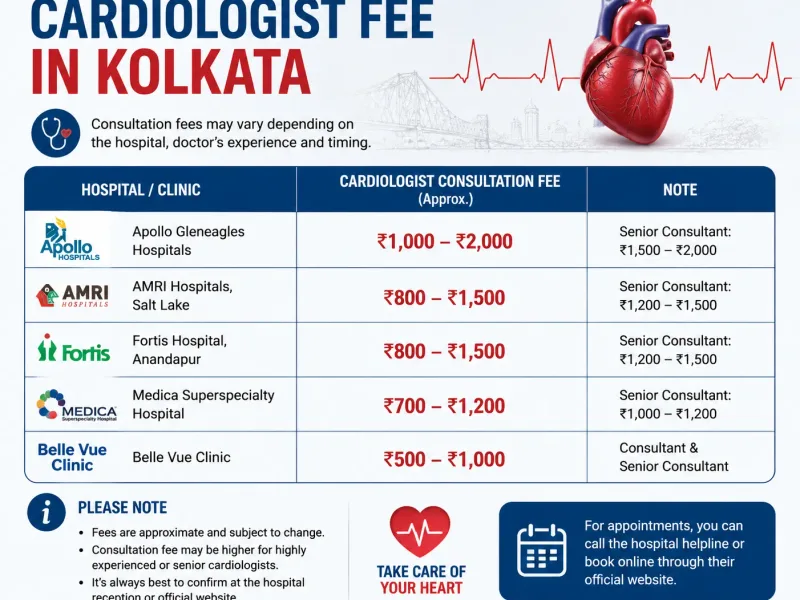
Learn about cardiologist fee in Kolkata, consultation charges, factors affecting costs, and tips to choose the right heart specialist.
May 29, 2026

A simple guide to the best shortness of breath specialist in Kolkata, including causes, symptoms, treatment options, and expert medical advice.
May 29, 2026

Find the best chest pain doctor in Kolkata. Learn causes, symptoms, tests, and treatment options from top heart specialists in simple English.
May 29, 2026