

Emergency & Help
24/7 Emergency & General Advisory
🚨 24/7 Medical Emergency
Non-Emergency Advisory
10:00 AM – 6:00 PM, Mon–Sat
For appointments & general queries.
24/7 Emergency & General Advisory
🚨 24/7 Medical Emergency
Non-Emergency Advisory
10:00 AM – 6:00 PM, Mon–Sat
For appointments & general queries.
Learn essential dynamic and static stretches for your inner thighs to improve flexibility, prevent injuries, and reduce muscle tension. Perfect for Indian readers seeking practical advice.

Your inner thigh muscles, also known as the adductors, are a group of five muscles that play a vital role in your daily movements. They help keep you balanced, stable, and moving safely. From walking and turning to bending, these muscles are constantly working. Because they are so integral to our mobility, it's important to keep them flexible and free from tension. Neglecting them can lead to tightness, cramps, and even injuries.
In India, where many of us lead active lives, whether it's navigating busy streets, participating in traditional sports, or simply performing daily chores, the health of our inner thigh muscles is paramount. A common scenario many of us face is feeling a sharp twinge or tightness in the groin area after a long walk or a sudden change in activity. This is often a signal that our adductor muscles need some attention.
This article will guide you through the importance of stretching your inner thighs, explain when and how to do it effectively, and provide you with clear instructions for some beneficial stretches. We'll cover both dynamic stretches, perfect for warming up before exercise, and static stretches, ideal for cooling down afterwards. Understanding these techniques can significantly improve your flexibility, reduce the risk of strains, and help alleviate post-exercise discomfort.
Regularly stretching your inner thigh muscles offers several key benefits:
Fitness experts and researchers generally agree that a combination of both dynamic and static stretching is most effective for improving flexibility, enhancing athletic performance, and preventing injuries. The timing of these stretches is key:
Dynamic stretches are best performed before you exercise. Think of them as a targeted warm-up. They involve controlled movements that mimic the actions you'll be performing during your workout. Dynamic stretches:
Spend about five minutes on dynamic stretches before you start your main exercise routine, especially if your groin muscles feel a bit tight.
Static stretches are best performed after your workout. These involve holding a stretch in a fixed position for a period of time without any movement. Static stretches:
It's important to note that static stretches are less effective if done without a proper warm-up, which is why dynamic stretching beforehand is so important.
Here are some simple yet effective stretches you can incorporate into your routine. Remember to breathe deeply and listen to your body. Never push into pain.
This is a great dynamic stretch to do before a workout. It targets your inner thighs, hips, and glutes.
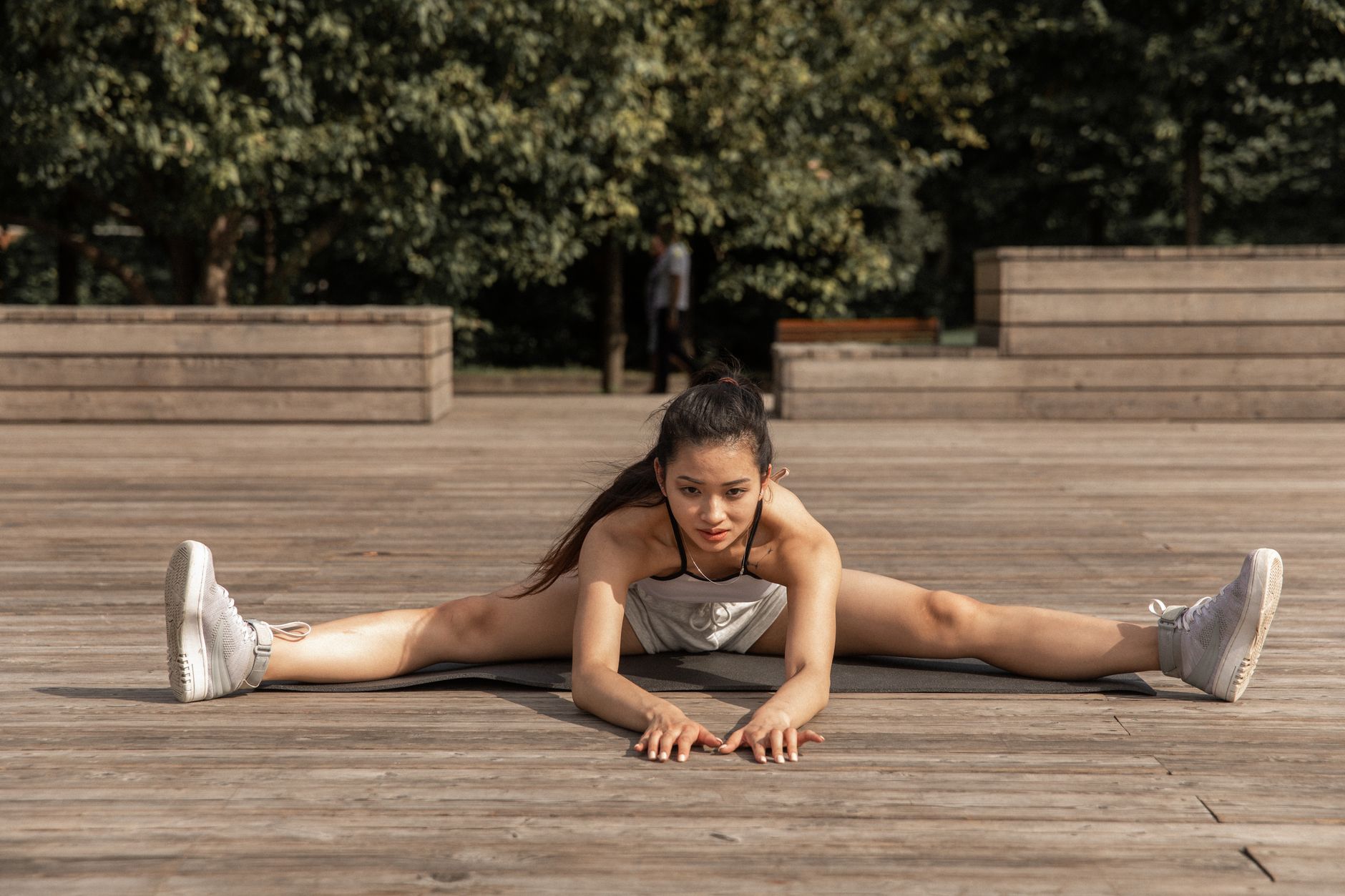
This classic stretch is excellent for opening up the hips and stretching the inner thighs and groin. It's a great static stretch for your cool-down.
This stretch targets the hamstrings and inner thighs effectively. It's best done after your workout.
This stretch is similar to the butterfly but allows for a deeper stretch of the inner thighs.
Imagine you've just finished playing a game of cricket with friends on a Sunday morning. You feel great, but as you start walking back, you notice a tightness in your inner thigh that makes each step a little uncomfortable. This is a common experience, and it's your body's way of telling you that your adductor muscles might need some attention. Instead of ignoring it, you can do a few gentle static stretches like the Butterfly or Seated Straddle stretch right after the game to help ease that tension and prevent it from becoming a bigger issue later.
While stretching is generally safe and beneficial, there are times when you should seek professional medical advice:
A doctor or a physiotherapist can accurately diagnose the issue, recommend specific treatments, and provide a tailored rehabilitation plan to help you recover fully and prevent future problems.
For static stretches, aim to hold the position for 15 to 30 seconds. Breathe deeply throughout the stretch. Repeating it 3 times is usually recommended.
Yes, strong and flexible adductor muscles contribute to overall hip and knee stability. By improving the balance of muscles around the hip and knee, stretching your inner thighs can indirectly help alleviate certain types of knee pain, especially those related to muscle imbalances.
You should feel a gentle pull or tension, but never sharp pain. If you feel pain, ease up on the stretch immediately. Pushing too hard can cause injury.
Visit Hospital
Near You

Discover simple yet effective glute stretches to relieve tightness, reduce back pain, and improve your mobility. Learn how to perform them safely at home or at your desk.
April 1, 2026

Squats and leg presses are both excellent for leg day, but they differ in muscle engagement, benefits, and risks. Learn which one is best for your fitness goals.
April 1, 2026
Discover 6 effective gluteus medius stretches to relieve hip pain, improve flexibility, and prevent injuries. Learn simple techniques for better hip health.
April 1, 2026