

Emergency & Help
24/7 Emergency & General Advisory
🚨 24/7 Medical Emergency
Non-Emergency Advisory
10:00 AM – 6:00 PM, Mon–Sat
For appointments & general queries.
24/7 Emergency & General Advisory
🚨 24/7 Medical Emergency
Non-Emergency Advisory
10:00 AM – 6:00 PM, Mon–Sat
For appointments & general queries.
Stay updated with our latest healthcare news and your appointments.
Bilirubin levels help assess liver health. This guide explains normal bilirubin values, types, causes of abnormal levels, symptoms, and when to seek medical advice.
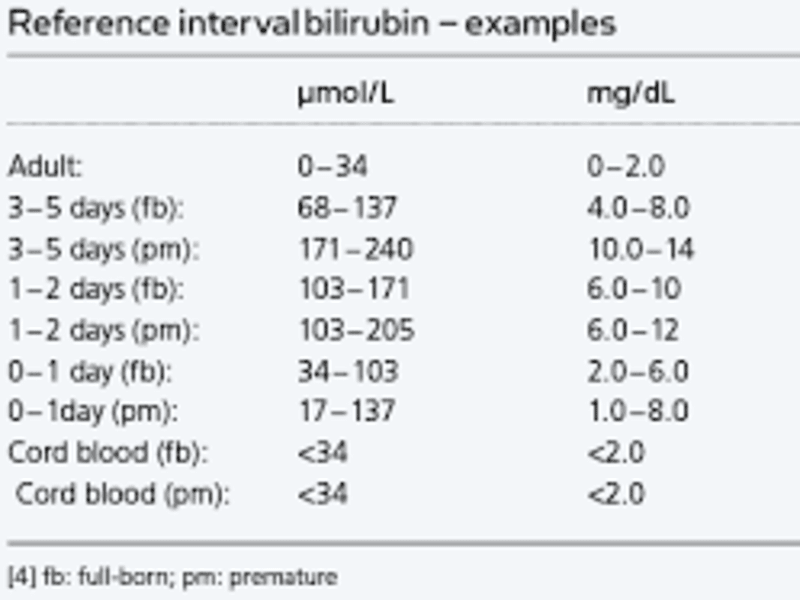
Learn about bilirubin normal values, test ranges, causes of high or low levels, symptoms, and when to consult a doctor.
Bilirubin is a yellowish substance that is present in the body as a result of red blood cell breakdown. The liver processes it and it is ultimately excreted in the bile. The level of bilirubin is also assessed in liver functioning.
Such disorders as jaundice, liver disease or bile duct problems are determined with the help of the awareness of the normal level of bilirubin. Knowledge of what your test results entail can make you act medically promptly.
Bilirubin is a product of natural decomposition of hemoglobin. It is very essential in the way it is processed and eliminated by the liver.
It is revealed by a blood test, commonly in a liver function test (LFT).
Depicts hepatic well-being and functionality.
aids in the detection of jaundice and liver diseases.
Examines the bile ducts.
Evaluates the treatment of liver diseases.
Normal levels of bilirubin are critical to general well-being.
The level of bilirubin is normally stated in the form of milligrams per deciliter (mg/dL). There can be slight variations of laboratories in the normal range.
The generally accepted ranges are the following:
Total bilirubin: 0.3 to 1.2 mg/dL
Direct (conjugated) bilirubin:0.1-0.3 mg/dL.
unconjugated (indirect) bilirubin: 0.2 to 0.8mg/dl.
The values beyond these ranges can signify a health problem.
Normal bilirubin may be increased as a result of different diseases of the liver, blood or biliary ducts.
The reasons as to why are useful in the treatment.
Hepatic diseases (including cirrhosis or hepatitis).
Blockage of bile ducts (gallstones)
Red blood cells (hemolysis) are dissolved.
Liver infections.
Certain medications
The clear manifestations of yellowing of the skin are related to high bilirubin.
Signs of excessive Bilirubin (Jaundice)
Under high levels of bilirubin this may lead to some symptoms otherwise known as jaundice.
They can be diagnosed at an early stage with the help of these signs.
Jaundice of the skin and eyes.
Dark-colored urine
Stool clay or pale.
Fatigue and weakness
Abdominal discomfort
In cases where these symptoms are manifested, then medical care is needed.
Low bilirubin is not a critical problem and it does not normally indicate a serious health problem.
However, they may be influenced to some degree.
Certain medications
Vitamin C supplementation.
Caffeine consumption
Laboratory variations
In the majority of the cases, low bilirubin does not require any treatment.
The well-being of the liver must be preserved in such a manner that bilirubin level does not surpass the normal condition.
Liver functioning can be supported by healthy lifestyle habits.
Eat healthy diet, high in fruits and vegetables.
Stay hydrated
Do not overindulge in alcohol.
Exercise regularly
Avoid unnecessary medications
Undergo regular check-ups.
These will help in prevention of liver-related issues.
Existence of abnormal levels of bilirubin can not be ignored especially where the symptoms are found.
Issues may be prevented by seeking medical advice on time.
Persistent jaundice symptoms
Bilirubin level abruptly increases.
Irresponsible drowsiness or bellyache.
Finding of literature analysis of hepatic abnormality.
Inaccurate diagnosis may be suggested by a doctor.
Bilirubin normal level is a valuable measure of liver condition and health. Medical conditions can be detected at an early stage by the awareness of normal range and factors of abnormal levels.
Contact a medical worker in case of abnormal level of bilirubin or the appearance of such symptoms as jaundice. The liver and bilirubin level are also very important to exercise.
FAQs:
1. What is the normal level of bilirubin in adults?
The normal bilirubin of the total is normally 0.3- 1.2mg/dL.
2. Is high bilirubin toxic?
Yes it may be an indicator of liver disease, blockage of the bile ducts or other diseases.
3. Does the level of bilirubin normalize?
Yes, the levels will again be at the normal level in case the underlying cause is treated correctly.
4. What foods could reduce bilirubin?
Fruits, vegetables and water are good dietary supplements in the liver functioning.
5. Is it low-bilirubin problematic?
Unusual low bilirubin is asymptomatic and can seldom need treatment.
Author: Doctar Team
Disclaimer: For more information connect with Doctor on Doctar.
Visit Hospital
Near You
For years, long COVID had no proven treatment — only symptom management. That changed in July 2026, when UCL researchers published trial results showing a structured cognitive rehabilitation program produced lasting improvement in long COVID brain fog. This piece explains what the trial found, how i
July 23, 2026

Learn how to properly clean and care for your new ear piercing to ensure it heals beautifully and avoid infection. Follow our step-by-step guide for optimal results.
April 1, 2026

Discover practical, science-backed tips to sharpen your reaction time for gaming, sports, and everyday life. Learn how to improve your brain's speed and accuracy.
April 1, 2026