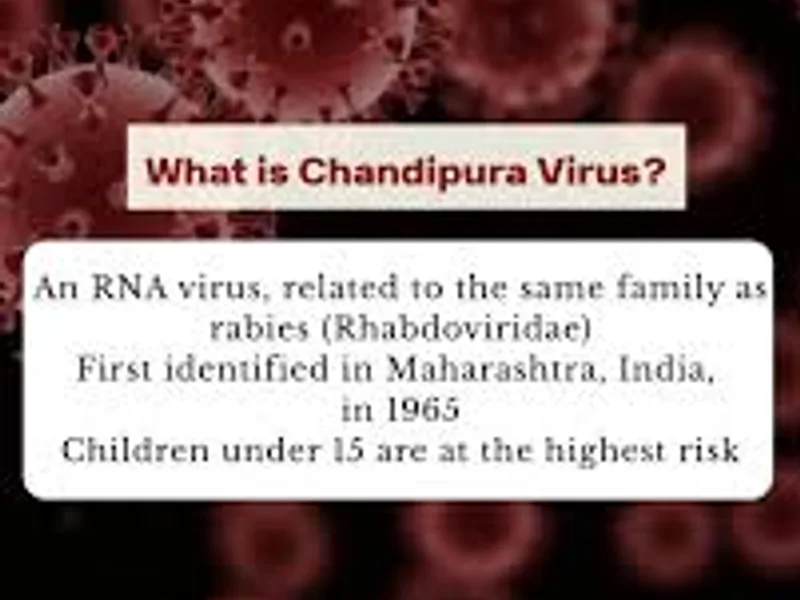
What Is Chandipura Virus, and Why Is It Back in the News
If you've been scrolling news apps this week and seen "Chandipura virus" trending, you're not imagining the alarm. Gujarat's health department has confirmed 35 laboratory-tested cases this monsoon season, and 22 children have died. Rajasthan has reported suspected cases too, and the Union Health Ministry sent a National Joint Outbreak Response Team (NJORT) to both states in early August 2026.
Chandipura virus, or CHPV, isn't new. It was first identified back in 1965 in a village called Chandipura in Maharashtra, and it belongs to the same viral family as rabies — Rhabdoviridae — though the illness it causes is very different. It's what doctors call an arbovirus, meaning it's carried by insects rather than spreading person to person.
What makes this outbreak worth talking about isn't novelty. It's speed. A child can look like they have a routine viral fever one evening and be critically ill with brain swelling by the next day.
How Chandipura Virus Spreads
The main carrier is a tiny insect called the sandfly, specifically female phlebotomine sandflies. These breed in cracked mud walls, cattle sheds, and damp organic debris — exactly the kind of environment that's common in rural and semi-urban parts of western India during the rains. Some studies have also flagged mosquitoes and ticks as possible secondary carriers, though sandflies remain the primary suspect.
One thing worth clearing up early: there's no confirmed evidence of the virus spreading directly between people. If your child is diagnosed, it doesn't mean the rest of the family is automatically at risk the way it would be with, say, a respiratory virus. The risk comes from the environment, not from close contact with a sick child.
Scientists at the Gujarat Biotechnology Research Centre are currently running whole-genome sequencing on samples from this year's cases, to see whether the circulating strain has changed meaningfully from earlier outbreaks. Early results show minor genetic variation, but nothing conclusive yet about whether the virus itself has become more dangerous.
Symptoms Every Parent Should Recognize
This is the part that matters most for families, so let's be direct about it.
Chandipura virus usually starts like an ordinary fever. Then, within 24 to 48 hours, it can progress to what's called Acute Encephalitis Syndrome, or AES — essentially, swelling and inflammation in the brain. Watch for:
High, sudden-onset fever
Repeated vomiting
Seizures or convulsions
Altered consciousness — confusion, unusual drowsiness, or the child becoming difficult to wake
Severe headache in older children who can describe it
In clinical practice, this is often missed in the first few hours because the early picture looks identical to a hundred other childhood fevers doctors see every monsoon season. That overlap is exactly why speed matters more than certainty. If a young child's fever comes with any change in alertness or a seizure, that's not a "wait and watch" situation — that's a same-hour trip to the nearest emergency care facility, full stop.
Why Children Are Hit Hardest
Nearly all serious CHPV cases occur in children under 15, and most of the deaths in outbreaks going back decades have been in this age group. Nobody has a fully settled explanation for why. Some researchers point to differences in how a developing immune system and a still-maturing blood-brain barrier respond to the virus, but honestly, this is one of those areas where the science hasn't caught up with the clinical pattern yet. It's worth asking your child's pediatrician directly if you're in an affected region — they'll have more localized, current guidance than any article can offer.
Diagnosis and Treatment: What's Actually Available
Here's the plain truth: there is no specific antiviral drug and no licensed vaccine for Chandipura virus. Treatment is entirely supportive — managing fever, seizures, breathing, and fluid balance while the body fights the infection, usually in an intensive care setting.
That makes early hospital admission the single biggest factor in survival. Diagnosis typically involves blood or cerebrospinal fluid testing, which is why access to a proper diagnostic center matters as much as the hospital bed itself. If a child in an affected district shows AES symptoms, doctors usually don't wait for lab confirmation before starting supportive treatment — the disease moves too fast for that.
If you're unsure where to go, checking hospitals near you with pediatric ICU capacity in advance, rather than during a crisis, is a genuinely useful thing to do if you live in Gujarat or Rajasthan right now.
Prevention: What You Can Actually Control
Since there's no vaccine, prevention comes down to reducing sandfly exposure, and most of it is unglamorous but effective:
Fill cracks in mud or brick walls where sandflies breed
Keep cattle sheds and animal enclosures away from living areas, and clean them regularly
Use insect repellent on children, especially in the evening and early morning
Consider mosquito nets treated with insecticide, even though sandflies aren't mosquitoes — the fine mesh helps against both
Clear organic debris and stagnant damp patches around the house
None of this guarantees safety, and it's fair to feel that's an unsatisfying answer. But vector control genuinely is the main lever public health teams are pulling right now, alongside faster referral of sick children.
If your child needs ongoing monitoring or you want a professional home assessment rather than travelling with a feverish child, a home visit doctor can be a reasonable first step before deciding whether hospitalization is needed — though any AES warning sign should bypass this and go straight to emergency care.
How India Is Responding to the 2026 Outbreak
The Health Ministry's NJORT team includes experts from the National Centre for Disease Control (NCDC), ICMR, and the Department of Animal Husbandry and Dairying, working under what's called a One Health approach — looking at human, animal, and environmental factors together rather than in isolation. The NCDC's Public Health Emergency Operations Centre has also been activated to support the ground response.
Notably, investigators haven't yet confirmed the exact vector for this specific 2026 outbreak through field testing — that detail is still pending, which tells you this response is happening in real time, not from a settled playbook.
When to Get Help — and Where
If you take one thing from this article, let it be this: a young child with fever plus a seizure, unusual drowsiness, or repeated vomiting during this outbreak period needs to be seen in person, immediately, not messaged about or Googled about. Call emergency services or head straight to the nearest hospital.
For non-emergency questions — what to watch for, whether a mild fever needs a same-day visit — start with a general physician or your regular pediatrician. If your area doesn't have easy hospital access, look up hospitals across India or search doctors near you in advance so you're not scrambling later. Families managing a child through recovery, including physical rehabilitation after severe illness, can also look into a physiotherapist once the acute phase has passed.
For home-based support during recovery — wound care, injections, or monitoring — a compounder or nurse visit can ease the burden on families juggling hospital visits. If transport is the barrier, check ambulance availability rather than risking a delay. Ongoing gut-related complications in some AES cases may also need input from a gastroenterologist, and any surgical intervention required during ICU care would involve a general surgeon.
You can also browse medicines and home essentials, check surgery options if complications arise, search more broadly for doctors near you, or explore home visit doctor services directly. For more background reading, Doctar has a dedicated piece specifically on why children are at risk in this outbreak, and the wider health blog is updated regularly as the situation develops. Questions about the platform itself, its about page and contact details are available too.