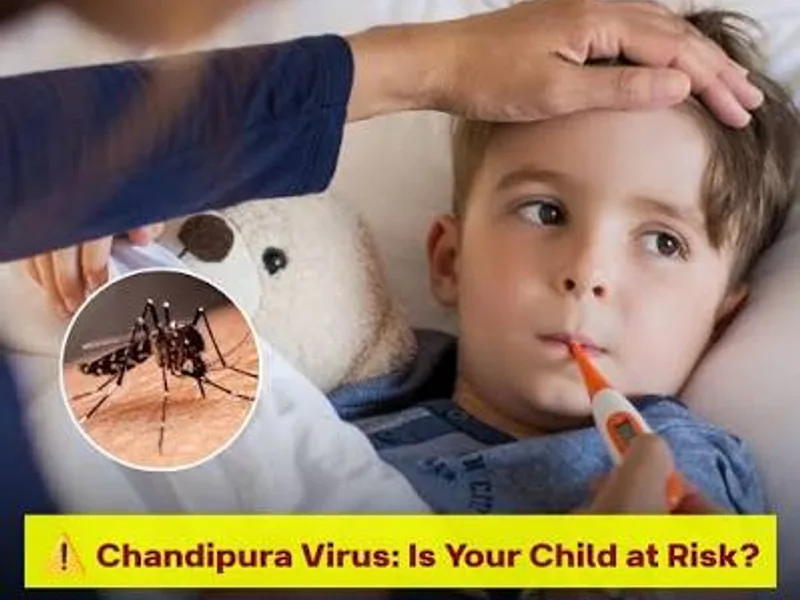
The Chandipura virus outbreak in Gujarat has put renewed attention on a rare infection that can become a medical emergency, particularly in children.
Recent reports from Gujarat say 35 Chandipura infections have been confirmed among 184 suspected cases, with 22 child deaths reported during the current monsoon outbreak. Health authorities have also expanded surveillance and outbreak-response efforts, including a national team to support investigations and containment. These figures can change as laboratory testing and case investigations continue.
Chandipura virus, or CHPV, is associated with acute encephalitis syndrome (AES), a group of illnesses that can cause inflammation of the brain and neurological problems. The infection has been reported mainly in children and has historically appeared more often during the monsoon season in parts of India.
What is Chandipura virus?
Chandipura virus belongs to the Vesiculovirus genus within the Rhabdoviridae family. It was first identified in India in 1965 and has since been linked with outbreaks of severe encephalitis, particularly among children.
The virus is mainly associated with insect vectors, especially sandflies. Government health information has also described transmission through vectors such as ticks. The exact ecology of transmission can vary between outbreaks and locations.
The illness can begin with symptoms that look ordinary, such as fever, headache, vomiting or tiredness. That is one reason early recognition can be difficult.
Families looking for a basic guide to fever symptoms can also read Doctar.in's understanding fever and when to seek help.
Why is the 2026 outbreak concerning?
The current outbreak is being reported during India's monsoon season, when conditions can support the insects associated with CHPV transmission.
Recent reporting has focused on Gujarat, with some cases also reported in Rajasthan. The Union government has deployed a National Joint Outbreak Response Team to strengthen surveillance, diagnostics and public-health coordination.
The concern is not simply the number of infections. Chandipura disease can progress rapidly once neurological symptoms appear. Previous WHO reporting described a high fatality risk and emphasized early access to intensive supportive care.
For parents, the practical message is straightforward: a fever in a child should not automatically be assumed to be Chandipura, but a fever accompanied by neurological warning signs deserves urgent medical assessment.
Doctar.in also explains when child fever needs expert care, including symptoms that should prompt medical attention.
What symptoms should parents watch for?
Chandipura infection may initially resemble several common childhood illnesses. Fever can be followed by headache, vomiting, unusual sleepiness, confusion, seizures or other changes in behaviour and consciousness.
Neurological symptoms are particularly concerning because they may indicate involvement of the brain.
Common warning signs associated with serious encephalitis can include:
High fever
Severe headache
Repeated vomiting
Excessive sleepiness or difficulty waking
Confusion or unusual behaviour
Seizures or convulsions
Loss of consciousness
Weakness or other neurological changes
These symptoms do not prove that a child has Chandipura virus. Other infections can produce a similar picture. A doctor may need laboratory tests and other investigations to identify the cause.
Parents can review Doctar.in's guide to fever in babies and when immediate medical help is needed, particularly for very young children.
For parents trying to measure a child's temperature accurately, Doctar.in also covers how to understand underarm temperature.
Why can Chandipura become severe?
The main danger is inflammation of the brain, known as encephalitis. When the brain becomes inflamed, neurological functions can deteriorate quickly.
This can result in seizures, altered consciousness and, in severe cases, coma. WHO has previously reported that Chandipura outbreaks can have a high case-fatality ratio and that there is no specific antiviral treatment or licensed vaccine specifically for CHPV.
In clinical practice, this is often missed because the illness can start like an ordinary fever. The change that matters is not simply the temperature, but the appearance of neurological symptoms or a child becoming unusually drowsy, confused or difficult to wake.
Doctar.in's explanation of encephalitis versus meningitis provides useful background on brain inflammation and overlapping symptoms.
A related guide discusses meningitis and neck pain, another example of why fever combined with neurological symptoms should not be ignored.
Why are children particularly affected?
Available outbreak evidence shows a strong association between severe Chandipura disease and children, particularly those under 15 years of age. Indian government health updates have repeatedly highlighted this age group during previous outbreaks.
Children also may not be able to describe headache, confusion or other neurological changes clearly. Parents often notice the earliest difference through behaviour: a normally active child becomes unusually quiet, sleepy or irritable.
Doctar.in's guide to pediatric neurological disorders explains how infections such as meningitis and encephalitis can affect the developing nervous system.
Parents concerned about finding specialist child care can also explore Doctar.in's child specialist doctor information and child doctor guidance for Supaul.
What happens when a child has a seizure?
A seizure can be one of the most frightening symptoms for a family. In a suspected encephalitis case, however, it is a neurological emergency rather than something that should simply be watched at home.
Doctar.in's article on neonatal seizures explains how seizures can be linked to problems affecting the brain and why medical evaluation is necessary.
Parents can also use Doctar.in to find a pediatric neurologist when specialist neurological care is required.
A seizure does not automatically mean Chandipura virus. Several infections, metabolic conditions and neurological disorders can cause seizures. The priority is urgent medical assessment rather than trying to identify the cause at home.
How is Chandipura virus diagnosed?
Doctors do not diagnose Chandipura infection from fever alone. The clinical picture is assessed alongside laboratory testing and the patient's exposure history.
During previous outbreaks, testing by specialist laboratories such as the National Institute of Virology has been used to confirm CHPV infection. Government outbreak investigations have also involved epidemiological, environmental and entomological assessments.
This distinction matters because acute encephalitis syndrome is not the same thing as Chandipura infection. AES can have multiple infectious and non-infectious causes, including other viruses.
A pediatrician can help assess a child at the beginning of the illness. Doctar.in lists doctors such as Dr. Chandra Shekhar, a pediatrician in Hyderabad, and Dr. Narendra N S, a pediatrician in Bengaluru.
Families can also review child healthcare options in Deoghar when looking for pediatric services.
Is there a specific treatment or vaccine?
There is currently no specific antiviral treatment established for Chandipura virus, and there is no licensed vaccine specifically for preventing CHPV infection. Management is largely supportive, with doctors treating complications and supporting breathing, circulation and other vital functions when necessary.
That does not mean treatment is hopeless. Early recognition and timely referral to an appropriately equipped hospital can matter, particularly when encephalitis or seizures develop.
The goal should not be self-treatment. Parents should not start medicines on the assumption that a fever is Chandipura.
For general information about childhood vaccination, Doctar.in also has resources on vaccination centres for children. Vaccines that protect against other infections remain important, but they do not specifically prevent Chandipura virus.
How can families reduce the risk?
Because CHPV is associated with insect vectors, reducing exposure to insect bites is a central prevention measure.
Families living in areas reporting cases should follow local public-health advice on vector control. Measures may include reducing insect exposure around homes, using appropriate protective barriers and keeping children covered when insect activity is high.
Doctar.in's guide on bug bites and bruising provides broader information about insect bites.
Its article on infected bug bites also explains when an insect bite needs medical assessment.
Other insect-bite resources include Doctar.in's information on spider bites in India and spider-bite symptoms and prevention. These are not Chandipura-specific, but they offer useful general information about insect exposure.
What about vomiting and dehydration?
Vomiting can occur in serious infections, including neurological illnesses. The bigger concern is what accompanies it.
A child who is repeatedly vomiting and becoming unusually sleepy, confused or difficult to wake needs medical assessment rather than prolonged home observation.
Doctar.in's guide on vomiting in babies explains some common causes and warning signs.
Its information on mucus in vomit and warning signs may also help parents understand when vomiting requires medical attention.
Dehydration can add another layer of risk. Families can read Doctar.in's guide to dehydration for general warning signs, while remembering that severe illness requires professional medical evaluation.
When should parents seek urgent care?
Do not wait for a laboratory report if a child with fever develops a seizure, confusion, severe drowsiness, loss of consciousness, repeated vomiting, breathing difficulty or a sudden neurological change.
The cause may be Chandipura, another infection, or something entirely different. That is precisely why urgent assessment is necessary.
For general fever guidance, Doctar.in also covers fever and when to seek a doctor in Gopalganj and finding a fever doctor in Begusarai.
Children with neurological symptoms may require care beyond a routine fever consultation. A pediatrician, emergency physician, neurologist or infectious-disease team may become involved depending on the presentation.