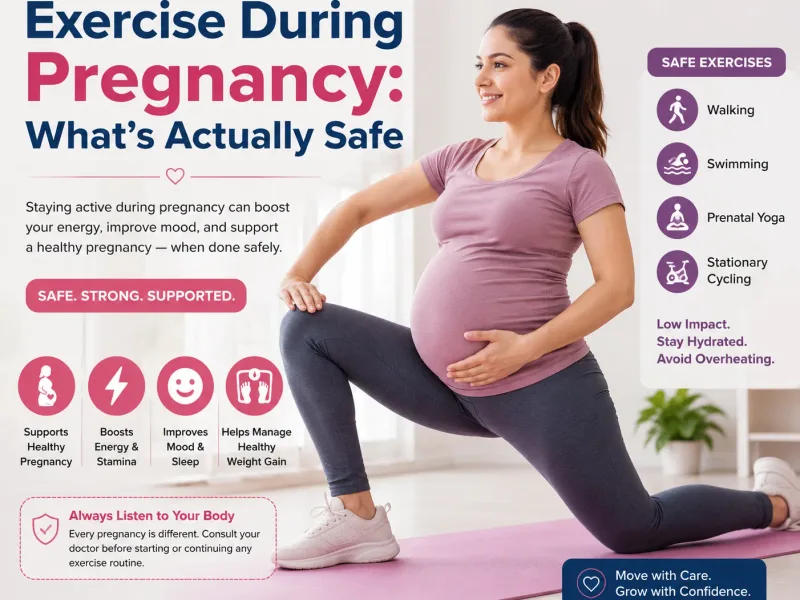
Pregnancy makes a lot of women second-guess things they used to do without thinking. Walking briskly. Lifting a heavier bag. A regular gym session. The question that comes up again and again in antenatal check-ups is simple: is it still safe to exercise now?
For most healthy pregnancies, the answer is yes. Not just "allowed" — actively encouraged. Staying active through pregnancy is linked to easier labour, better sleep, less lower back pain, and steadier blood sugar. It also seems to lower the odds of excessive weight gain and gestational diabetes, though the exact numbers vary study to study, so it's fairer to say "reduces risk" than to quote a specific percentage.
That said, pregnancy isn't the time to start training for a marathon. The goal shifts from performance to maintenance — keeping your body strong, mobile and comfortable as it changes week by week.
Why Movement Helps More Than People Expect
Here's something that often gets missed in general pregnancy advice: exercise isn't just about weight management. It directly affects circulation, which matters because pregnancy increases blood volume by a significant margin and puts extra strain on your veins.
In clinical practice, this is often overlooked because patients associate "exercise" with intense workouts and assume pregnancy rules it out entirely. Even 20 to 30 minutes of walking most days does something a sedentary day cannot — it improves venous return, eases swelling in the legs, and can reduce the severity of pregnancy-related fatigue. Gentle movement also seems to help mood, which matters given how common pregnancy-related anxiety and low mood can be.
Safe Exercises, Trimester by Trimester
First trimester (weeks 1–12).
Nausea and exhaustion are the bigger obstacles here, not the exercise itself. Walking, swimming, and light prenatal yoga are generally well tolerated. If you were already exercising before pregnancy, most doctors say you can usually continue at a similar or slightly reduced intensity — this isn't the trimester to push new personal bests.
Second trimester (weeks 13–26).
Energy often improves, and many women find this the easiest window to stay active. Stationary cycling, modified strength training with lighter weights, and swimming are commonly recommended. This is also when doctors start advising against exercises that involve lying flat on your back for extended periods, since the growing uterus can press on a major vein and reduce blood flow.
Third trimester (weeks 27–40+).
Balance becomes the main concern — your centre of gravity has shifted, and joints are looser due to hormonal changes (the hormone relaxin, in plain terms, softens ligaments to prepare the body for birth). Walking, swimming, and pelvic floor exercises remain solid choices. High-impact moves, sudden direction changes, and anything with a real fall risk should generally be avoided.
Exercises Doctors Usually Advise Against
A few categories come up repeatedly in pregnancy nutrition and lifestyle guidance as ones to skip or modify:
Contact sports, and anything with a high chance of falling — skiing, horseback riding, gymnastics. Scuba diving is off the list entirely because of decompression risks to the baby. Exercises done lying flat on the back after the first trimester. And, somewhat obviously, anything that leaves you gasping for air or unable to hold a conversation — that's usually a sign the intensity is too high.
Hot yoga and hot Pilates are also generally discouraged. Overheating in early pregnancy has been linked to complications, so it's one of the more consistent pieces of advice across sources.
Warning Signs to Stop and Call Your Doctor
Some symptoms during exercise are a clear signal to stop immediately and get medical advice, not push through:
Vaginal bleeding, dizziness or fainting, chest pain, calf pain or swelling, contractions, fluid leaking, or a noticeable drop in the baby's movement. None of these should be self-diagnosed at home. If any of them show up, the right move is a call to your obstetrician or gynecologist — not a Google search for reassurance.
Is it always obvious when to stop? Honestly, no — a lot of women describe pregnancy fatigue and "normal" pregnancy discomfort as feeling similar at first. That's exactly why regular prenatal visits matter more than any fitness app or generic checklist.
Talk to Your Doctor Before Starting
This article is general education, not a substitute for medical advice. Every pregnancy carries its own risk profile — conditions like placenta previa, certain heart conditions, or a history of preterm labour can change what's safe for you specifically. Before starting or restarting any exercise routine, it's worth a short conversation with your gynecologist about what fits your situation. You can find a verified gynecologist near you on Doctar if you don't already have one you're seeing regularly.