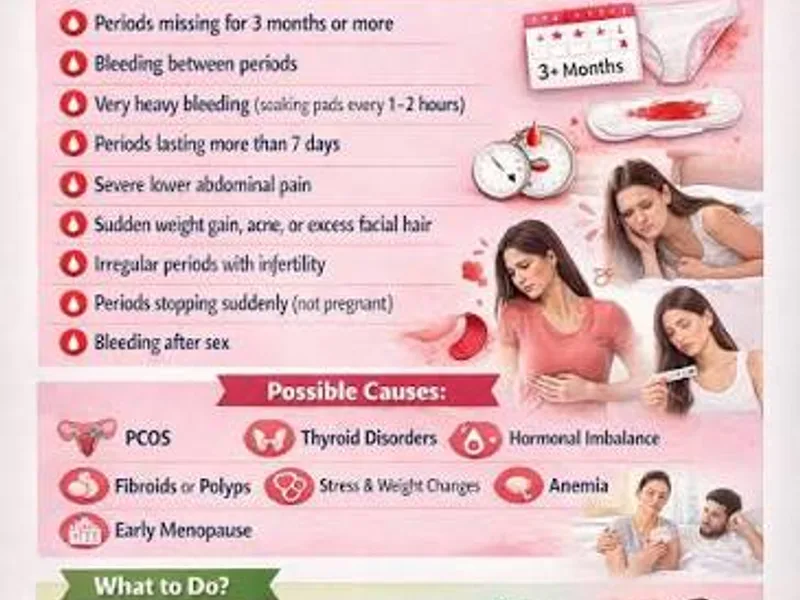
Irregular Periods: Causes, Warning Signs, and When to Get Checked
A period that arrives whenever it feels like it isn't just annoying. It can be your body's way of flagging something worth paying attention to.
Most women assume a 28-day cycle is the rule. It isn't. Anything between 21 and 35 days is generally considered normal. What counts as "irregular" is when that pattern itself keeps changing, cycles that swing from 24 days to 40 days, periods that vanish for months, or bleeding that shows up between periods.
What Actually Counts as Irregular
A cycle is usually flagged as irregular if the length varies by more than seven or eight days from month to month, if periods stop for three months or longer (outside of pregnancy or menopause), or if bleeding happens outside your expected window. One late period, on its own, rarely means much. A pattern, though, is worth tracking.
If you've noticed unusual bleeding between periods, it's worth understanding what intermenstrual bleeding can indicate before assuming it's nothing.
Common Causes of Irregular Periods
Hormonal Imbalances Top the List
The menstrual cycle runs on a tight hormonal relay between the brain and the ovaries. When estrogen and progesterone don't rise and fall the way they should, cycles wobble.
Polycystic Ovary Syndrome, or PCOS, is one of the most frequent culprits. It disrupts ovulation and can cause cycles to stretch out or disappear altogether. If you're managing PCOS and thinking about family planning, this guide on navigating pregnancy with PCOS is a useful next read.
The thyroid gland plays a bigger role here than most people realize. Both an underactive and an overactive thyroid can throw ovulation off track. In clinical practice, this is often missed because thyroid symptoms, fatigue, weight changes, mood shifts, get blamed on stress or lifestyle first, and the cycle disruption is treated as a separate problem instead of a related one.
A shortened second half of the cycle, known as a short luteal phase, is another hormone-driven cause worth knowing about. You can read more on luteal phase disorders and how they connect to fertility.
Stress Is Not Just "In Your Head"
Chronic stress raises cortisol, and cortisol interferes with the hormones that trigger ovulation. Some women notice their period simply skips a month during exam season, a job change, or a family crisis. It's a real physiological response, not a coincidence. Persistent stress can also show up as irritability and mood changes that compound the problem.
Sudden Weight Changes
Rapid weight loss, excessive exercise, or significant weight gain all affect the hormones that regulate the cycle. Body fat produces estrogen, so both too little and too much of it can throw things off. This is especially common in young athletes and in women recovering from restrictive eating patterns.
Reproductive Health Conditions
Endometriosis, fibroids, and adenomyosis can all cause irregular or unusually heavy bleeding. If cramps or bleeding patterns have changed while you're on hormonal treatment, this piece on cramps while on birth control walks through what's normal and what isn't. Endometriosis specifically deserves attention because it's frequently misdiagnosed as ordinary period pain for years before a proper workup happens; the overview on endometriosis and hormonal management explains why early evaluation matters, and bloating tied to the condition is covered separately in this piece on endo belly.
Birth Control and Other Medications
Starting or stopping hormonal contraception almost always causes a few irregular cycles while the body recalibrates. Understanding how progestin and natural progesterone work differently in the body helps explain why. Certain other medications, including some used for endometriosis such as those discussed in this piece on drug interactions with hormonal treatments, can also affect cycle timing.
Age-Related Shifts: Puberty and Perimenopause
In the first year or two after a girl's first period, irregular cycles are completely normal while the hormonal system matures. On the other end, perimenopause brings similar unpredictability as ovarian hormone production becomes erratic. The differences between perimenopause and PMS are easy to confuse, and knowing which one you're dealing with changes the conversation with your doctor. For women exploring options during this transition, this guide to hormone replacement therapy is worth a look.
Pregnancy and Related Causes
A missed period is often the first pregnancy sign, but irregular spotting can also happen around implantation. This explainer on understanding implantation timing is a good starting point if you're trying to make sense of unusual bleeding while trying to conceive. Underlying conditions such as gestational diabetes, covered in this article on gestational diabetes after pregnancy, can also influence cycle recovery postpartum.
Less Common but Serious Causes
Sudden, severe pelvic pain alongside cycle changes should never be ignored. Conditions like ovarian torsion are medical emergencies, not something to wait out. Hormonal conditions affecting the adrenal glands, such as those discussed in this guide to Cushing's syndrome, and reproductive hormone disruptions covered in this piece on reproductive health and hormone therapy, can also present with irregular cycles as an early sign. Bleeding disorders are worth ruling out too; heavy menstrual bleeding is one of the symptoms covered in this piece on INR and clotting tests. And if unusual skin changes accompany hormonal symptoms, this article on vulvar skin changes is useful background, though it's unrelated to cycle irregularity directly.
When to See a Doctor
Track your cycle for two to three months before assuming the worst; occasional irregularity is common and often harmless. But get checked if periods stop for three months without pregnancy, if bleeding is unusually heavy, if cycles are consistently shorter than 21 days or longer than 35, or if irregularity comes with new pain, hair growth, or unexplained weight change.
A gynecologist can run basic bloodwork and an ultrasound to narrow down the cause quickly. In Kolkata, women can consult experienced gynecologists such as Dr. Bikash Banerjee, Dr. Mou Chatterjee, Dr. Abhinibesh Chatterjee, Dr. Sheuli Pal, Dr. Swagatika Panda, or Dr. M Padmaja Bhattacharya. For fertility-related workups, a dedicated centre like ARC International Fertility & Research Centre is another option worth knowing about.