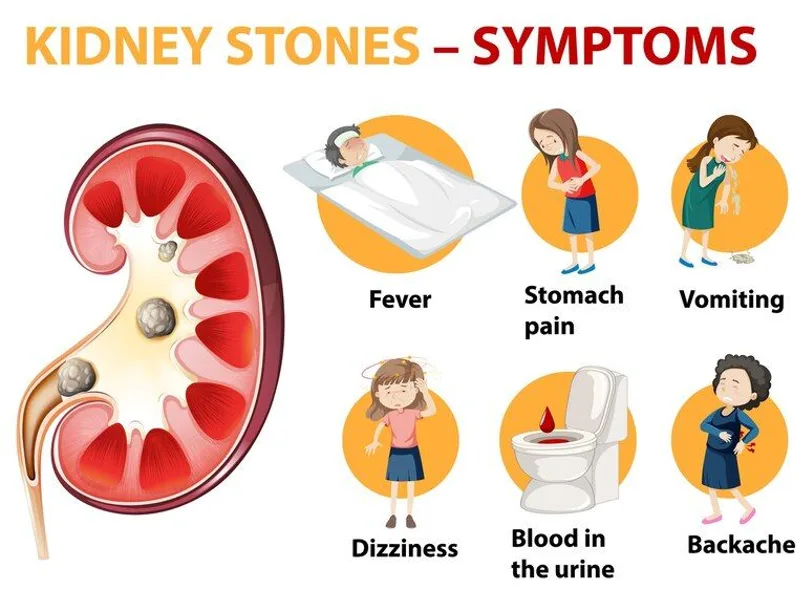
What do kidney stone symptoms feel like?
Sudden, sharp pain is the classic warning sign. The pain often begins in the side or back below the ribs and may travel toward the lower abdomen or groin.
Unlike ordinary muscle pain, kidney stone pain can come in waves. It may become extremely intense, ease for a while, and then return as the stone shifts position.
DOCTAR's guide to kidney stone causes, symptoms and treatment describes this pattern as pain that can fluctuate in intensity and move from the flank toward the groin.
Another useful reference is DOCTAR's article on kidney stone home remedies and symptoms, which covers the typical urinary and digestive symptoms associated with stones.
Pain while urinating
A stone near the lower end of the urinary tract may make urination painful or uncomfortable. Some people describe burning or a sharp sensation while passing urine.
The urge to urinate may also become more frequent, particularly when the stone has moved closer to the bladder. These symptoms can overlap with a urinary tract infection, so they should not automatically be blamed on a stone.
DOCTAR's guide to urinary tract infections explains how burning, frequent urination and changes in urine can occur with UTIs as well.
Blood in the urine
Pink, red or brown urine can occur when a stone irritates the urinary tract. The medical term is hematuria, meaning blood in the urine.
Blood is not proof that someone has a kidney stone, however. Urinary infections and other conditions can also cause it, which is why unexplained or persistent blood in urine deserves medical evaluation.
DOCTAR's comparison of bladder stones and kidney stones also discusses blood in urine and other symptoms that can overlap between different types of urinary stones.
Nausea and vomiting can accompany the pain
Severe stone pain can make people feel sick to their stomach. Nausea and vomiting are common when the pain is intense, and persistent vomiting can create another problem: dehydration.
If someone cannot keep fluids down because of repeated vomiting, medical assessment becomes more important. The issue may not simply be discomfort from a small stone.
DOCTAR's article on lingering pain after kidney stones discusses nausea, vomiting, obstruction and infection as reasons persistent symptoms should not be ignored.
Fever and chills are a different kind of warning
Fever with a suspected kidney stone is not a symptom to casually watch at home. A blocked urinary tract combined with infection can become a serious medical problem.
Chills, fever, worsening side or back pain, vomiting and feeling markedly unwell may indicate that an infection has reached the kidney or is occurring behind an obstruction.
DOCTAR's emergency UTI guide specifically identifies fever, chills, nausea, vomiting and severe back or side pain as warning signs requiring prompt medical attention.
In clinical practice, this is often missed because patients understandably focus on the pain. The combination of pain, fever and urinary obstruction is much more concerning than pain alone.
Can a kidney stone cause symptoms without severe pain?
Yes. Not every kidney stone announces itself dramatically.
A small stone may cause little or no discomfort, particularly while it remains in the kidney. Symptoms are more likely when the stone moves, irritates the urinary tract or blocks urine flow.
This is one reason imaging sometimes discovers stones incidentally while investigating another health problem. The absence of severe pain does not necessarily mean there is no stone.
DOCTAR's renal scan guide explains how imaging can help doctors investigate kidney structure, urinary blockages and other kidney problems.
Kidney stone symptoms can resemble other problems
Pain in the side or back does not automatically mean a kidney stone. Muscle injuries, digestive conditions, urinary infections and several abdominal or pelvic problems can produce similar discomfort.
The location and pattern of pain matter, but they are not enough to confirm a diagnosis. Doctors may consider the person's medical history, examination findings, urine tests, blood tests and imaging before deciding what is happening.
DOCTAR's online nephrologist consultation guide discusses how kidney specialists assess conditions including kidney stones, urinary infections and kidney disease.
How doctors check for a kidney stone
A suspected stone is usually investigated rather than diagnosed from pain alone. Urine testing can look for blood and signs of infection, while blood tests can provide information about kidney function and other possible causes.
Imaging is often central to the assessment. Depending on the circumstances, doctors may use ultrasound, X-ray or CT imaging to identify a stone, determine its location and look for obstruction.
DOCTAR's kidney stone diagnosis guide describes the role of imaging, urine tests and blood tests in evaluating stones.
A kidney function test guide also explains the blood and urine markers commonly assessed when doctors evaluate renal function.
For people with recurring urinary problems, a urine protein-creatinine ratio test may be relevant to a broader kidney assessment, although it is not a test used specifically to diagnose every kidney stone.
When is kidney stone pain an emergency?
Severe pain plus certain additional symptoms should be treated as a medical priority.
Seek urgent medical care if suspected kidney stone symptoms include:
fever or chills
severe or worsening pain
repeated vomiting or inability to keep fluids down
inability or major difficulty passing urine
significant or persistent blood in the urine
feeling severely weak or unwell
These signs can indicate infection, obstruction or another condition that needs prompt assessment. DOCTAR's guide to persistent pain after passing a stone also highlights worsening pain, fever, vomiting and difficulty urinating as reasons to seek medical attention.
What happens after a stone passes?
Passing the stone does not always mean the story is over. Some people have mild soreness for a short period because the urinary tract has been irritated.
Persistent or worsening pain, however, may point to another stone, incomplete passage, obstruction, infection or another source of pain. DOCTAR's article on lingering kidney stone pain explains why ongoing symptoms sometimes need further testing.
A person who repeatedly develops stones may also need a closer look at diet, fluid intake, medications, family history and underlying medical conditions.
Why kidney stones can keep coming back
One kidney stone can be a warning to look at the bigger picture. Dehydration, dietary patterns, obesity, certain metabolic conditions, family history and some medicines can influence stone formation.
The type of stone matters, too. Calcium-based stones are common, but uric acid and other types require different considerations. That is why blindly following a restrictive “kidney stone diet” found online is not necessarily sensible.
DOCTAR's low-oxalate diet guide discusses why dietary changes should be matched to a person's stone history and medical advice.
The kidney stone prevention guide also covers hydration, sodium, animal protein, calcium and other factors involved in prevention.
Hydration helps, but more is not always better
Adequate fluid intake is central to kidney stone prevention, but individual needs vary. People with certain kidney, heart or other medical conditions may have fluid restrictions, so generic advice should not replace medical guidance.
The goal is generally to avoid highly concentrated urine, but someone with an existing obstruction or severe symptoms should not rely on drinking large amounts of fluid as a substitute for medical evaluation.
DOCTAR's kidney stone home-remedy article discusses hydration and other supportive measures while emphasising the need for professional advice when symptoms are significant.
Treatment depends on the stone
There is no single treatment that fits every kidney stone. Doctors consider its size, location, symptoms, obstruction, infection risk and the person's overall health.
Some stones can pass naturally with observation and medical support. Others may require a procedure such as shock-wave treatment or ureteroscopy, in which a small scope is used to reach and treat the stone.
DOCTAR's guide to ureteroscopy with laser lithotripsy explains how this minimally invasive approach can be used for selected stones.
For more complex cases, treatment may involve other procedures. The choice should be made by a qualified clinician after assessment rather than based on stone size alone.
Kidney health deserves attention beyond stones
Kidney stones and chronic kidney disease are not the same condition. However, recurrent stones, obstruction and other medical problems can make broader kidney health worth monitoring.
People with diabetes, high blood pressure or other kidney risk factors may need regular kidney checks. DOCTAR's article on diabetes and kidney disease explains why kidney damage can develop quietly in people with diabetes.
Similarly, early kidney disease and diet covers the role of nutrition and medical monitoring in people already diagnosed with chronic kidney disease.
For patients with kidney disease, sodium and kidney health is another relevant topic because excess sodium can affect fluid balance and blood pressure.
And if protein intake is a concern, DOCTAR's guide to protein intake in CKD explains why dietary needs can change when kidney function is reduced.
Kidney failure is a different and much more advanced condition. DOCTAR's guide to kidney failure explains how severe loss of kidney function affects the body.
Patients who ultimately need dialysis can learn more from DOCTAR's dialysis guide.
For people already receiving cancer treatment, DOCTAR's guide to protecting kidney function during chemotherapy discusses why kidney monitoring can become particularly important.