Jharkhand is facing a renewed malaria concern in 2026, particularly in parts of Singhbhum and other high-risk districts. Government data compiled by the National Centre for Vector Borne Diseases Control recorded 16,727 malaria-positive cases and five deaths in Jharkhand from January through June 2026.
The rise was already visible by late May. A June report based on state Health Department data said Jharkhand had recorded 12,342 cases between January and May, with West Singhbhum, East Singhbhum, Godda, Seraikela-Kharsawan and Khunti among the districts reporting substantial numbers.
The situation has not been uniform across the state. In July, health officials reported that intensive screening and mosquito-control work had helped bring down malaria positivity in Potka block of East Singhbhum after a local outbreak.
That distinction matters. Calling every fever in Jharkhand “malaria” would be a mistake. Dengue, typhoid, viral infections and other illnesses can produce similar early symptoms. DOCTAR's guide on adult fever and when to worry explains why persistent or severe fever deserves medical assessment.
Which Jharkhand districts are seeing concern?
East Singhbhum and West Singhbhum have been among the main areas driving the state's malaria burden this year. By June, reporting based on a state Health Department statement said the two districts together accounted for roughly three-quarters of Jharkhand's reported cases.
Local clusters can develop quickly when transmission increases. In Khunti, for example, health workers screened an entire remote village after a malaria case was identified in early July. Ten residents subsequently tested positive, with most reported to have recovered while others remained under monitoring.
East Singhbhum also saw a serious episode earlier in the monsoon season. The state issued a health alert after at least four malaria patients died in the district and instructed officials to intensify fever surveys, rapid testing, treatment and mosquito-control activities.
For readers looking for local medical care, DOCTAR's general physician near me service can help locate primary-care doctors, while its general physician directory covers doctors across India.
Why malaria becomes a bigger concern during the monsoon
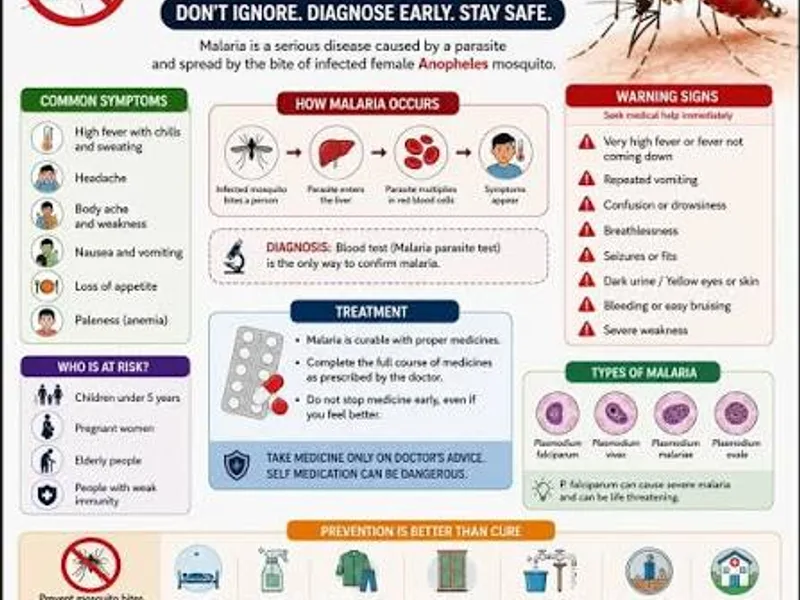
Malaria is caused by Plasmodium parasites and transmitted through infected female Anopheles mosquitoes. Rain can create additional breeding conditions, particularly where water collects around homes, settlements, construction sites and poorly drained areas.
But rainfall alone does not create an outbreak. Mosquito density, parasite transmission, housing conditions, access to testing and treatment, and local environmental factors all influence risk.
The mosquito problem is also easy to underestimate. DOCTAR's article on why mosquitoes are attracted to some people explains that mosquito attraction is influenced by several biological and environmental factors rather than simply one person's blood group.
Families can also read about whether mosquitoes can bite through clothes and mosquito bites and scarring for practical bite-prevention advice.
What are the symptoms of malaria?
Malaria commonly causes fever, chills and sweating. Headache, weakness, body aches, nausea and vomiting may also occur.
Symptoms can vary depending on the parasite and the individual. Plasmodium falciparum is particularly important because it can progress to severe malaria and affect organs such as the brain, kidneys or lungs.
A person with fever in a malaria-affected area should not try to identify the infection from symptoms alone. Testing is needed.
In clinical practice, fever is often missed as an early warning sign because patients may initially blame it on weather changes, tiredness or a routine viral infection. During a period of increased malaria transmission, that assumption can delay testing.
DOCTAR's fever with low platelets guide is also useful because malaria, dengue and typhoid can overlap clinically, especially during the early stages.
When should someone get tested?
Testing is particularly important when fever occurs with chills, sweating, headache or body aches and the person lives in or has recently travelled through a malaria-prone area.
Health workers in affected Jharkhand districts have been using rapid diagnostic tests and fever surveys to identify cases sooner. The state Health Department has also directed officials to ensure prompt testing and treatment in high-risk areas.
A doctor may recommend malaria testing along with other investigations depending on the symptoms and local disease pattern. Do not assume that a negative result from one test automatically explains every persistent fever; medical assessment should guide what happens next.
For comparison, DOCTAR's typhoid testing guide explains why typhoid and malaria can sometimes look similar at the beginning.
What treatment is available?
Malaria is treatable, but the correct treatment depends on the parasite involved, the severity of illness and local treatment recommendations. Antimalarial medicines should be selected and prescribed by a qualified healthcare professional.
This article does not provide medication doses or personal treatment instructions. Someone with suspected malaria should contact a doctor or health facility rather than taking leftover medicines or stopping treatment when the fever improves.
People who develop severe weakness, confusion, difficulty breathing, repeated vomiting, seizures, fainting, jaundice or reduced urine output need urgent medical attention.
If fever is accompanied by dehydration, DOCTAR's guides on fever management and oral rehydration and dehydration provide general educational information. These resources should not replace clinical assessment in a seriously ill patient.
How can families reduce malaria risk?
Mosquito control works best when households and communities act together. Families can reduce exposure by using intact mosquito nets, covering exposed skin, keeping doors and windows screened where possible and removing standing water around the home.
The DOCTAR guide to mosquito-control and dengue prevention covers practical measures such as removing water-holding containers and improving household protection. Although dengue and malaria are transmitted by different mosquito species, reducing mosquito exposure remains useful.
Parents should take extra care with young children. DOCTAR's guide to mosquito bites in babies discusses protective measures for infants.
People spending time outdoors can also read about mosquito bites and clothing and common mosquito-bite reactions.
Malaria is not the only cause of monsoon fever
A fever during the Jharkhand monsoon does not automatically mean malaria. Dengue, typhoid, chikungunya, respiratory infections and other illnesses can also circulate.
DOCTAR's dengue symptoms guide explains the warning signs that can distinguish a potentially serious dengue illness from a routine fever. Its article on how long dengue can last also explains why symptoms can change over several days.
For another perspective, the Koderma fever-doctor guide discusses how doctors approach fever when the underlying cause is uncertain. Similar educational guidance is available in DOCTAR's fever guide for Patna and fever guide for Begusarai.
That is why laboratory testing and a proper clinical history matter more than guessing from symptoms.
Who should be especially careful?
Children, older adults, pregnant women and people with weakened immunity may need closer medical attention when they develop fever. People with other medical conditions should also seek advice early rather than waiting for symptoms to become severe.
Parents can use DOCTAR's pediatrician guide for Deoghar as a starting point for understanding child-focused medical care. For adults, DOCTAR's general physician guide for Deoghar explains when a general physician can be the appropriate first point of contact.
For residents outside Jharkhand, DOCTAR also maintains broader general physician listings, while individual profiles such as Dr. Manjusha Jha in Deoghar show how doctor-specific information can be checked before an appointment.
What is the government doing?
Jharkhand's Health Department has responded with intensified surveillance, fever surveys, rapid testing, treatment support and mosquito-control activities in affected locations. The state has also directed district authorities to strengthen coordination and public awareness.
In Potka, officials reported extensive testing and indoor residual spraying as part of the response, with malaria positivity falling after the intervention.
The state's official Health Department portal also provides access to health-system resources, including the National Health Mission portal and the 104 health helpline.
Residents should rely on district health advisories and qualified healthcare professionals for current local instructions rather than social-media messages or unverified claims.