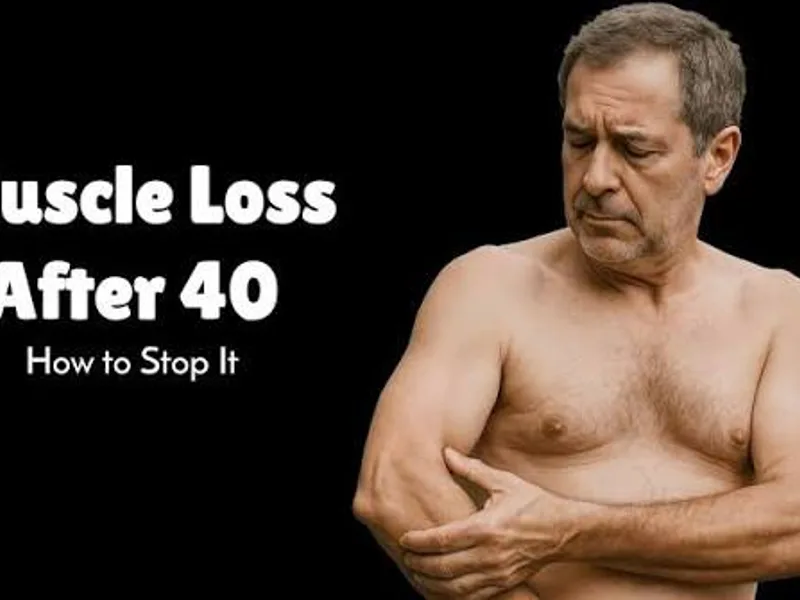
Why Does Muscle Loss Happen After 40?
Muscle does not disappear overnight. The process is usually gradual and influenced by several factors.
Muscle mass generally reaches its peak in early adulthood, after which age-related changes can slowly affect muscle size and strength. Inactivity can accelerate the process. Long periods of sitting, repeated breaks from exercise, illness and inadequate nutrition can all reduce the stimulus the muscles need to stay strong.
Hormonal changes, chronic diseases and inflammation can also contribute. Weight loss diets can become another problem when people cut calories aggressively without doing resistance exercise or eating enough protein.
This is where the popular idea of simply "getting older" can be misleading. Age is one factor, but lifestyle and health status matter too.
Doctar's guide to muscle building also explains how resistance exercise and nutrition work together to support muscle development. (DOCTAR)
What Are the Signs of Sarcopenia?
The earliest clue may not be a visibly thinner arm or leg. Loss of strength is often more useful to notice.
You might find that activities that once felt routine are becoming harder. Examples include:
· Getting up from a chair without using your hands
· Carrying grocery bags
· Climbing stairs
· Walking uphill
· Opening heavy doors
· Lifting or moving household objects
· Recovering from a trip or loss of balance
Reduced walking speed, difficulty rising from a chair and increasing weakness can be signs that warrant medical assessment. Sarcopenia is associated with impaired physical function and a greater risk of falls and fractures.
For additional reading, Doctar's covers posture, gait and everyday movement.
Muscle Mass Alone Does Not Tell the Whole Story
A common mistake is to judge muscle health by body weight or appearance.
Someone can weigh the same as they did years ago while becoming weaker. Conversely, a person can lose weight and preserve much of their muscle if the weight loss is managed appropriately.
Modern clinical definitions therefore place considerable emphasis on muscle strength, not just muscle size. Under the EWGSOP2 approach, low muscle strength is a key characteristic; low muscle quantity or quality helps confirm sarcopenia, while poor physical performance indicates severe sarcopenia.
That is why a healthcare professional may assess grip strength, chair-rise ability, walking performance or muscle quantity rather than relying on appearance alone.
Strength Training Is the Main Tool
If there is one habit that deserves more attention after 40, it is resistance exercise.
Strength training gives muscles a reason to adapt. It can involve weights, resistance bands, machines or appropriately challenging bodyweight exercises. Research and expert position statements support resistance training as an effective way to counter age-related losses in muscle strength and physical function.
Doctar's guide to resistance bands is useful for people who prefer exercising at home.
You can also read about free weights versus machines and understanding 1-rep max before building a structured program.
The goal is not to lift the heaviest possible weight. The better approach is to use an appropriate level of resistance and gradually challenge the muscles while maintaining good technique.
Doctar's progressive workout guidance discusses progressive overload, form and recovery.
Protein Matters, Too
Exercise provides the signal for muscle adaptation, but the body also needs adequate nutrition.
Protein supplies amino acids needed for muscle maintenance and repair. Protein needs vary according to body size, activity level, health status and other factors, so there is no single target that is appropriate for everyone. People with kidney disease or other medical conditions may need individual dietary advice.
Doctar's protein intake guide explains different protein considerations for active and older adults.
For people who prefer plant-based foods, Doctar also covers plant-based protein sources. Another useful resource is its guide to protein and workout nutrition.
The broader point is simple: do not focus only on calories. A diet that supports healthy aging should provide enough protein, energy and micronutrients.
What About Calcium and Vitamin D?
Muscle health and bone health overlap. Weak muscles can contribute to falls, while fragile bones can make the consequences of a fall more serious.
Calcium is involved in muscle contraction as well as bone health. Vitamin D also has an important role in normal muscle and bone function, although supplementation should not be treated as a universal solution for muscle loss.
See Doctar's osteoporosis prevention guide for more information about bone health and calcium.
For women going through menopause, Doctar's vitamin D and menopause guide discusses the changing nutritional and bone-health considerations.
Do not start high-dose supplements simply because you are worried about muscle loss. If deficiency is suspected, a doctor can decide whether testing or supplementation is appropriate.
Don't Ignore Sleep and Recovery
Training is only part of the equation. Recovery matters because the body needs time to repair and adapt.
Poor sleep can affect physical performance, energy and exercise recovery. Doctar's guide to sleep problems discusses common sleep difficulties and healthy sleep habits.
Doctar also explains why adequate recovery matters when training for strength.
In clinical practice, this is often missed because people tend to notice muscle loss only after it starts affecting independence. A gradual decline in strength can look like "just getting older" until climbing stairs, getting out of a chair or carrying bags becomes noticeably harder.
What If You Have Joint Pain?
Pain should not automatically mean stopping all exercise. But it does mean the program may need to change.
Low-impact activities such as walking, cycling and swimming can help people stay active when high-impact exercise is uncomfortable. Doctar's low-impact exercise guide explores several options.
Balance work may also become useful as strength and mobility change. Doctar's balance board guide and balance exercises for seniors provide related information.
If pain, weakness or mobility problems are limiting activity, a physiotherapist can help tailor exercise rather than leaving you to guess.
Doctar's at-home physical therapy guide explains how supervised rehabilitation can be delivered outside a traditional clinic.
When Should You See a Doctor?
Not every episode of weakness means sarcopenia. Weakness can have many causes, including nutritional problems, medication effects, neurological disorders, hormonal conditions and other illnesses.
See a healthcare professional if weakness is persistent, worsening or interfering with normal activities. Unexplained weight loss, repeated falls, difficulty walking, significant fatigue or a sudden change in strength also deserves assessment.
Doctar's general health and specialist services can help readers explore relevant medical information and healthcare options. For people with mobility concerns, its physiotherapy resources may also be useful.
People recovering from surgery or injury may need a more specific rehabilitation plan. Doctar's post-surgery physiotherapy guide discusses the role of rehabilitation in rebuilding strength and movement.
Can Muscle Loss After 40 Be Prevented?
There is no way to stop biological aging. But muscle decline is not an all-or-nothing process.
Regular resistance training, adequate nutrition, everyday movement, good sleep and management of chronic health conditions can all support muscle function. Even people who have already become less active can improve strength with an appropriately designed program. Doctar's healthy-aging protein guide offers more food-based ideas.
For older adults, its senior fitness equipment guide also discusses practical options for strength, balance and mobility.
And if weight loss is part of your goal, be careful about losing weight too quickly or relying entirely on calorie restriction. Doctar's calorie-needs guide explains why energy requirements differ between individuals.