PCOS Symptoms: Recognizing the Signs Your Body Is Sending
PCOS is one of the most common hormonal conditions in women of reproductive age, yet it's still routinely missed for years. Why does that happen? Mostly because the symptoms show up gradually, and each one on its own looks unremarkable.
Polycystic Ovary Syndrome affects how the ovaries work. It disrupts ovulation, raises androgen levels (hormones often called "male hormones," though everyone has them), and can change how the body responds to insulin. The result is a cluster of symptoms that touch the skin, the cycle, the metabolism, and sometimes the mood, all at once.
In clinical practice, this is often missed because a teenager with acne and irregular periods gets treated for acne alone, and a woman in her late twenties with unexplained weight gain gets told to "just eat less and move more." Neither approach addresses the underlying hormonal picture.
The Core Symptoms of PCOS
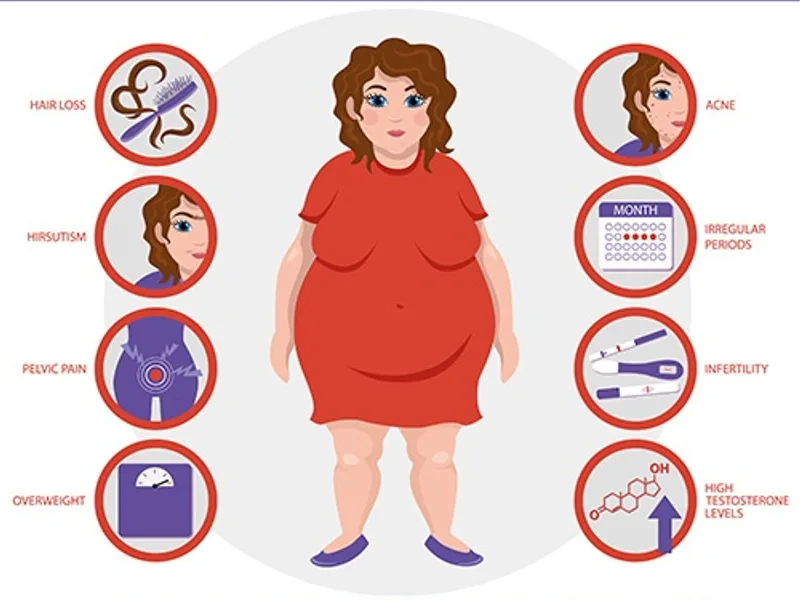
Irregular or Absent Periods
This is usually the first sign anyone notices. Cycles might stretch past 35 days, arrive unpredictably, or stop altogether for months. It happens because the hormonal signal that triggers ovulation isn't firing consistently. If you're trying to figure out whether your own cycle pattern fits, this breakdown of what makes a menstrual cycle irregular is a useful starting point, and understanding a related issue like a short luteal phase can help make sense of cycles that feel "off" even when a period does show up.
Excess Hair Growth (Hirsutism)
Higher androgen levels can cause coarse, dark hair to grow on the face, chest, or back, areas where it typically doesn't in women. This is one of the more distressing symptoms for many patients, and it's rarely the first thing a doctor asks about. Unusual hair growth in less obvious places, like the toes, can also point toward a hormonal cause worth investigating, as explained in this piece on hirsutism and hormonal hair growth.
Acne That Doesn't Respond to the Usual Treatments
Hormonal acne linked to PCOS tends to cluster along the jawline and chin and often resists standard topical treatment. If breakouts appeared or worsened around the time your periods became irregular, that timing matters and is worth mentioning to a doctor.
Thinning Hair on the Scalp
While facial and body hair increases, scalp hair can do the opposite. Androgen-driven hair thinning, sometimes called female pattern hair loss, often shows up gradually along the crown rather than all at once.
Weight Gain, Especially Around the Abdomen
Many women with PCOS notice weight that concentrates around the midsection and doesn't shift easily with diet changes alone. This isn't a willpower issue. It's tied to how the body is processing insulin, which brings us to one of the least talked-about parts of PCOS.
Skin Changes: Darkened Patches and Skin Tags
Look at the back of the neck, underarms, or skin folds. Velvety, darkened patches called acanthosis nigricans, sometimes alongside small skin tags, are a visible marker of insulin resistance and show up in a meaningful number of PCOS cases. It's a symptom people often mistake for poor hygiene or sun exposure, when it's actually a hormonal and metabolic signal.
The Metabolic Side of PCOS
Insulin Resistance
A large share of women with PCOS have some degree of insulin resistance, meaning the body needs more insulin than usual to keep blood sugar steady. Left unaddressed, this raises the long-term risk of type 2 diabetes. Medications like metformin, more commonly known for diabetes management, are frequently prescribed off-label to help regulate this side of PCOS, alongside anti-androgen options such as those covered in this guide on spironolactone and its effects.
Thyroid Overlap
PCOS and thyroid conditions share enough symptoms, fatigue, weight changes, cycle irregularity, that they're sometimes confused for one another, or missed because a doctor only tests for one. This comparison of PCOS and hyperthyroidism lays out how the two differ and why testing both matters.
Symptoms Beyond the Physical
Fertility Difficulty
Because PCOS disrupts ovulation, it's one of the leading causes of difficulty conceiving. That doesn't mean pregnancy isn't possible; many women with PCOS conceive with the right support. This guide on navigating pregnancy with PCOS covers what that path can look like, and understanding contraceptive options is equally relevant, as detailed in this piece on birth control and PCOS.
Mood Changes
Anxiety and low mood show up more often in women with PCOS, and it's not purely psychological, hormonal fluctuation plays a direct role. Stress itself can also worsen hormonal symptoms, creating a loop that's worth naming even if it's hard to untangle in one appointment; this piece on irritability and its causes touches on that overlap.
Skin Conditions Linked to PCOS
Some women with PCOS also develop eczema or other inflammatory skin issues, likely connected to the same hormonal and metabolic shifts. There's more detail in this article on the link between PCOS and eczema.
Symptoms That Overlap With Other Conditions
PCOS symptoms can look similar to other hormonal issues, including amenorrhea from other causes, Cushing's syndrome, or adrenal gland conditions. This comparison of amenorrhea and its causes and this explainer on Cushing's syndrome symptoms are both worth reading if your symptom picture doesn't fit neatly into one box. Reproductive hormone therapy options, discussed in this article on hormone-related reproductive treatments, also intersect with PCOS management in some cases. Related conditions like endometriosis can coexist with PCOS and complicate the picture further, and cramping patterns while on hormonal treatment, covered in this piece on birth control and cramps, are worth tracking too. The role of progesterone versus progestin in PCOS treatment plans is another piece of the puzzle many patients never get explained clearly.
When to See a Doctor
If you notice two or more of these symptoms together, irregular periods plus acne, or hair growth plus unexplained weight gain, that combination is worth a proper evaluation rather than treating each symptom separately. Diagnosis typically involves bloodwork, a pelvic ultrasound, and a conversation about your full symptom history.
Gynecologists who can evaluate PCOS symptoms and order the right tests include Dr. Bikash Banerjee, Dr. Mou Chatterjee, Dr. Abhinibesh Chatterjee, Dr. Sheuli Pal, Dr. Swagatika Panda, and Dr. M Padmaja Bhattacharya. For fertility concerns specifically, a specialized centre such as ARC International Fertility & Research Centre is worth considering.