What Is Progressive Overload?
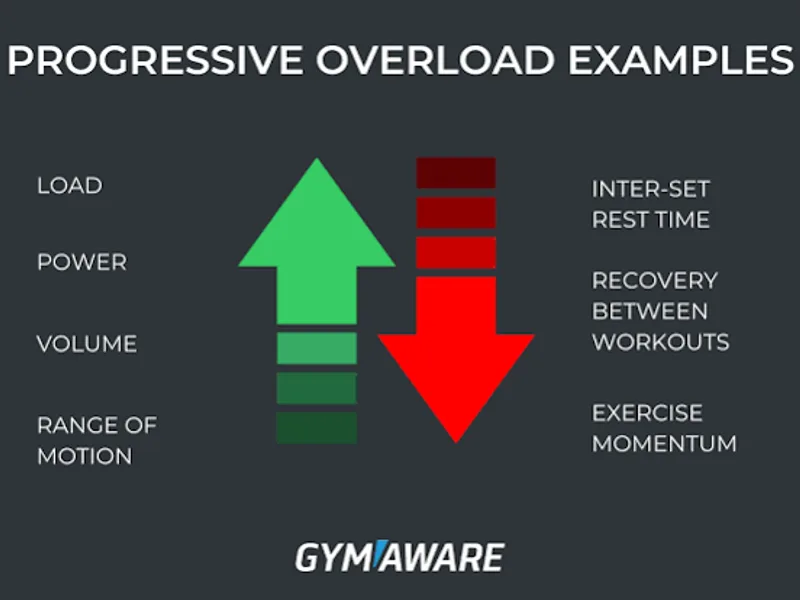
Progressive overload is a simple training principle: the body needs a gradually increasing challenge to keep adapting.
A beginner may become stronger simply by repeating a basic resistance exercise consistently. But once the same workload becomes easy, continuing to do exactly the same thing may provide less stimulus for further improvement. Progressive overload addresses that by increasing the training demand in a controlled way.
The change does not always have to be a heavier dumbbell. You can increase repetitions, add a set, improve your range of motion, slow a movement down, or use a more challenging variation.
Doctar.in's guide to progressive overload and getting stronger covers these methods in practical terms.
What Are the Main Progressive Overload Benefits?
The biggest benefit is continued adaptation. A 2026 American College of Sports Medicine review of resistance-training evidence found improvements in muscle strength, muscle size, power, endurance and several measures of physical function among healthy adults who performed resistance training.
1. It Can Increase Muscle Strength
Strength is one of the clearest outcomes of progressive resistance training.
As your muscles repeatedly work against resistance, your body becomes better at producing force. That can make everyday activities such as carrying groceries, climbing stairs or getting up from a chair easier.
For readers who want to understand strength training more deeply, Doctar.in's guide to the 1-rep max explains one way strength is measured.
2. It Supports Muscle Growth
Progressive overload can also contribute to muscle hypertrophy, meaning an increase in muscle size.
The process is not simply about damaging muscles and waiting for them to grow back. Training creates a stimulus, while adequate recovery and nutrition help the body adapt. The 2026 ACSM evidence review found that resistance-training programs can improve muscle size, although the best approach varies according to the person's goal and training experience.
Doctar.in also explains this relationship in its muscle-building guide.
3. It Helps Prevent Training Plateaus
A plateau can be frustrating. You may perform the same workout for weeks and notice that it no longer feels challenging.
Progressive overload gives you a structured way to move forward. Instead of suddenly doubling the weight, you can make one small change and observe how your body responds.
This is also why progressive overload is useful beyond traditional weightlifting. Bodyweight movements and resistance-band exercises can be progressed too.
For example, Doctar.in's resistance-band training guide discusses increasing resistance, repetitions, sets and exercise difficulty.
4. It Can Improve Physical Function
Strength is not only a gym metric.
Being able to lift, push, pull, squat and carry with greater control can translate into better performance in daily life. Current evidence reviewed by ACSM found improvements in several physical-function outcomes following resistance training.
This matters particularly as people get older. Doctar.in's fitness guide for people in their 50s, 60s and beyond discusses strength, mobility, balance and independence as connected parts of healthy ageing.
5. It Can Support Bone Health
Resistance exercise places mechanical demands on the body that can contribute to maintaining or improving bone strength.
That does not mean every strength workout will prevent osteoporosis. Bone health depends on several factors, including age, hormones, nutrition, activity and medical history. Still, muscle-strengthening and weight-bearing activity are recognised components of healthy physical activity.
Doctar.in's guide to preventing osteoporosis explains the role of exercise in bone health.
For women after menopause, its exercise guide for bone strength discusses resistance training in more detail.
6. It Can Improve Muscular Endurance
Progressive overload is not limited to lifting heavier weights.
If you gradually increase how many repetitions you can perform or how long you can sustain an activity, you are also challenging muscular endurance. This can be useful for activities ranging from recreational sport to everyday physical tasks.
Doctar.in's guide to exercises per muscle group explains how training volume, repetitions and goals can influence a strength routine.
How Do You Apply Progressive Overload Safely?
The safest approach is gradual, not dramatic.
You might start by performing an exercise with a manageable resistance. Once the movement becomes consistently comfortable with good technique, you can consider a modest increase in repetitions, resistance, sets or difficulty.
There is no universal rule that everyone should increase weight every week. Your training history, age, recovery, technique and health all matter.
The WHO recommends that adults perform muscle-strengthening activity involving major muscle groups on at least two days each week and advises people who are inactive to start with smaller amounts and gradually increase activity.
For people using bodyweight exercises, calisthenics versus weightlifting offers useful context on different ways to build strength.
Simple movements can work, too. Doctar.in's daily fitness exercise guide covers movements such as squats, push-ups and planks.
Progressive Overload Does Not Mean Training to Failure
This distinction is often missed.
Progressive overload means gradually increasing the training challenge. It does not mean every session should end with exhaustion or every set should be taken to complete muscular failure.
The 2026 ACSM evidence review found that several resistance-training variables can be adjusted according to the goal, and it did not find that every advanced training technique was necessary for results.
For beginners especially, technique and consistency deserve more attention than constantly chasing heavier loads.
Doctar.in's guide to the 5x5 workout provides another example of a structured strength-training approach.
Recovery Is Part of Progressive Overload
Training provides the stimulus. Recovery allows adaptation.
Poor recovery can make a sensible training plan feel much harder than it should. Sleep, nutrition, rest days and the total amount of physical activity all influence how well someone responds to training.
Doctar.in's muscle-building and recovery guide discusses the role of recovery alongside resistance training.
This is where professional experience matters. In clinical practice, the part of progressive overload that is often missed is not the exercise itself but the recovery between training sessions. People may add weight because a previous workout felt easy, without considering whether their technique, joints or overall recovery are ready for the next increase.
Common Mistakes to Avoid
The most common mistake is progressing too quickly.
Adding resistance while technique is deteriorating can turn a productive exercise into a poorly controlled one. Persistent or sharp pain should not be treated as proof that a workout is effective.
Other problems include changing several training variables at once, ignoring rest, and comparing your progress with someone else's.
For people with limited mobility, chair exercises for strength and flexibility show how exercise can be adapted rather than abandoned.
People managing an injury may also benefit from professional guidance. Doctar.in's at-home physical therapy guide explains how rehabilitation can be structured around individual needs.
Can Progressive Overload Be Used for Different Exercises?
Yes. The principle is broader than barbells and gym machines.
For example, someone training the hips may gradually increase resistance or difficulty with hip thrust exercises.
Someone working on grip and carrying strength can explore farmer's walks.
Upper-body training can also be progressed through movements such as dumbbell pullovers, dumbbell chest flies and cable curls.
Even smaller muscle groups can be trained progressively. Doctar.in's guide to inner-thigh and adductor exercises covers strength and stability work for these muscles.
For athletic training, more advanced exercises such as the power clean or bear complex can involve progressive challenges, although they require more technical skill and are not suitable for everyone.
When Should You Get Professional Advice?
Most healthy adults can incorporate some form of muscle-strengthening activity, but individual circumstances change the equation.
If you have a known medical condition, significant joint pain, a recent injury, or are returning to exercise after surgery, speak with a doctor or qualified physiotherapist before substantially increasing training demands.
People with joint problems may find Doctar.in's low-impact exercise guide for joint health useful as general education.
Those recovering from specific illnesses may need a more tailored approach. For example, Doctar.in discusses exercise adaptations for people with COPD and staying active during kidney cancer care.
The same principle applies to people using weight-loss medicines. Doctar.in's GLP-1 and exercise guide discusses the role of resistance training in maintaining muscle during weight loss.