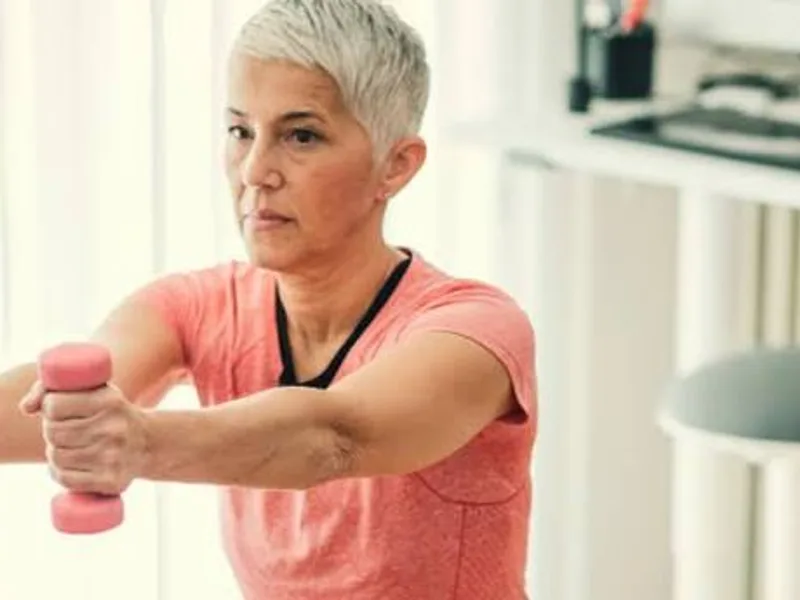
Why Strength Training Matters After 50
Getting older does not mean getting weaker by default. Some loss of muscle and strength is a normal part of aging, but inactivity can accelerate it. Strength training gives the body a reason to keep adapting.
For women over 50, the benefits extend beyond the gym. Carrying groceries, climbing stairs, getting up from a chair and lifting a suitcase all require strength. Maintaining that capacity can make everyday life easier and help preserve independence.
Research and clinical guidance support combining resistance exercise with weight-bearing activity for bone and muscle health. The Bone Health & Osteoporosis Foundation specifically recommends muscle-strengthening exercises such as weights, resistance bands, machines and bodyweight movements.
Doctar's guide on fitness for people in their 50s, 60s and beyond also highlights strength training as part of staying active with age.
Menopause Changes the Training Conversation
For many women, the years around menopause bring changes in muscle, body composition, recovery and bone health. Falling estrogen levels after menopause are associated with increased bone loss, although the degree varies from woman to woman.
That makes resistance training particularly relevant. It does not "balance hormones" in a simple or guaranteed way, but it can provide a valuable mechanical stimulus to muscles and bones.
Doctar's guide to exercise after menopause discusses resistance training alongside weight-bearing exercise, balance work and other forms of movement.
Women dealing with broader menopausal changes may also find Doctar's healthy habits during menopause guide useful for understanding exercise, nutrition and lifestyle together.
In clinical practice, this is often missed because women may be told to "stay active" without being shown how to progressively challenge their muscles. Walking is valuable, but walking alone is not the same stimulus as resistance training.
What Should a Beginner Actually Do?
A good starting programme does not need to look like bodybuilding. The goal is to train the major movement patterns while keeping technique controlled.
1. Sit-to-stand or squat
Squatting trains the legs and hips for movements that occur throughout the day. A chair can provide a useful reference for someone who is new to exercise.
Doctar's goblet squat guide explains how a squat variation can develop lower-body strength and stability.
2. Row
Rows work the upper back and arms. They can be performed with resistance bands, dumbbells or a suitable machine.
If equipment is limited, Doctar's resistance-band exercise guide offers examples of how bands can be used for strength training at home.
3. Chest press or modified push-up
These exercises train the chest, shoulders and arms. A wall or countertop can make a push-up easier for someone who is starting from a low fitness level.
4. Hip-hinge movement
Movements based on bending at the hips train the muscles of the hips and back. Technique matters here, particularly for women with existing back or bone problems.
Doctar's guide to back-pain exercises discusses situations where exercise may need modification and when professional assessment is appropriate.
5. Shoulder strengthening
Strong shoulders make reaching, lifting and carrying easier. Resistance bands can be a practical option.
See Doctar's resistance-band shoulder exercises for examples of controlled shoulder movements.
How Often Should Women Over 50 Strength Train?
There is no single schedule that works for every woman. Current bone-health guidance commonly recommends muscle-strengthening exercise around two to three days per week, alongside weight-bearing activity.
Someone who has been inactive may begin with shorter sessions and gradually build capacity. Recovery matters too. Muscles need time to adapt, and soreness is not a measure of whether a workout was successful.
Doctar's muscle-building guide explains the relationship between resistance training, nutrition and recovery.
The principle is simple: train consistently, recover adequately and increase the challenge gradually.
That gradual increase is known as progressive overload. It might mean adding a little resistance, performing an additional repetition or improving control rather than dramatically increasing weight. Doctar's progressive overload guide explores this principle in more detail.
Free Weights, Machines or Resistance Bands?
There is no prize for choosing the most intimidating equipment.
Dumbbells, machines, bands and bodyweight exercises can all be useful. The best option is the one that allows you to train safely and consistently.
Doctar's free weights versus machines comparison explains the practical differences between these approaches.
Resistance bands can be especially convenient for home workouts. Doctar also has a detailed resistance-band safety guide covering setup, resistance and technique.
For women who want to understand resistance training more deeply, Doctar's 1-rep max guide explains strength measurement, although beginners generally do not need to test their maximum lift.
Don't Forget Balance and Mobility
Strength is only part of physical function. Balance and mobility become increasingly useful as people age because they help with walking, stairs, turning and recovering from an unexpected trip.
Doctar's balance exercises for seniors provide examples of simple balance-focused movements.
Its guide to loss of balance in older adults also explains why weakness, joint problems, vision changes and other factors can affect stability.
Flexibility has a role as well. Doctar's practical flexibility guide covers ways to work on movement without making flexibility the sole goal of a fitness programme.
Grip strength deserves attention too. Opening jars, carrying bags and holding onto railings all depend on it. Doctar's grip-strength guide explores this often-overlooked part of functional strength.
What About Bone Density?
Bone health deserves special attention after menopause. Resistance and weight-bearing exercises can help maintain bone strength, but exercise should be matched to an individual's fracture risk and bone health.
The Bone Health & Osteoporosis Foundation recommends both weight-bearing and muscle-strengthening exercise. However, people with osteoporosis or a high risk of fracture may need to avoid certain high-impact or spinal-loading movements and should obtain professional guidance.
Doctar's osteoporosis prevention guide and its article on exercises to avoid with osteoporosis provide additional context.
Women over 65 should also discuss osteoporosis screening with their clinician. The USPSTF recommends screening women aged 65 and older and recommends risk-based screening for postmenopausal women younger than 65 who are at increased risk.
Nutrition Still Matters
Exercise is only one part of maintaining muscle and bone health. Adequate protein, calcium, vitamin D and overall nutrition support the body's ability to adapt to training.
Doctar's menopause nutrition guide discusses protein-rich foods and key nutrients during menopause.
Its vitamin D and menopause guide looks specifically at vitamin D and bone health, while the broader vitamins and supplements guide explains why deficiency should not be self-diagnosed.
Doctar also covers the relationship between vitamin D and joint pain, although joint pain has many possible causes and should not automatically be blamed on vitamin D deficiency.
When Should You Get Professional Advice?
Starting slowly is sensible, particularly if you have been inactive for a long time. Medical or physiotherapy advice is especially relevant if you have known osteoporosis, a recent fracture, significant joint pain, heart disease, uncontrolled blood pressure, recent surgery or another condition that could affect exercise safety.
Doctar's at-home physical therapy guide explains how physiotherapy can help people with mobility and strength limitations.
Women with arthritis may also need modified exercises. Doctar's foot and ankle arthritis exercise guide and hand arthritis exercise guide illustrate how exercise can be adapted around joint symptoms.
For additional shoulder-specific concerns, Doctar's senior shoulder-strengthening guide discusses when pain warrants professional attention.