Women and Stroke Risk Factors: Why the Picture Looks Different
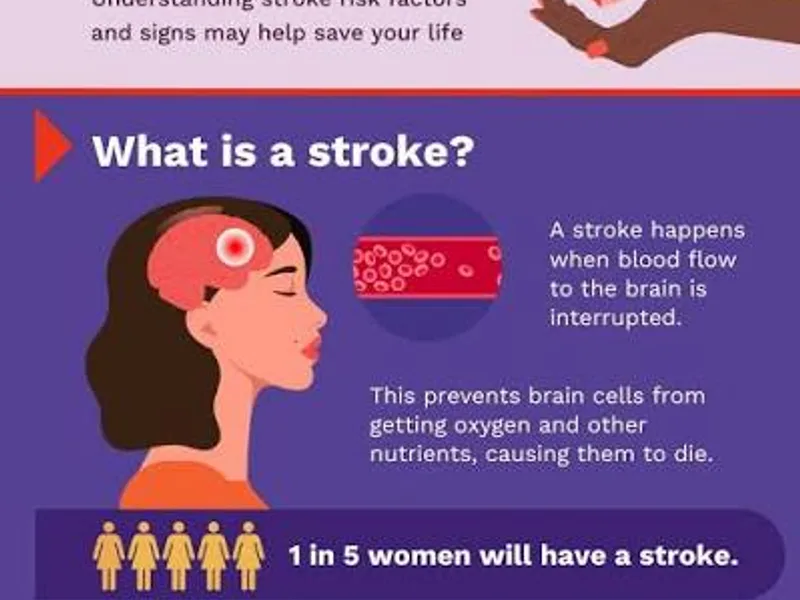
Stroke is often talked about as a men's health problem, largely because men tend to have strokes earlier in life. But women are more likely to die from a stroke, and they carry a set of risk factors that men simply don't have. If you've never had this explained to you by a doctor, you're not alone — it's a gap that shows up a lot in women's health consultations.
The Hormone Factor Nobody Warns You About
Pregnancy changes a woman's blood vessels and clotting system in ways that can linger long after delivery. Conditions like preeclampsia and eclampsia — both marked by dangerously high blood pressure during pregnancy — roughly double a woman's lifetime stroke risk, even decades later. That's a detail many women are never told at their postpartum visit.
Birth control pills add another layer, particularly for women who smoke or already have high blood pressure. The estrogen in combined oral contraceptives can raise clotting risk slightly. For most healthy women this risk stays small, but it climbs when combined with smoking, obesity, or a personal history of clotting disorders. If you're unsure how your prescription interacts with your risk profile, it's worth a direct conversation with a gynecologist rather than guessing from an internet forum.
Then there's menopause. Estrogen has a mildly protective effect on blood vessels, and when levels drop, blood pressure and cholesterol often creep up too. This is one reason menopause is linked to rising cardiovascular risk — it isn't just hot flashes and mood shifts, it's a genuine shift in vascular health that deserves monitoring, not dismissal.
The "Shared" Risk Factors Still Hit Women Differently
High blood pressure remains the single biggest driver of stroke for both sexes, but it's more common and often less controlled in older women. Left unmanaged, it damages artery walls over time — the same mechanism seen in coronary artery disease, stroke's close cousin. Regular checks with a cardiologist matter more than people assume, especially after 50.
Atrial fibrillation, an irregular heartbeat that lets blood pool and clot inside the heart, is another underappreciated one. Women with AFib appear to face a higher relative stroke risk than men with the same condition — researchers aren't entirely settled on why, but hormonal and structural heart differences are suspected. This is exactly the kind of thing that's easy to miss on a routine physical unless someone specifically listens for it, which is why a general physician visit that includes a pulse check isn't a waste of time.
Diabetes, obesity, and high cholesterol round out the list, and they tend to compound each other. An endocrinologist can help manage blood sugar long before it becomes a vascular problem, and a dietitian consultation is genuinely underused as a preventive step, not just a weight-loss tool.
Migraine With Aura: The One People Forget
Here's something that surprises a lot of patients: migraine with aura — the kind with visual disturbances like flashing lights or blind spots before the headache — is an independent stroke risk factor in women, particularly younger women who also smoke or use estrogen-based contraception. In clinical practice, this is often missed because migraine gets filed away as "just a headache issue" rather than flagged as a vascular one. If you get migraines with aura and you're on the pill, that combination is worth mentioning at your next appointment, not brushing off.
Recognizing a Stroke in Progress
Whatever the cause, the emergency response doesn't change. Use F.A.S.T. — Face drooping, Arm weakness, Speech difficulty, Time to call emergency services. Women sometimes present with less typical symptoms too: sudden confusion, hiccups, nausea, or unexplained fatigue can occasionally be the main sign instead of the classic one-sided weakness. Don't wait it out. Every minute without treatment costs brain tissue, and knowing the difference between an ischemic and hemorrhagic stroke is something the emergency team will sort out — your job is just to act fast and call for help through an ambulance service or head straight to emergency care.
Silent, smaller vascular changes can also build up over years without obvious symptoms — a pattern sometimes described as microvascular ischemic disease. This is part of why routine diagnostic screening as you get older isn't just a formality.
What You Can Actually Do
None of this means every woman with a migraine or a past pregnancy complication is destined for a stroke — most aren't. But awareness changes behavior. Get your blood pressure checked regularly, ask specifically about your stroke risk during hospital visits, and don't assume your risk profile is identical to your husband's or father's just because you eat the same meals.
Practical takeaway: if you're a woman with a history of preeclampsia, migraine with aura, or you're on hormonal birth control while smoking, bring it up by name at your next checkup — don't wait for the doctor to ask. That single conversation is often the difference between catching a risk factor early and finding out the hard way.
This article recommends consulting a licensed physician or neurologist for personal risk assessment. It does not replace medical diagnosis or treatment advice.
Note for publisher: Before publishing, this article should be reviewed and attributed to a qualified medical professional — ideally a neurologist, cardiologist, or OB-GYN — per standard E-E-A-T and YMYL editorial practice.
More on Doctar
(Combined with the in-text links above, this totals 25 internal links to Doctar.in pages.)
5. Keywords
Primary: women and stroke risk factors
Related/long-tail: stroke risk in women, stroke symptoms in women, migraine and stroke risk, preeclampsia and stroke, menopause and cardiovascular risk, birth control and stroke risk, atrial fibrillation in women, F.A.S.T. stroke signs
6. Category
Other
7. Image Suggestion
A candid, documentary-style photo of a woman in her late 40s having her blood pressure checked in a clinic by a female doctor — genuine expression, slightly worried but attentive, natural lighting, no stock-photo smiling-at-camera pose. This signals real clinical context rather than generic wellness imagery.
8. Schema Suggestion
MedicalWebPage schema (with medicalAudience: Female and about: Stroke) — appropriate because the content is health-condition-specific, educational rather than diagnostic, and benefits from structured medical entity markup that search engines use to assess YMYL trustworthiness. A secondary Article schema can be layered on top for authorship and publish-date signals.