

Emergency & Help
24/7 Emergency & General Advisory
🚨 24/7 Medical Emergency
Non-Emergency Advisory
10:00 AM – 6:00 PM, Mon–Sat
For appointments & general queries.
24/7 Emergency & General Advisory
🚨 24/7 Medical Emergency
Non-Emergency Advisory
10:00 AM – 6:00 PM, Mon–Sat
For appointments & general queries.
Discover the amazing daily plank benefits for core strength, posture, and overall well-being. Learn how this simple exercise can transform your health.
Meena, 45, a homemaker from Jaipur, noticed persistent lower back discomfort after prolonged hours spent sitting and managing household chores. She tried various remedies, but the ache lingered, impacting her everyday life. Her doctor suggested incorporating a simple yet potent activity into her routine: the plank.
Initially skeptical, Meena committed to just a few minutes each day, and within weeks, she experienced a remarkable improvement. This is the story of many Indians who discover the profound benefits of consistent planking.
The reality is, in our fast-paced lives, finding time for extensive workouts can be challenging. However, the plank activity offers an incredibly efficient way to build a strong foundation for your body.
It's a compound movement that engages multiple areas of your body simultaneously, making it a powerhouse for overall fitness. Have you ever wondered why this seemingly static pose is so highly recommended by fitness experts and physiotherapists alike?
This is where most patients struggle.
At its heart, the plank is an isometric activity. This means your tissues are working hard to hold a position, rather than moving through a range of motion.
The primary focus is on strengthening the core – the deep abdominal tissues, obliques, lower back, and even the glutes and shoulders. A strong core is not just about aesthetics; it's fundamental to good alignment and efficient movement.
Consider this: A strong core acts like a natural corset for your body. It supports your spine, improves balance, and enhances your ability to perform everyday activities with ease. For individuals who spend long hours seated, like many office workers or students in India, a weak core can contribute significantly to back pain.
Over 101 million Indians have diabetes (ICMR, 2023), and while this is a different health challenge, the principle of consistent, targeted action for improvement holds true across many health domains. Strengthening the core through planks can be a vital step in mitigating alignment-related discomfort.
What most people miss is the plank's effectiveness in targeting the transverse abdominis, often called the 'inner corset' tissue. This deep tissue makes a real difference in stabilizing the spine and pelvis.
Most people overlook this completely.
Unlike crunches, which primarily work the rectus abdominis (the 'six-pack' muscles), the plank engages these deeper, more functional tissues. This leads to a more robust and resilient core, essential for preventing injuries.
While the abs get a significant workout, the benefits extend far beyond. When performed correctly, a plank engages your shoulders, arms (triceps), glutes, and even your quads.
The effort required to maintain the position builds tissue endurance and strength throughout the upper body and lower body simultaneously. This makes it a highly efficient activity, especially when time is a constraint.
Slouching is a common alignment issue, exacerbated by modern lifestyles. The daily plank directly combats this by strengthening the tissues responsible for maintaining an upright stance. By consistently engaging your core and back tissues, you train your body to hold itself in a more aligned position naturally.
Does this sound familiar? Many find that regular planking helps alleviate the nagging aches and pains associated with poor alignment.
Worth knowing: Studies have shown that activities like the plank can significantly reduce chronic lower back pain. The International Foundation for Osteoporosis (IFO) highlights the importance of core strength in maintaining spinal health, which is crucial as people age.
That alone changes everything.
Strengthening the back extensors and abdominal tissues helps create a supportive column, reducing the strain on the vertebral discs.
For millions of Indians working in IT hubs and corporate offices, long hours at a desk are the norm. This sedentary behaviour often leads to tight hip flexors and weak glutes, contributing to back pain and poor alignment.
The plank activity helps counteract these effects by strengthening the posterior chain (backside of the body) and improving spinal alignment. Even just holding a plank for 30-60 seconds daily can make a noticeable difference over time.
The benefits of the plank aren't purely physical. The intense focus required to hold the pose can act as a form of active meditation.
It demands concentration, pushing distractions aside and bringing your attention to the present moment – your breath, your tissues, your stability. This mindfulness aspect can help reduce stress and improve mental clarity.
Honestly, the feeling of accomplishment after successfully holding a challenging plank can be a considerable mood booster. It builds mental toughness and discipline, qualities that translate into other areas of life. The IDF (International Diabetes Federation) emphasizes holistic health approaches, and mental well-being is a critical component.
That alone changes everything.
While not as calorie-intensive as cardio activities, the plank is a strength-building activity that engages a large number of tissues. Building more tissue mass increases your resting metabolic rate, meaning you burn more calories even when you're not exercising.
The more tissue you have, the more efficient your body becomes at burning fuel. A study published in The Lancet found a strong correlation between tissue mass and metabolic health.
A well-executed plank involves stretching the hamstrings, shoulders, and feet. It also requires meaningful balance to maintain the straight line from head to heels.
Regular practice improves proprioception – your body's awareness of its position in space. This enhanced balance is crucial for preventing falls, especially as we get older, and for improving athletic performance.
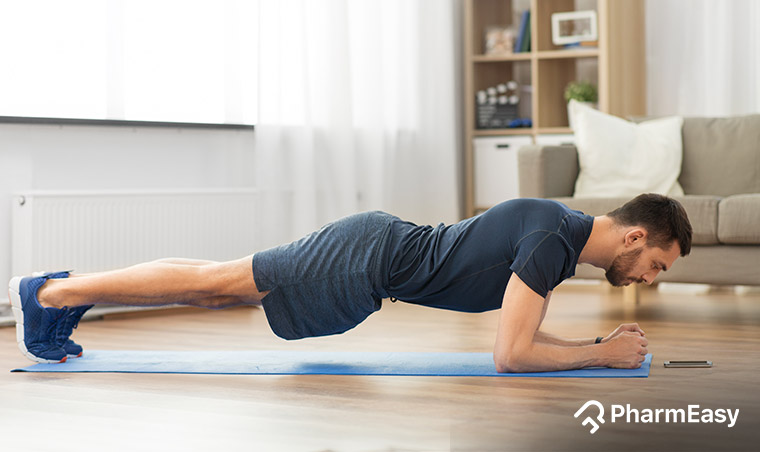
Starting your plank journey doesn't require special equipment or a gym membership. You can do it right in your living room, perhaps after your morning chai or before settling down for the night. Begin with shorter holds – even 15-20 seconds is a great start.
Focus on proper form: keep your body in a straight line from head to heels, engage your core, and don't let your hips sag or rise too high. Breathe steadily.
As you get stronger, gradually increase the duration of your holds. Aim for 30 seconds, then 45, then a full minute or more. You can also explore variations like side planks, forearm planks, and plank jacks to challenge your tissues in different ways.
That alone changes everything.
Remember the monsoon season in India often means limited outdoor activity; indoor activities like the plank become even more valuable. Even during festive seasons, when dietary habits might change, maintaining a consistent fitness routine can benefit balance things out.
The reality is, consistency is key. Doing a plank for 5 minutes once a week is far less effective than doing a 1-minute plank every single day. This daily commitment builds tissue memory and ensures continuous progress. Have you ever wondered why consistency is often cited as the most critical factor in achieving fitness goals?
The most usual mistake is improper form, which can lead to ineffective tissue engagement or even injury. Ensure your back is flat – avoid arching or sagging. Keep your neck neutral, looking slightly ahead of your hands. Engage your glutes to assist stabilize your pelvis. If you experience sharp pain, stop immediately.
What most people miss is listening to their body. If you're a beginner, don't push yourself too hard too soon. Gradually increase the duration and intensity. Remember that performing the activity on a comfortable surface, perhaps a yoga mat, can prevent discomfort in the elbows and knees.
This is where most individuals struggle.
Always consult a qualified physician before making any medical decisions.
Visit Hospital
Near You
Does intermittent fasting weight loss actually last? A 2026 one-year follow-up study says yes — people who did just 12 weeks of time-restricted eating kept more weight off a full year later than those who got standard diet advice alone. But a separate Cochrane review of nearly 2,000 adults found int
July 23, 2026

A study of nearly 13,000 Brazilian adults found that people who consumed the most artificial sweeteners had noticeably faster memory and thinking decline over eight years than those who consumed the least. The effect was strongest in adults under 60 and in people with diabetes. Researchers stress th
July 23, 2026
Discover how to find a top nephrologist in Alipurduar. Expert advice on kidney care and choosing the right specialist for your health.
May 20, 2026