

Emergency & Help
24/7 Emergency & General Advisory
🚨 24/7 Medical Emergency
Non-Emergency Advisory
10:00 AM – 6:00 PM, Mon–Sat
For appointments & general queries.
24/7 Emergency & General Advisory
🚨 24/7 Medical Emergency
Non-Emergency Advisory
10:00 AM – 6:00 PM, Mon–Sat
For appointments & general queries.
Discover the profound benefits of Rajakapotasana (King Pigeon Pose) and learn the correct technique from Dr. Himani Bisht. Improve flexibility, reduce stress, and more.
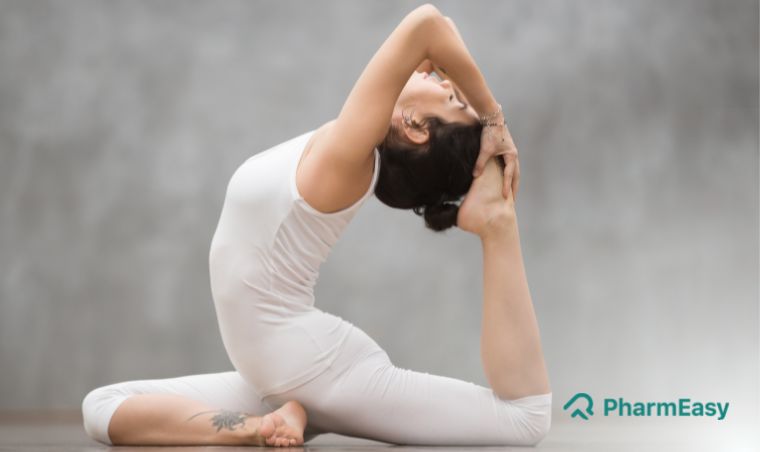
Meena, 45, a homemaker from Jaipur, noticed a persistent ache in her hips after long hours spent sitting on the floor for household chores. She also felt an unusual amount of tension accumulating, affecting her sleep. Like many in India, her daily life involved movements that, over time, could lead to stiffness and discomfort.
Her yoga instructor suggested she try Rajakapotasana, the King Pigeon Pose, a posture known for its deep opening effects. Meena was initially intimidated by the name and the seemingly complex shape, but with patient guidance, she began to experience its transformative power.
Rajakapotasana, or the King Pigeon Pose, is an advanced yoga asana that offers a wealth of benefits for both the body and the mind. While it might appear challenging, practicing it with proper alignment and awareness can lead to significant improvements in suppleness, strength, and emotional balance.
Dr. Himani Bisht, a seasoned yoga practitioner and educator, guides us through the essence of this powerful pose.
At its core, Rajakapotasana is a deep hip opener and a gentle backbend. The name itself, derived from Sanskrit, translates to 'King Pigeon Pose' (Raja = King, Kapota = Pigeon, Asana = Pose). Pigeons are often associated with grace and gentle movements, and this pose, when executed correctly, embodies that fluidity.
It sounds simple. It rarely is.
It requires a considerable degree of suppleness in the hips, hamstrings, and spine. Think about it this way: this posture is designed to alleviate tightness held deep within the pelvic region, an area where tension often accumulates.
In many cases, modern lifestyles, including prolonged sitting (whether at a desk or on the floor as is common in India during festivals or daily chores), contribute to tight hip flexors and a general lack of mobility. This can manifest as pain in the lumbar area, sciatica, and even digestive issues.
Rajakapotasana directly addresses these concerns by encouraging a deeper range of motion and promoting better circulation in the lower body.
The advantages of incorporating Rajakapotasana into your yoga practice are extensive. Here are some of the key benefits:
The magic of Rajakapotasana lies in its ability to target multiple muscle groups simultaneously. When you enter the pose, the front leg (bent and brought forward) works on opening the hip externally, stretching the glutes and piriformis muscles. Simultaneously, the back leg, extended straight behind, stretches the hip flexor (psoas) and quadriceps of that leg. The gentle backbend in the torso lengthens the front of the body, including the chest and abdomen.
This combination of actions creates a profound alleviation of tightness that is often held unconsciously in these areas. So what does that mean for you? It means a notable reduction in physical tightness and a corresponding uplift in mood and energy levels.
Most people overlook this completely.
Rajakapotasana is an advanced pose. It is crucial to build a foundation with preparatory poses before attempting it. Poses like Janu Sirsasana (Head-to-Knee Forward Bend), Baddha Konasana (Bound Angle Pose), Eka Pada Rajakapotasana Prep (One-Legged King Pigeon Pose Prep), and low lunges are excellent for developing hip and hamstring suppleness.
Here’s how to approach Rajakapotasana, ideally under the guidance of a qualified yoga instructor:
Given its complexity, misalignments are usual. Here’s what to watch out for:
Remember, the journey is as important as the destination. Progress may be gradual, especially for those who aren't naturally supple.
Patience and consistent practice are key. In India, where many traditional practices involve floor-sitting, improving hip mobility through poses like Rajakapotasana can significantly enhance daily comfort and prevent long-term issues.
The breath (pranayama) is the life force that guides you through any yoga asana. In Rajakapotasana, deep, conscious breaths enable to deepen the stretch and alleviate tightness. Inhale to lengthen the spine and create space; exhale to soften into the pose and release holding patterns. Mindfulness is equally vital.
Pay attention to the sensations in your body without judgment. If you experience pain, ease back. If you feel an alleviation, breathe into it.
The International Diabetes Federation (IDF) estimates that India will have over 134 million people with diabetes by 2045, a number that highlights the growing need for lifestyle interventions that promote overall health. Yoga, with its holistic approach, plays a marked role in managing tension and improving metabolic health, indirectly contributing to preventing such chronic conditions.
Recovery is rarely linear.
Rajakapotasana, by stimulating abdominal organs and reducing tension, can be a valuable part of this preventative health strategy.
While beneficial, Rajakapotasana is not for everyone. Individuals with serious knee injuries, hip issues, or recent abdominal surgery should avoid this pose or practice it with extreme caution and professional guidance.
Pregnant women should also consult their healthcare provider and experienced yoga instructor before attempting this or any advanced asana.
It's essential to listen to your body. If you have any pre-existing medical conditions, always seek advice from a healthcare professional. The World Health Organization (WHO) emphasizes the importance of physical activity for maintaining health, and yoga is a fantastic way to achieve this.
Always consult a qualified physician before making any medical decisions.
Visit Hospital
Near You
Does intermittent fasting weight loss actually last? A 2026 one-year follow-up study says yes — people who did just 12 weeks of time-restricted eating kept more weight off a full year later than those who got standard diet advice alone. But a separate Cochrane review of nearly 2,000 adults found int
July 23, 2026

A study of nearly 13,000 Brazilian adults found that people who consumed the most artificial sweeteners had noticeably faster memory and thinking decline over eight years than those who consumed the least. The effect was strongest in adults under 60 and in people with diabetes. Researchers stress th
July 23, 2026
Discover how to find a top nephrologist in Alipurduar. Expert advice on kidney care and choosing the right specialist for your health.
May 20, 2026